




.svg)
.svg)

.svg)


.svg)





.svg)
.png?width=500&height=424&name=Style-1---V1-(1).png)

.png?width=1230&height=692&name=Vector%20(13).png)
Workwize vs. Allwhere: Overview
Workwize
Workwize is a global IT asset management and automation platform that supports the full lifecycle of IT hardware for distributed teams.
It helps you build zero-touch onboarding and offboarding workflows that are triggered when HR adds or removes an employee in the HRIS. That means you enjoy end-to-end lifecycle automation across 100+ countries.
Who uses it
IT teams at mid-sized companies (200–1000 employees), large enterprises (1000+ employees), fast-growing startups, and tech scale-ups managing hardware at scale. Customers include DuckDuckGo, HighLevel, and Ingenico.
Primary strengths
- Directly integrates with your HRIS and MDM, kicking off remote onboarding and offboarding as HR makes any changes.
- Covers 100+ countries through 72+ suppliers and 14 owned warehouses, with a catalog of 1,200+ SKUs, including furniture.
- 14 Local warehouses minimize delays, shipping costs, and carbon emissions.
- Helps recover residual value of up to 45% of the device’s sticker price with flexible redemption options.
Known limitations
Workwize can be expensive for very small, single-location companies with simple hardware needs and low device movement (fewer than 10 devices a month).
Allwhere
Source: Allwhere
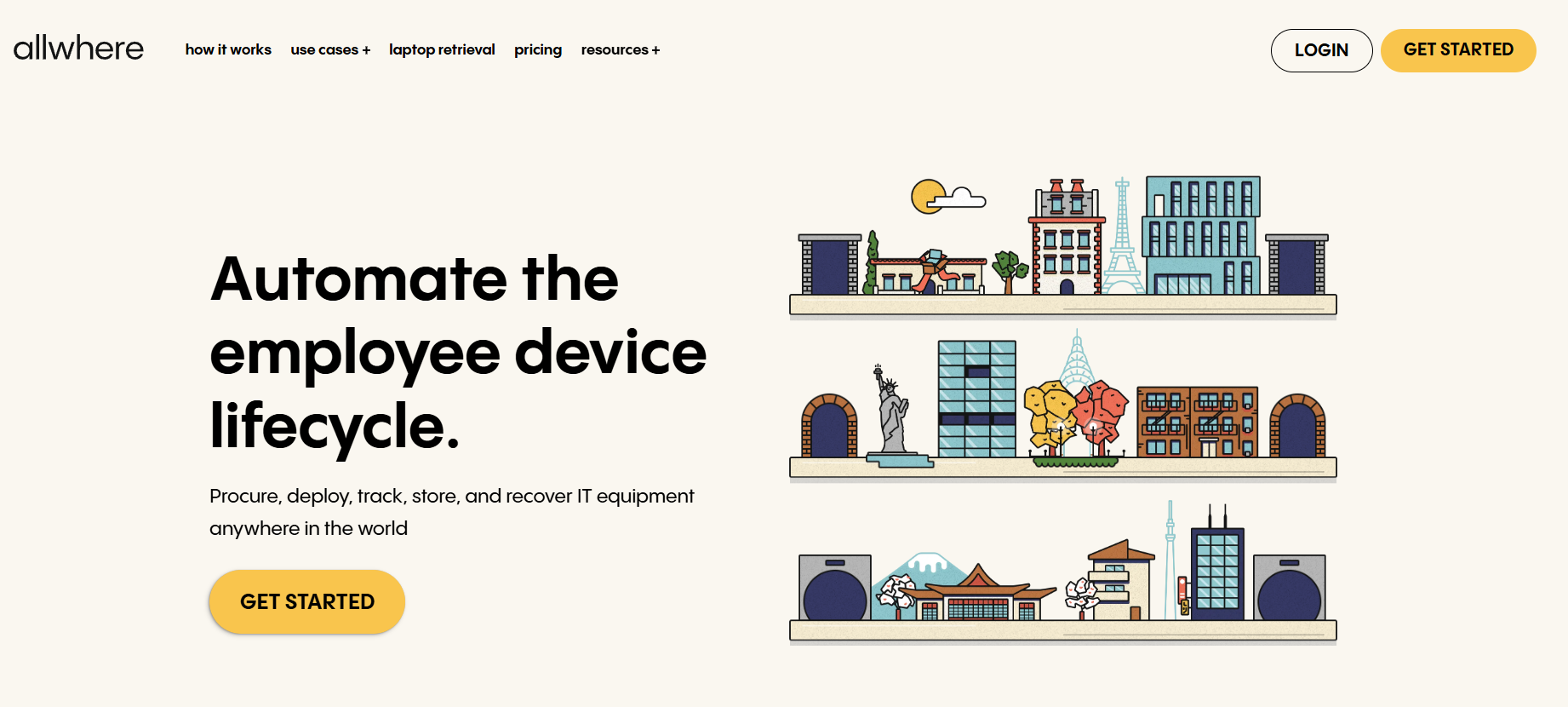
Allwhere is a global remote IT equipment management platform that helps you procure, manage, deploy and retrieve your assets across 48 countries.
Who uses it
Ideal for companies of all sizes, from startups to enterprises, with distributed teams operating across multiple countries
Primary strengths
Their pay-as-you-go model makes Allwhere suitable for smaller companies with limited assets that seek flexibility over a monthly/yearly subscription fee.
Known limitations
One of the primary disadvantages is the number of countries they support. Allwhere supports just 48 countries compared to Workwize’s 100+.
If you operate in Singapore, Japan, the UAE, and South Africa, Allwhere won’t be able to procure, deploy, or retrieve assets for you.
Workwize vs Allwhere: Feature-by-Feature Comparison
Here’s a feature-by-feature comparison between both platforms, where we pinpoint the differences based on real user reviews, Reddit users, and our own product research.
Procurement and Global Hardware Delivery
Workwize
Workwize operates through a network of over 72 suppliers across 100+ countries. It also has local warehouses in 14 regions, including the EU, UK, US, Canada, India, Brazil, Australia, and the UAE. So coverage is rarely an issue.
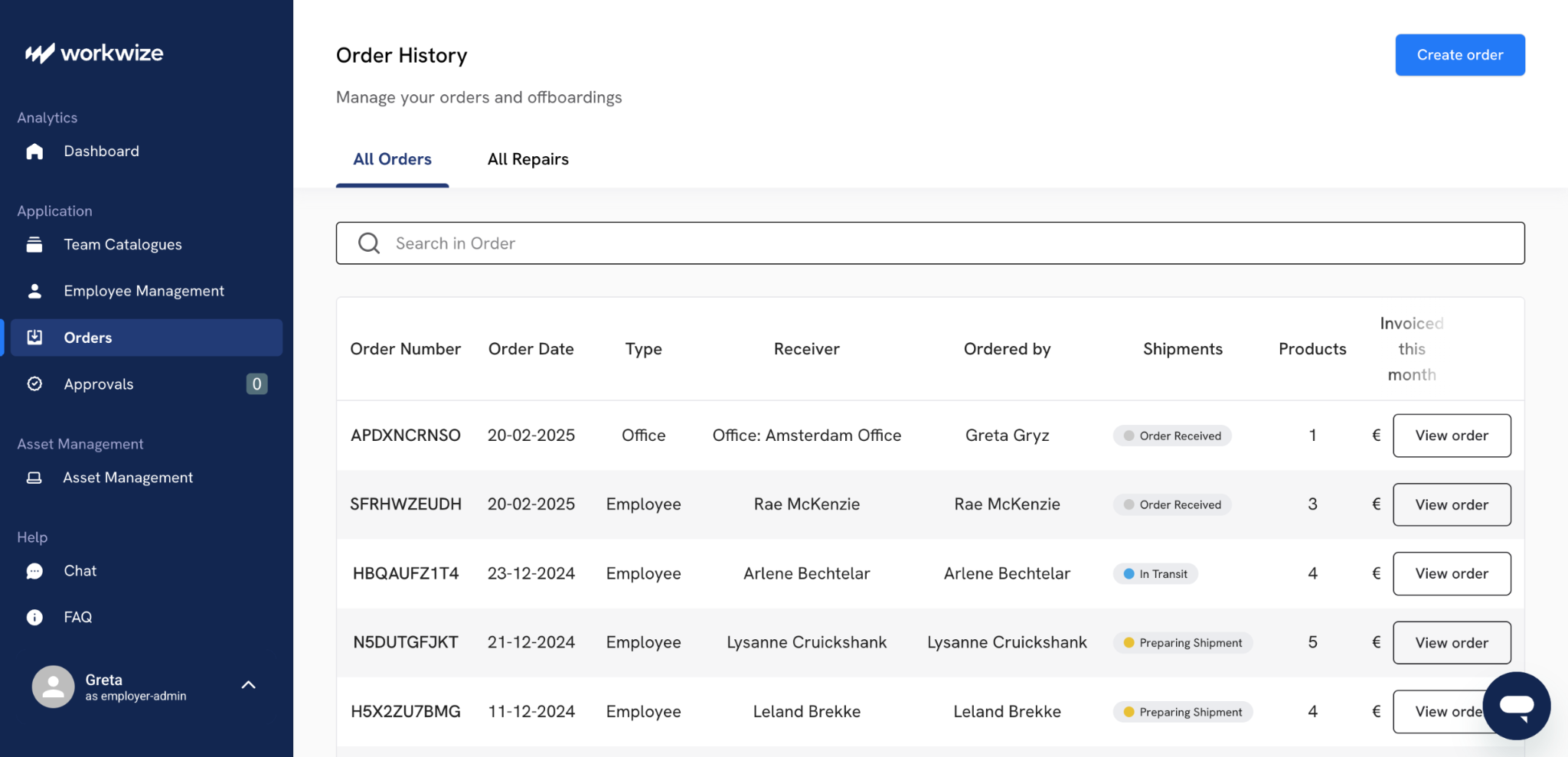
The self-service portal lets your employees choose from a pre-approved catalog, and your IT team maintains control over device standardization. The catalog itself is very broad, covering over 1200 SKUs.
In case you don’t find an item you need, you can simply request it right from Workwize’s dashboard.
Once you choose devices, delivery typically happens within 5 to 7 business days in regions where Workwize operates directly (primarily Europe and North America).
Outside those regions, particularly in LATAM and APAC, delivery takes 5 to 14 days as orders route through regional partners. This rarely matters for organizations hiring primarily in Western Europe and North America.

Allwhere
Allwhere operates through a global network of 9 warehouses located in the USA, Spain, the United Kingdom, Mexico, Brazil, Peru, Argentina, Colombia, and Uruguay. This helps them deliver and retrieve IT equipment across 48 countries with ease.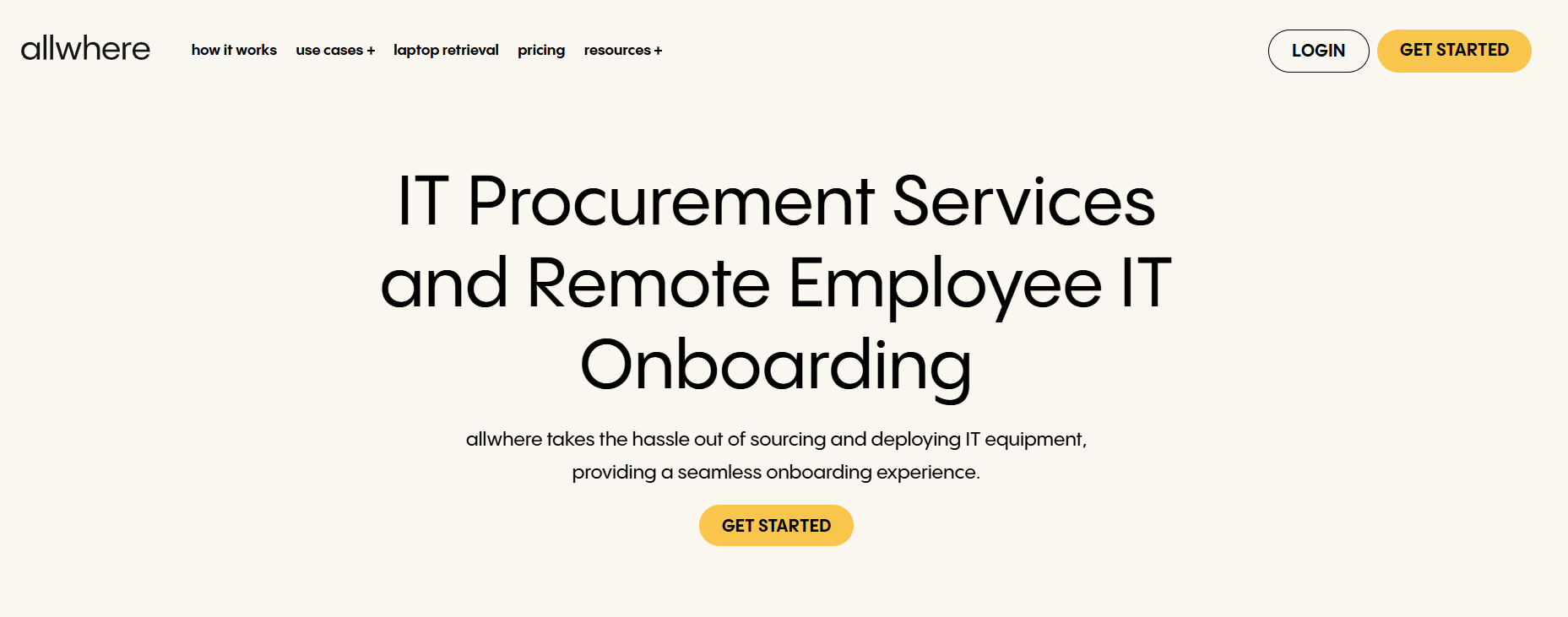
They have a massive catalog that also includes furniture and company swag, as well as regular IT equipment such as laptops and workstations. Like Workwize, Allwhere also lets you request new items.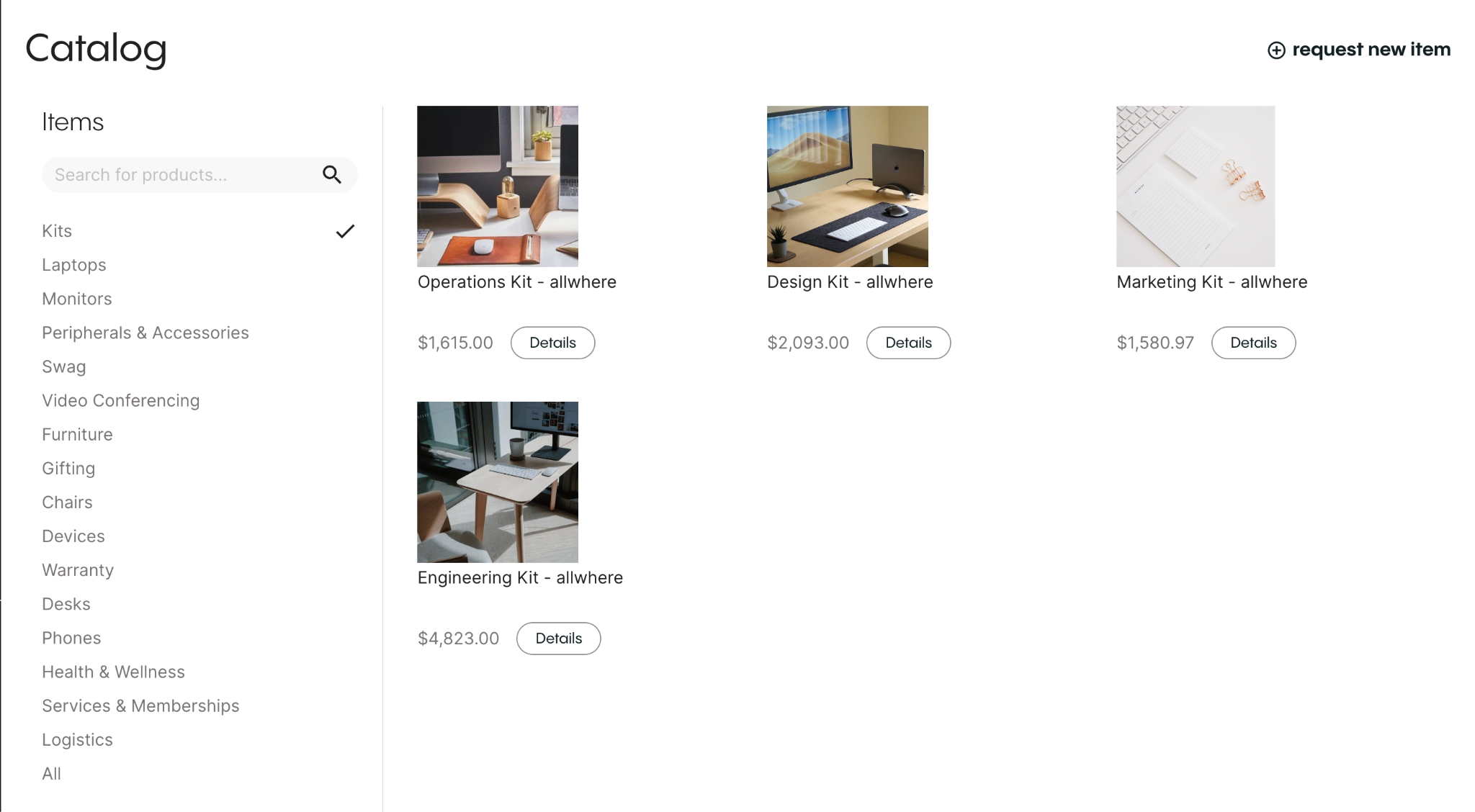
They share different timelines for procurement and deployment:
- If Allwhere has to procure and ship a device, it would take them 4-6 business days in the US and Canada, and 7-10 days in other locations they support.
- If they have the items you need, it’ll be considered a deployment order. And this will take 4-6 days in the US, Canada, the EU, and the UK.
- Allwhere also offers expedited deliveries that cut the delivery time to just 1-3 business days.
Note. You can add up to 48 hours more if you request manual autopilot enrollment.
Winner: Workwize (for supporting more than double the locations)
Workwize is more global, supporting procurement and deployment across 100+ countries, compared to Allwhere’s 48.

Automation and HRIS Integration
Workwize
Workwize gives you native integrations with over 70 HRIS platforms. Popular options include BambooHR, HiBob, Workday, Rippling, Gusto, Deel, Personio, ADP, UKG, SAP SuccessFactors and Oracle.
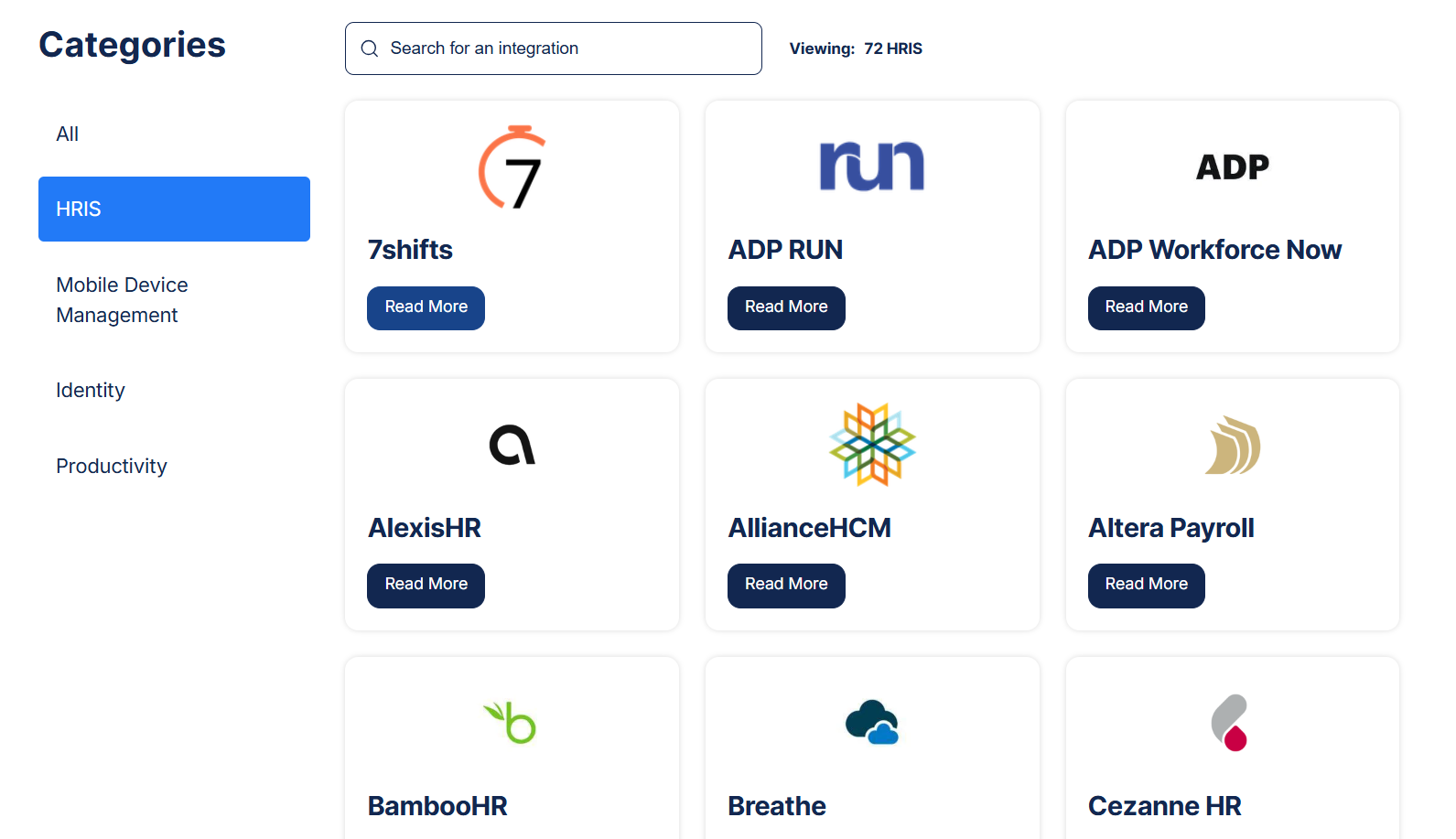
It also connects with Active Directory and SCIM for user provisioning and with identity providers like Okta, OneLogin, Azure AD and JumpCloud.
When your HRIS registers a new hire, Workwize automatically triggers device procurement based on the employee's team and role.
This plug-and-play integration with HR platforms actually takes the burden off IT teams, as this verified user reports:
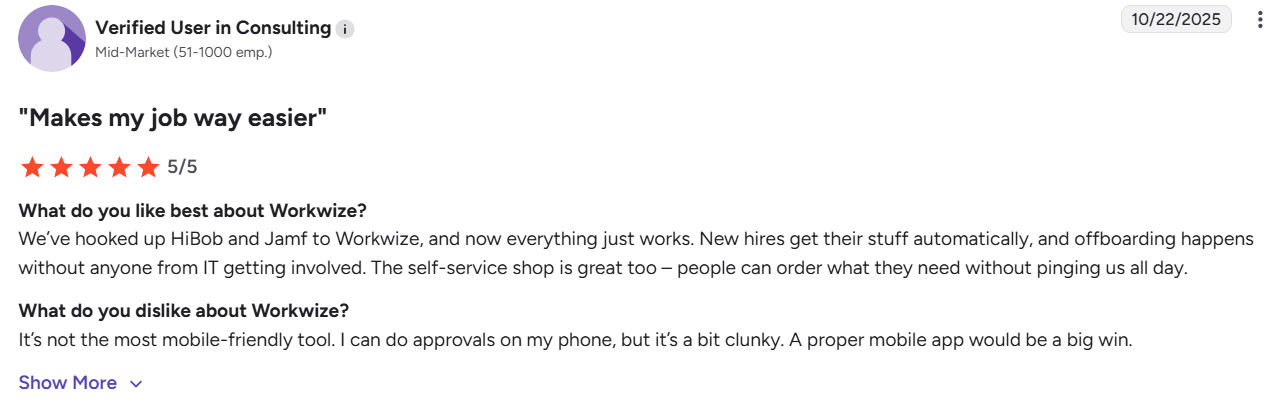
Source: G2
The same applies to offboarding; when HR enters a termination date, the system schedules retrieval, revokes access, and updates asset status without your intervention.
Notifications are sent via Slack or Microsoft Teams to keep stakeholders informed. The depth here is important if you’re running complex HR workflows, as Workwize can likely connect to whatever system you're already using.
Workwize also lets you build end-to-end automated workflows. For instance, you can create a deployment kit and set some conditions. 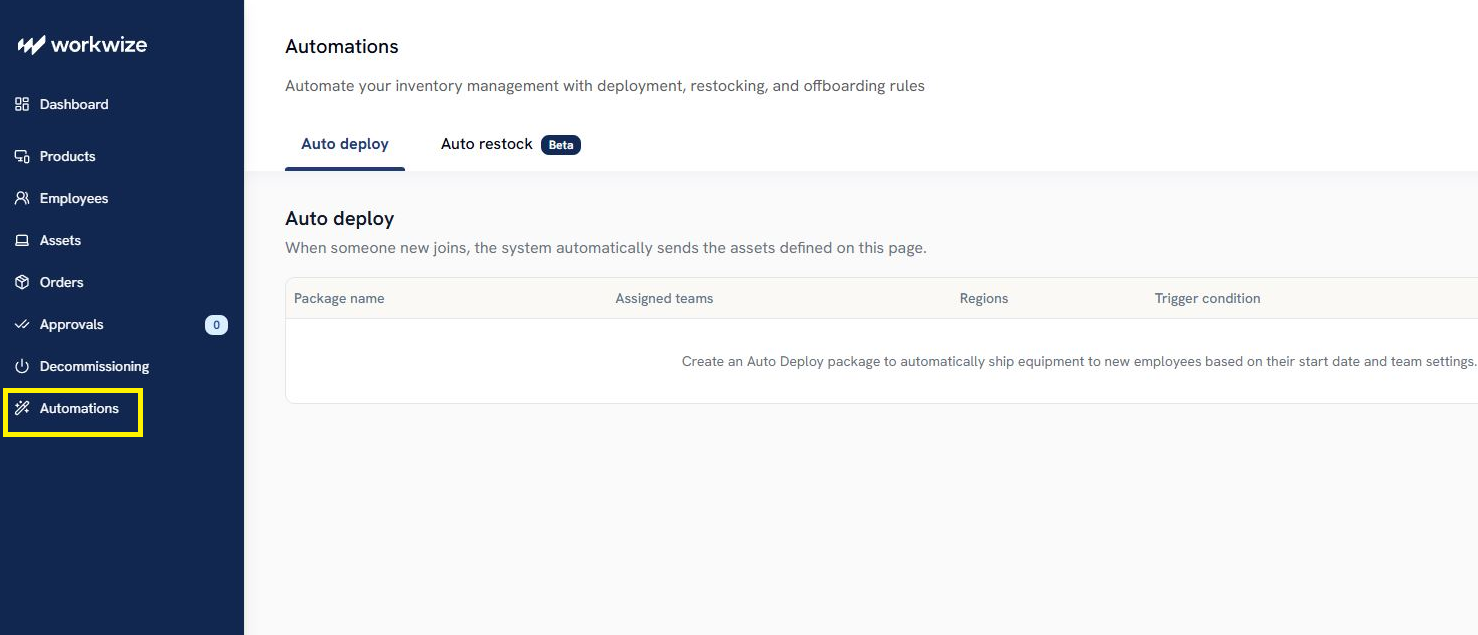
When those conditions are met, the deployment kit (which includes pre-defined assets) is shipped and delivered without manual ordering—end-to-end procurement automation.
Allwhere
Allwhere natively integrates with 48 HRIS platforms, including BambooHR, HiBob, Lattice HR, PageOne, SageHR, UKG Pro, and more.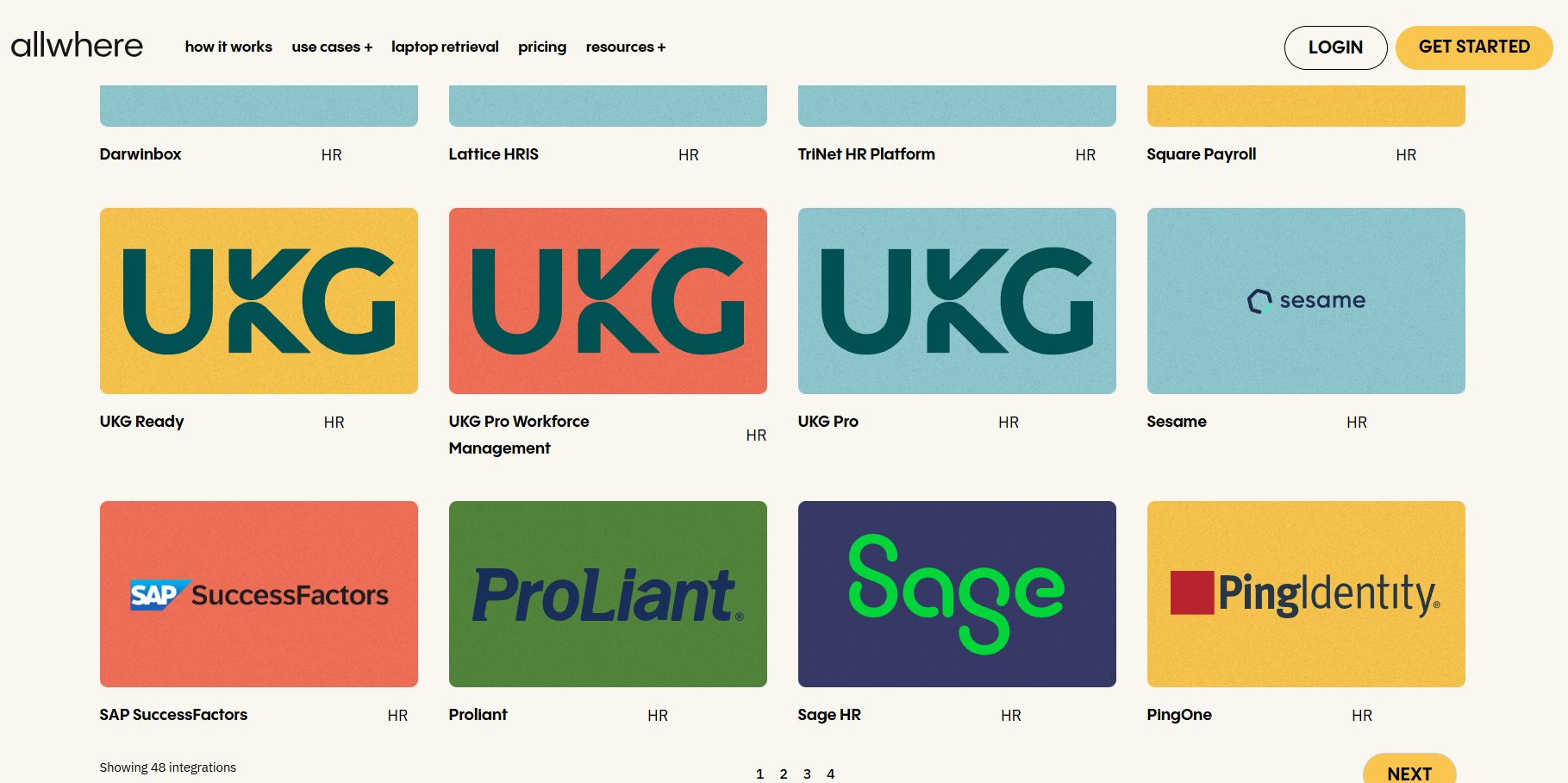
Source: Allwhere
Similar to Workwize, you can connect your HRIS (like HiBob) with Allwhere to create automated workflows for employee onboarding and offboarding triggered by HR events.
So, the HR adding an employee to HiBob triggers onboarding, and updating the termination date (or some similar event) triggers offboarding.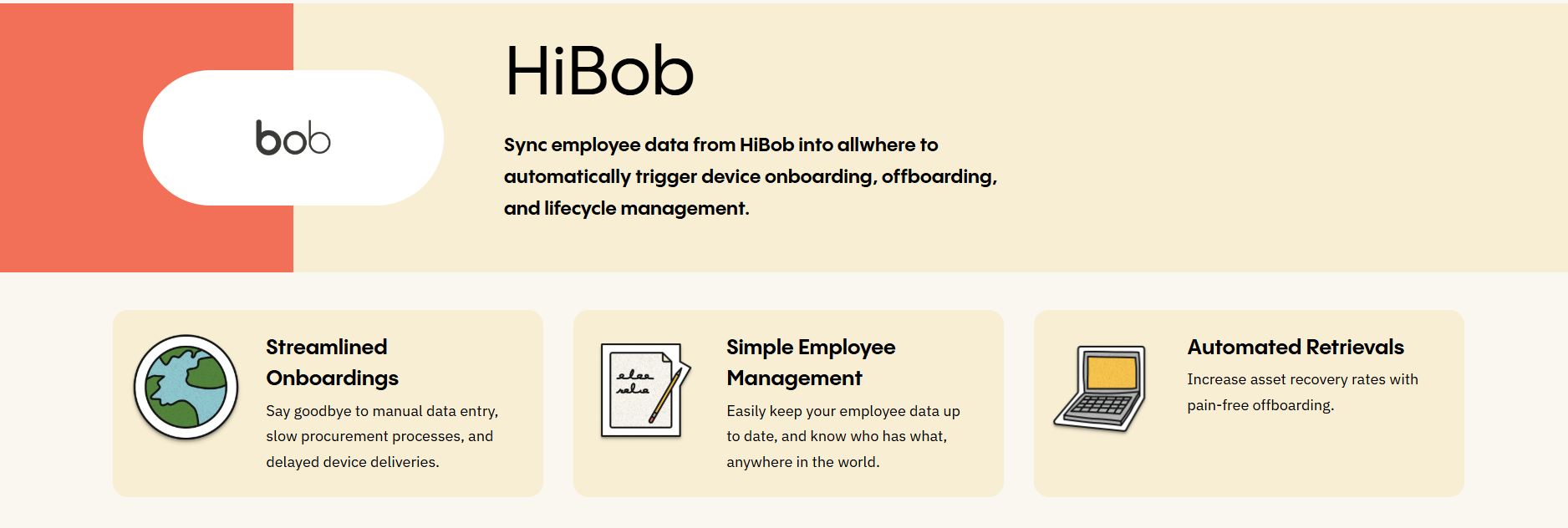
Source: Allwhere
And the total number of integrations HiBob offers is 53, which is lower than Workwize’s 82
Winner: Workwize (for the higher number of integrations)
Both Allwhere and Workwize support end-to-end automated workflows triggered by HR events.
However, Workwize offers 82 plug-and-play integrations, out of which 72 are HRIS platforms. And Allwhere offers 53 integrations in total, and 48 of them are HRIS tools.
More integrations mean you have a better chance of connecting the platform to your existing HR and IT stack. This reduces manual work, improves automation, and makes implementation easier.
Plus, Workwize’s automation capabilities are more hands-off than Allwhere, since you can enable zero-touch deployment and restocking.
Asset Visibility and Tracking
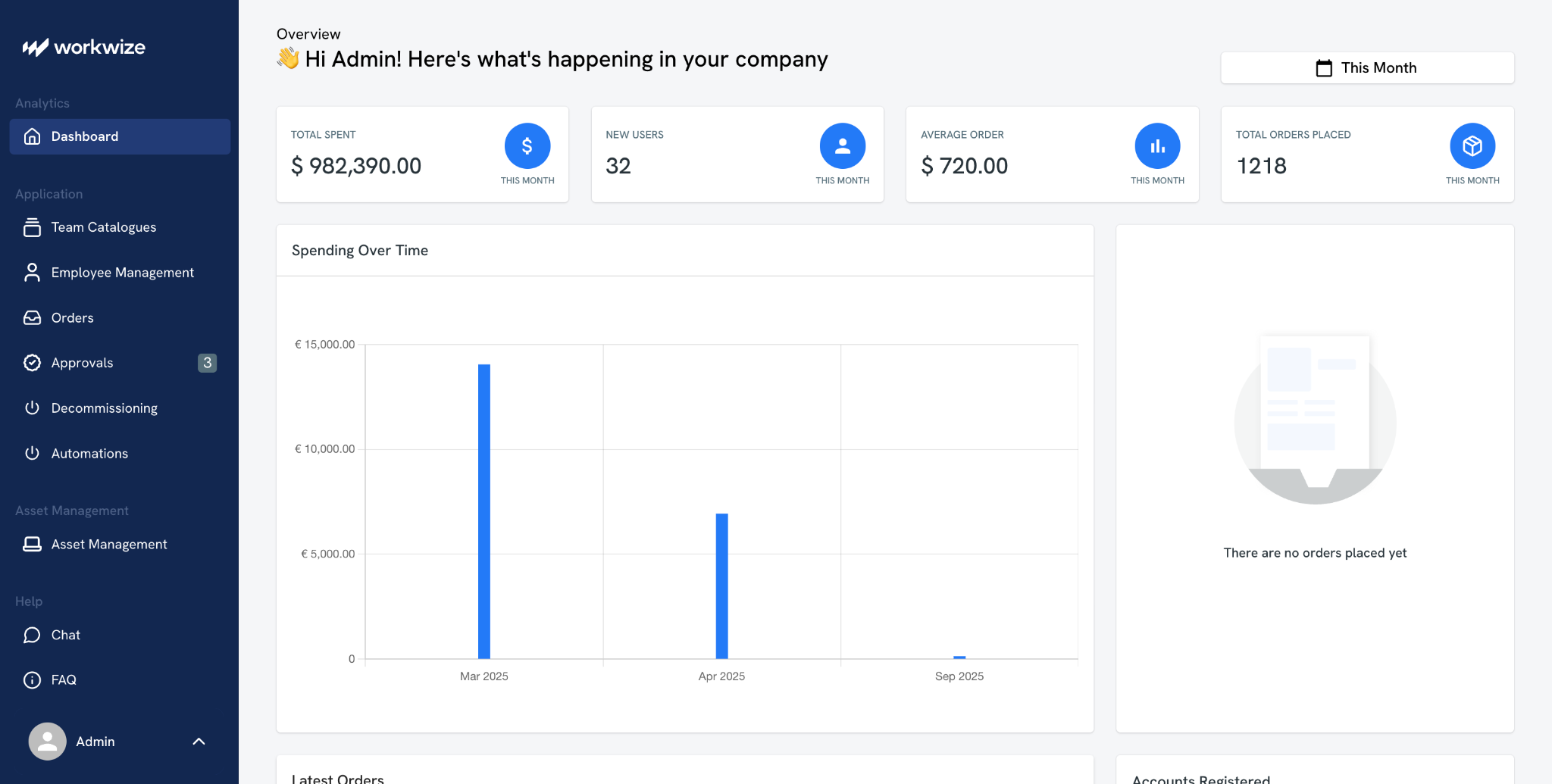
Starting with Workwize’s dashboard, you get an overview of the total money you’ve spent, the number of orders placed, new users, and a summary of orders and their status.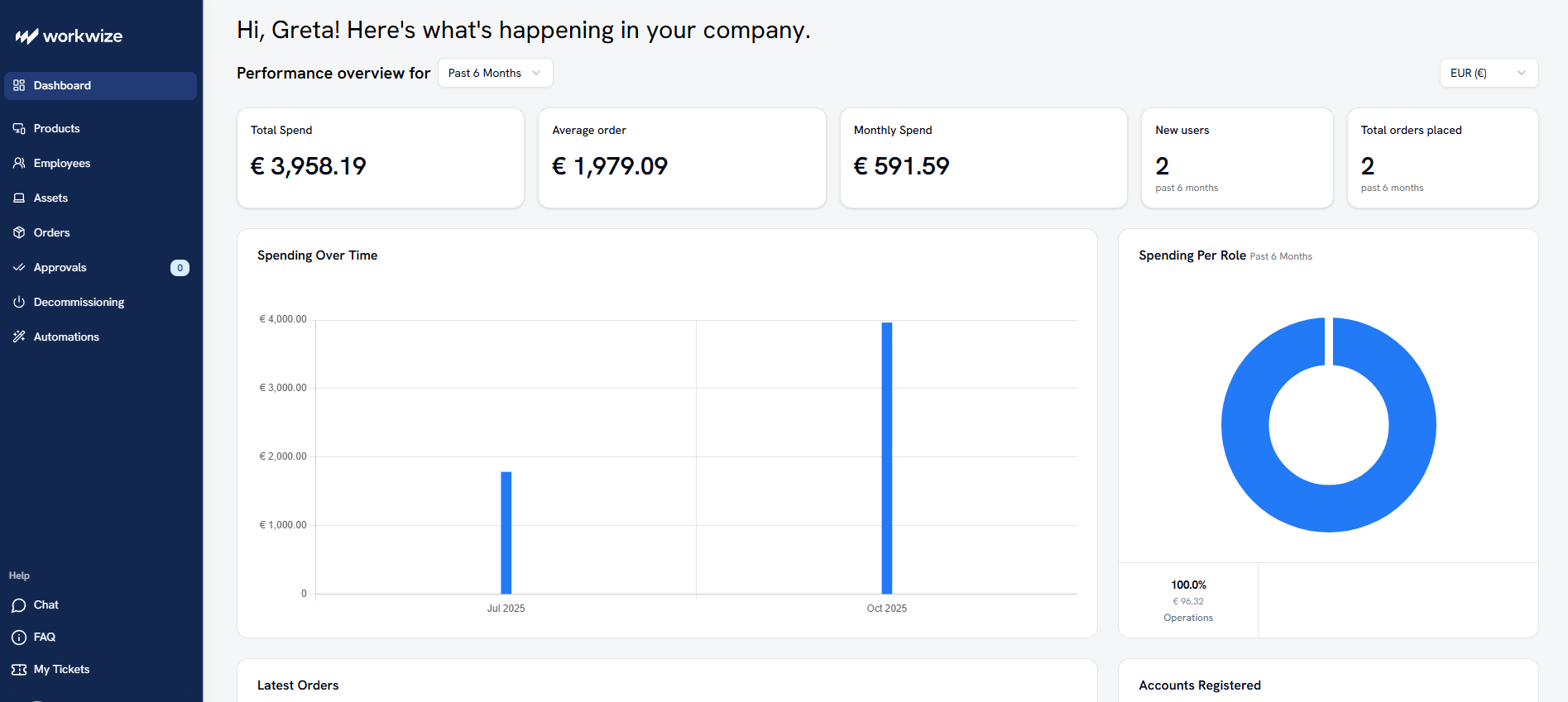
When you visit the assets section, you can view all the assets you have and click any asset to dive deeper. This dashboard basically answers the following questions:
- How many assets do you have?
- Who has which device?
- When were the devices issued?
- When are the assets due for return?
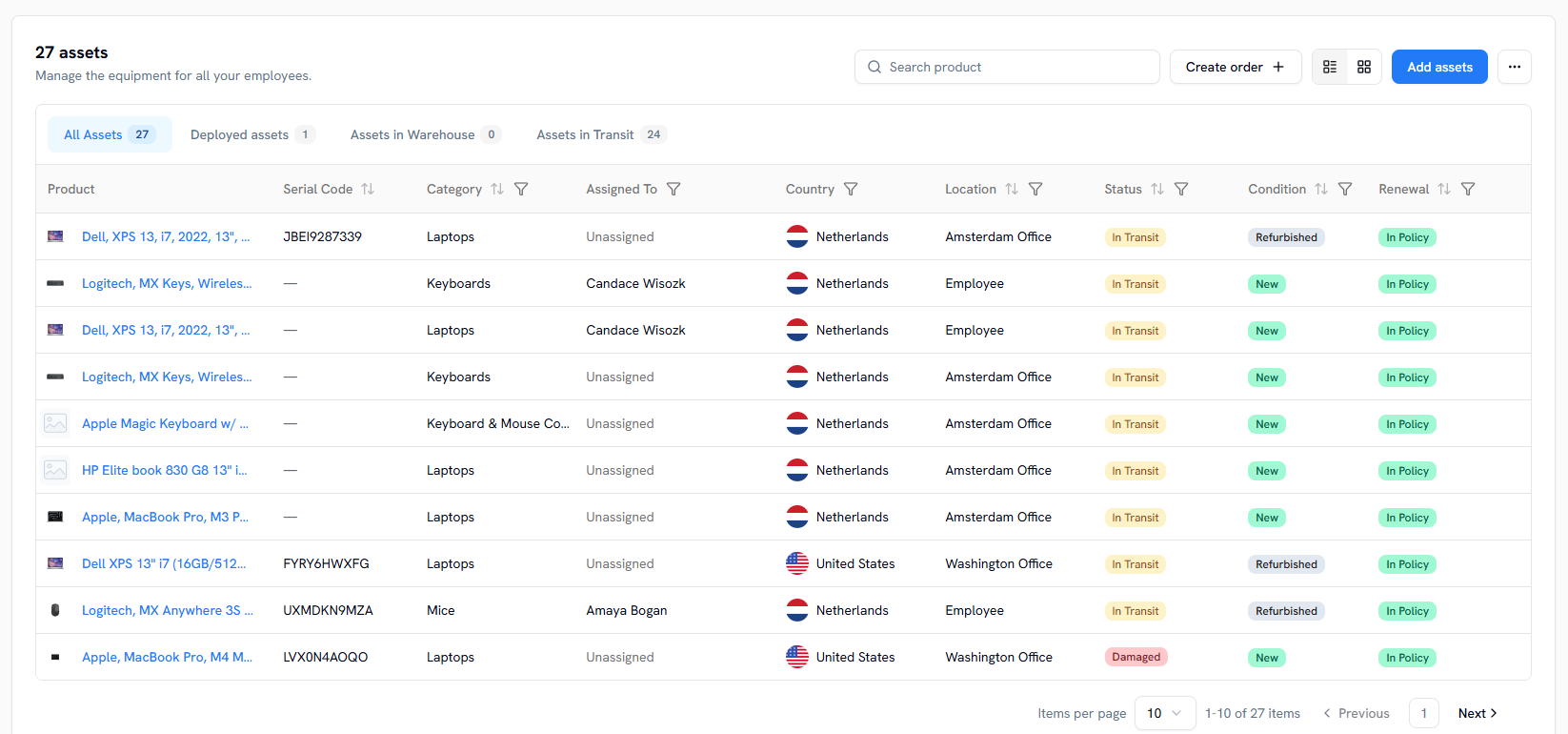
In addition, Workwize includes built-in automatic compliance tracking, ensuring assets adhere to company policies and industry regulations without manual tracking. The dashboard sends automatic alerts for upcoming renewals, warranty expirations, and device replacement needs.
And the orders section helps you track all the orders you’ve placed, their status, repairs, and even offboardings.
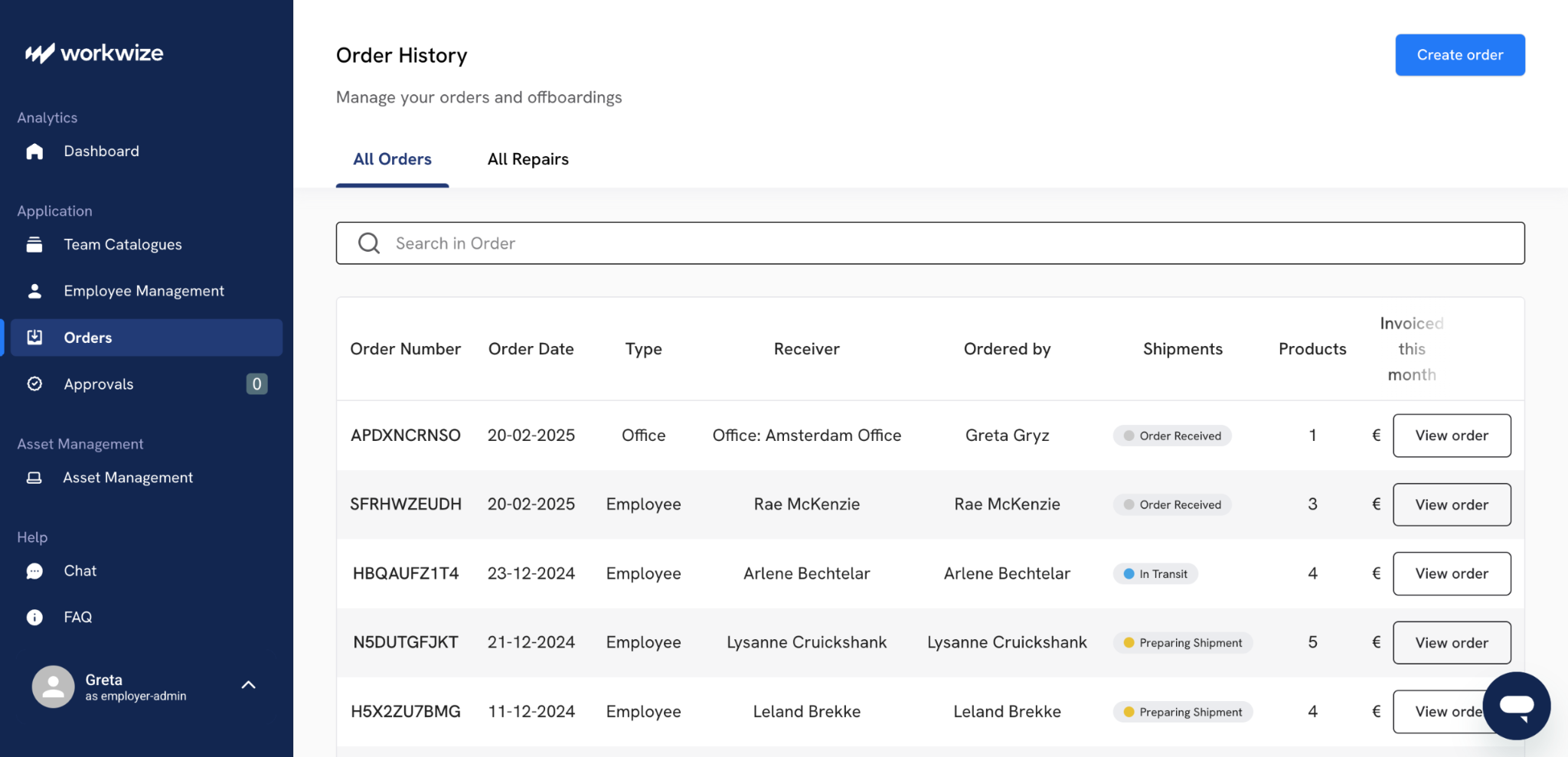
Workwize, in essence, serves as your system of record for all your IT assets. 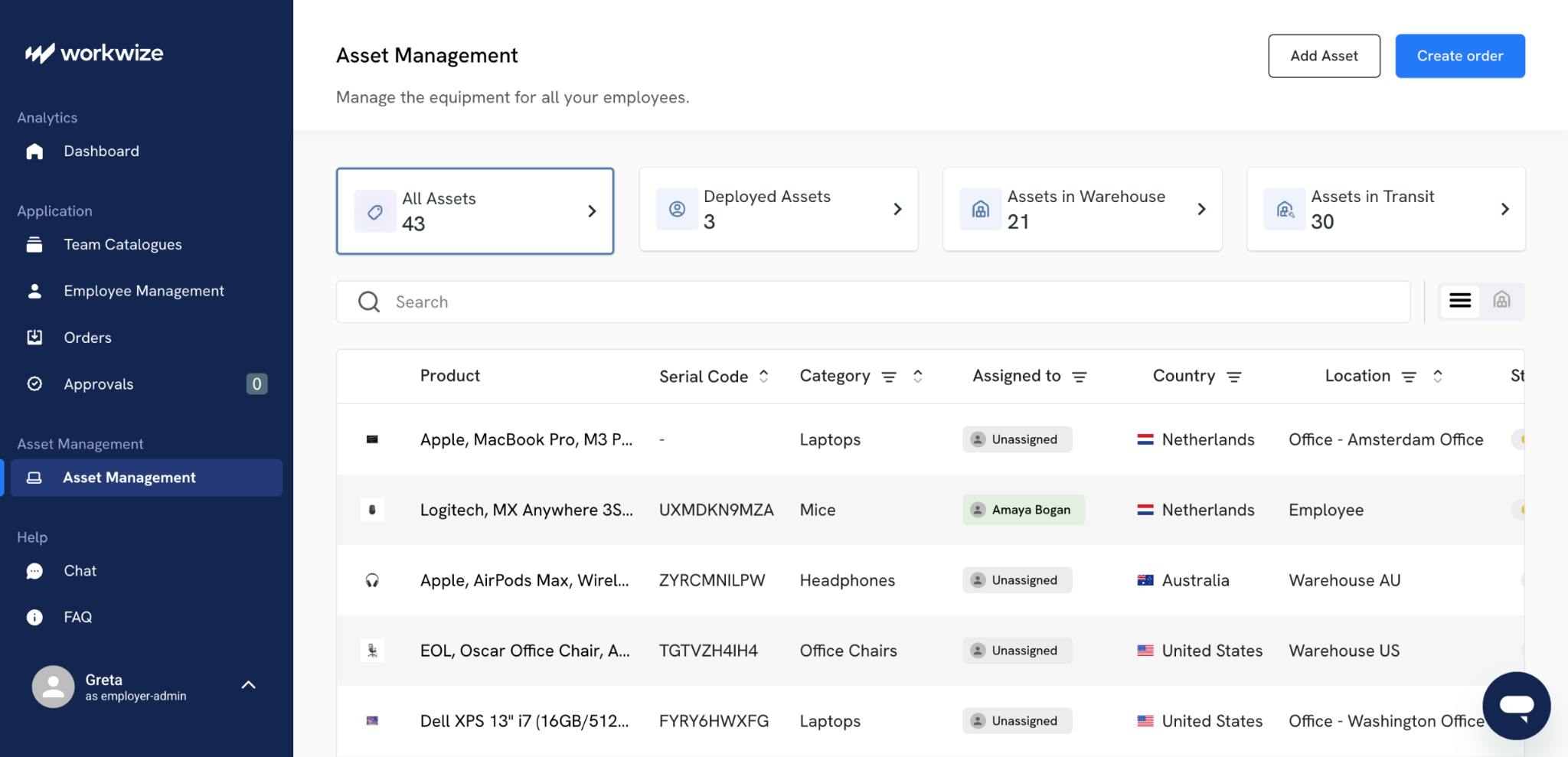
One G2 reviewer specifically called out the smooth tracking of IT assets in his review:
Via G2
Allwhere
Based on its release notes, Allwhere has worked hard to improve its visibility and asset tracking.
Their dashboard gives you an overview of multiple things, including recent updates on devices, total assets allocated to employees, total orders, and anything that needs your attention.
A particular thing I liked is the number of hours saved. This metric actually tells you the hours you saved by using Allwhere, which makes it easy to determine the ROI: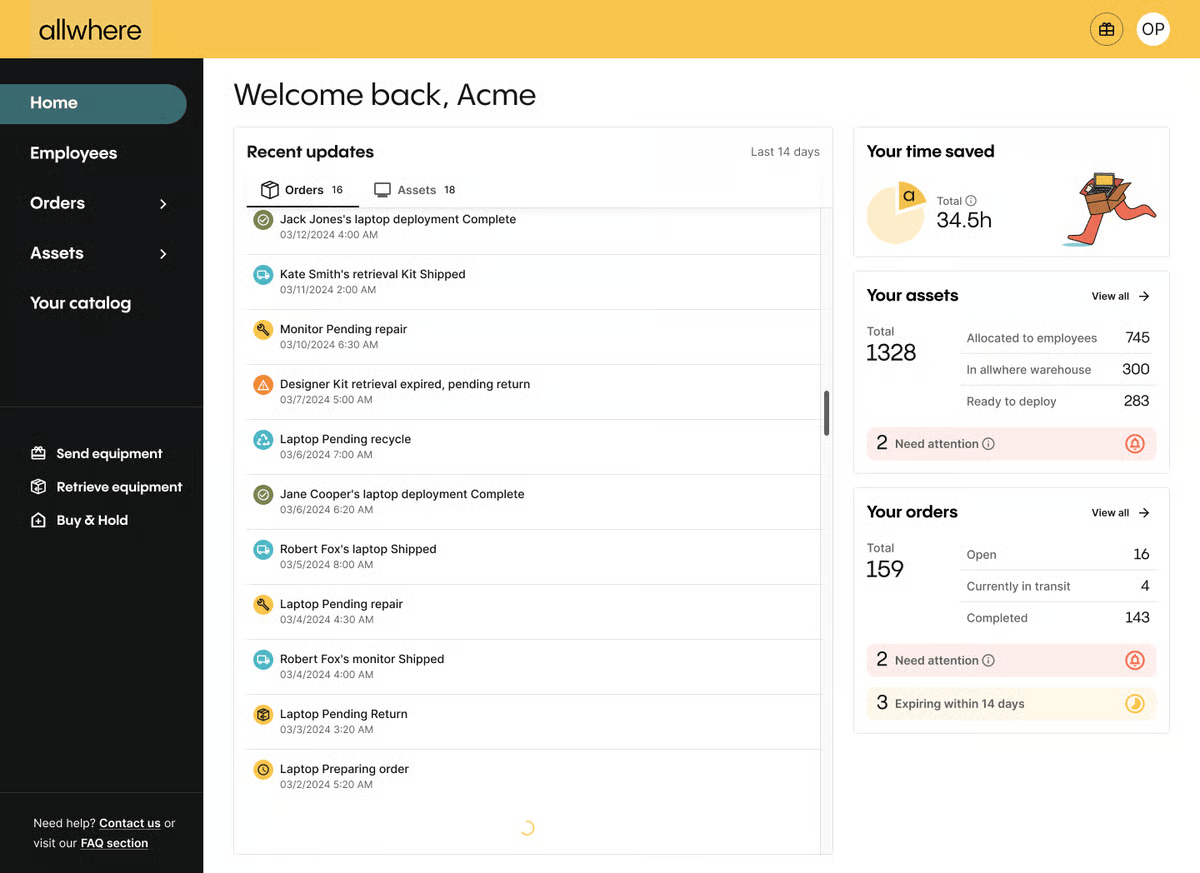
Then there's the orders dashboard, which tells you about the orders you’ve placed. You can see the status, type of order, date, destination, and estimated delivery date, among other details.
There are the orders.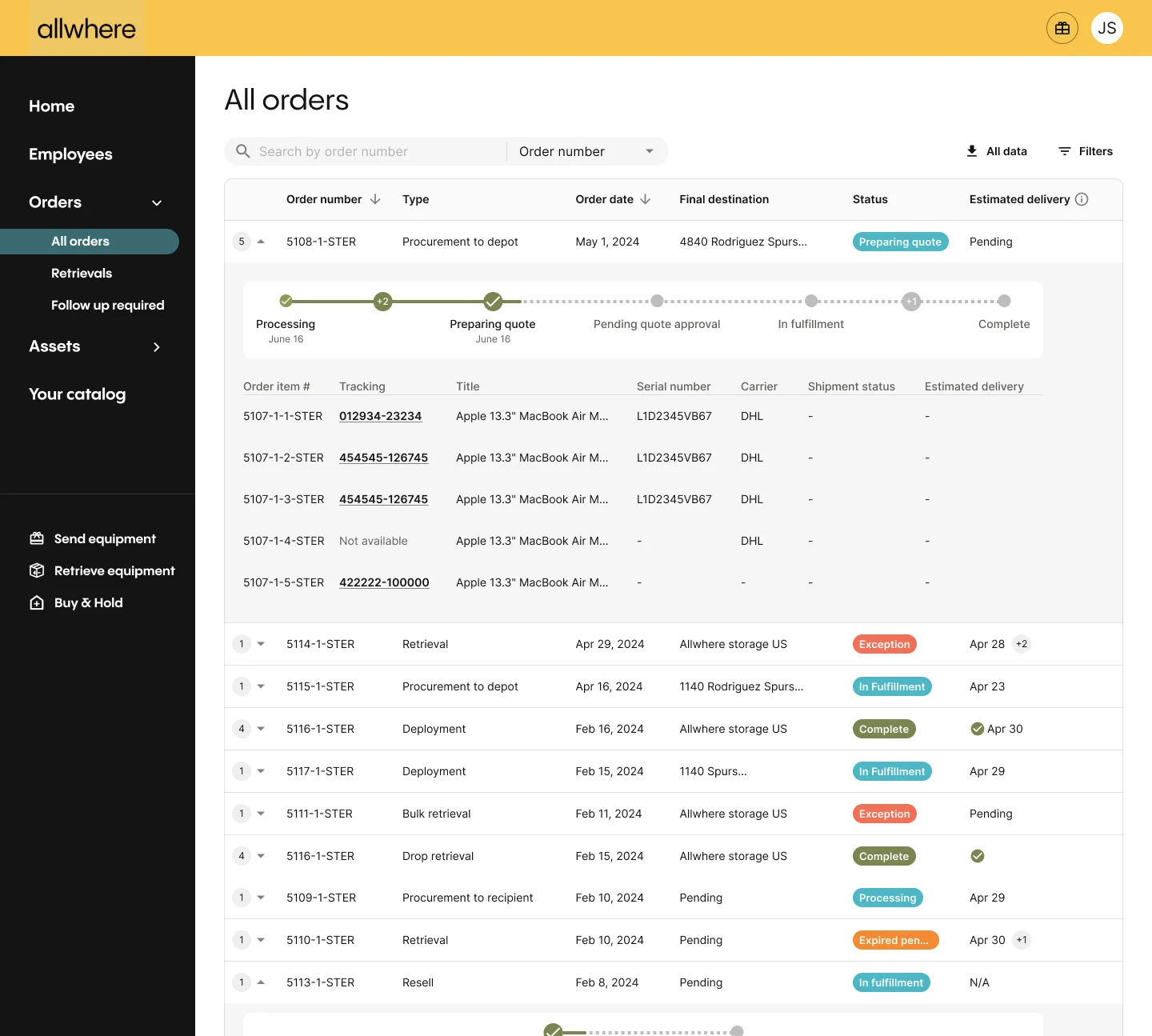
And the devices tab tells you the asset type, make, model, condition, location, purchase date, status, and other details. You can click on a particular asset to dive deeper: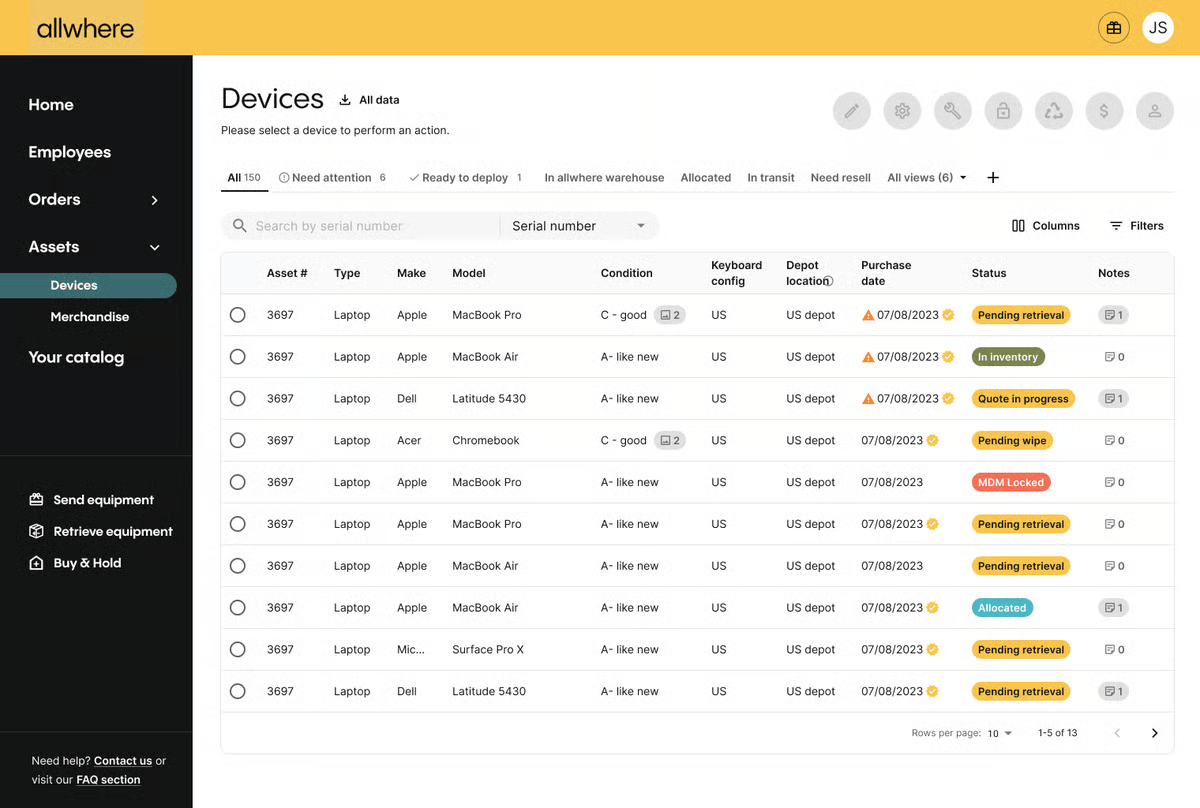
Even independent users on third-party review sites like G2 praise Allwhere for offering clarity and transparency on the hardware in stock and in transit:
Source: G2
Winner: Tie
Both platforms offer strong visibility into assets and orders, and the currently available evidence does not clearly prove that one is materially better than the other.
Offboarding and Device Retrieval
Workwize
Workwize integrates with your HRIS platform and initiates retrieval as soon as the employee’s termination is updated. Add a few details, and your retrieval is now booked.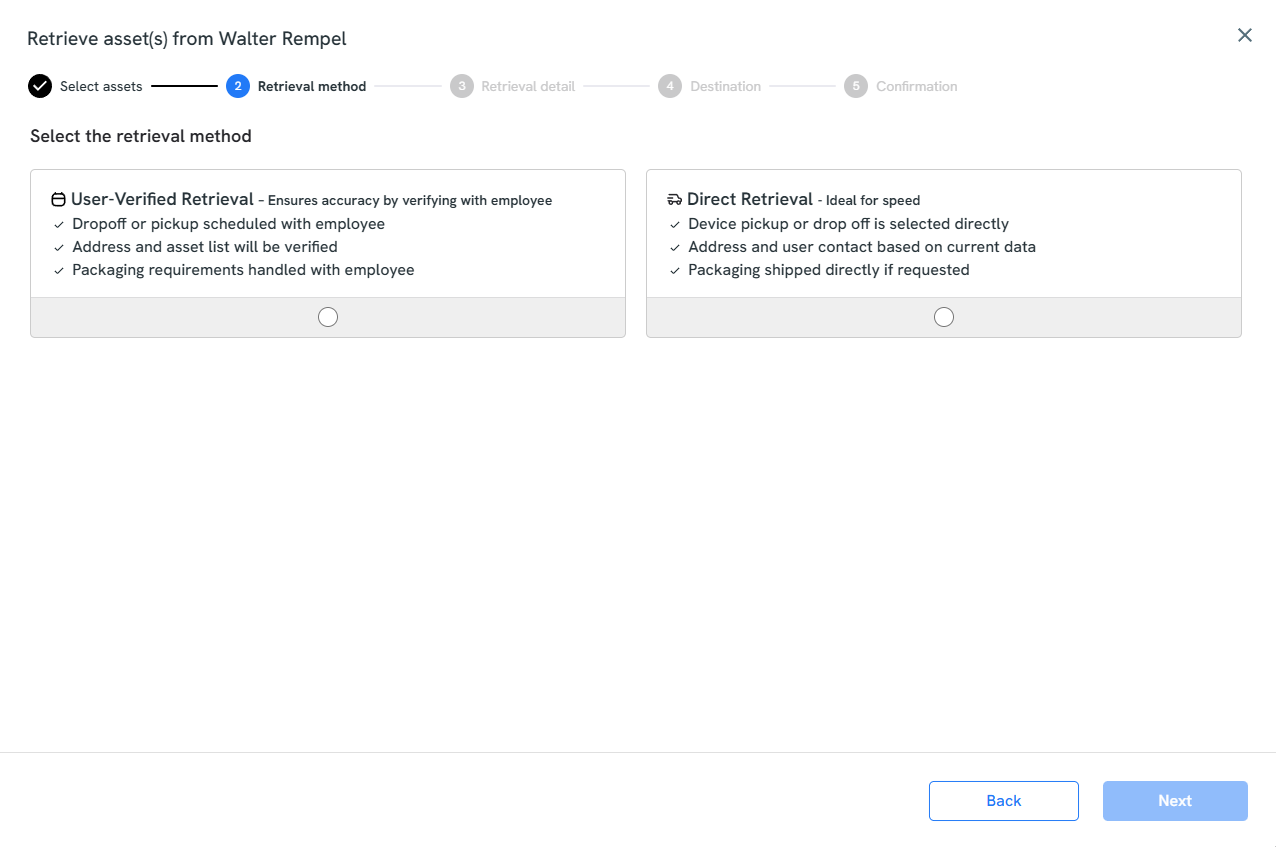
Workwize sends your employees a secure package with instructions and offers to pick up the devices or have them drop them off at the nearest courier point. This makes it convenient for the employees and increases the chances of return.
And throughout the process, you get real-time updates and alerts, reducing the risk of losing the device in transit.
In addition to supporting 100+ countries and offering end-to-end IT asset management services, Workwize boasts a 100% hardware retrieval rate, which is unmatched among platforms on the list.
Allwhere
With Allwhere, you can manually start a return by adding basic information or trigger it based on HR events, similar to Workwize.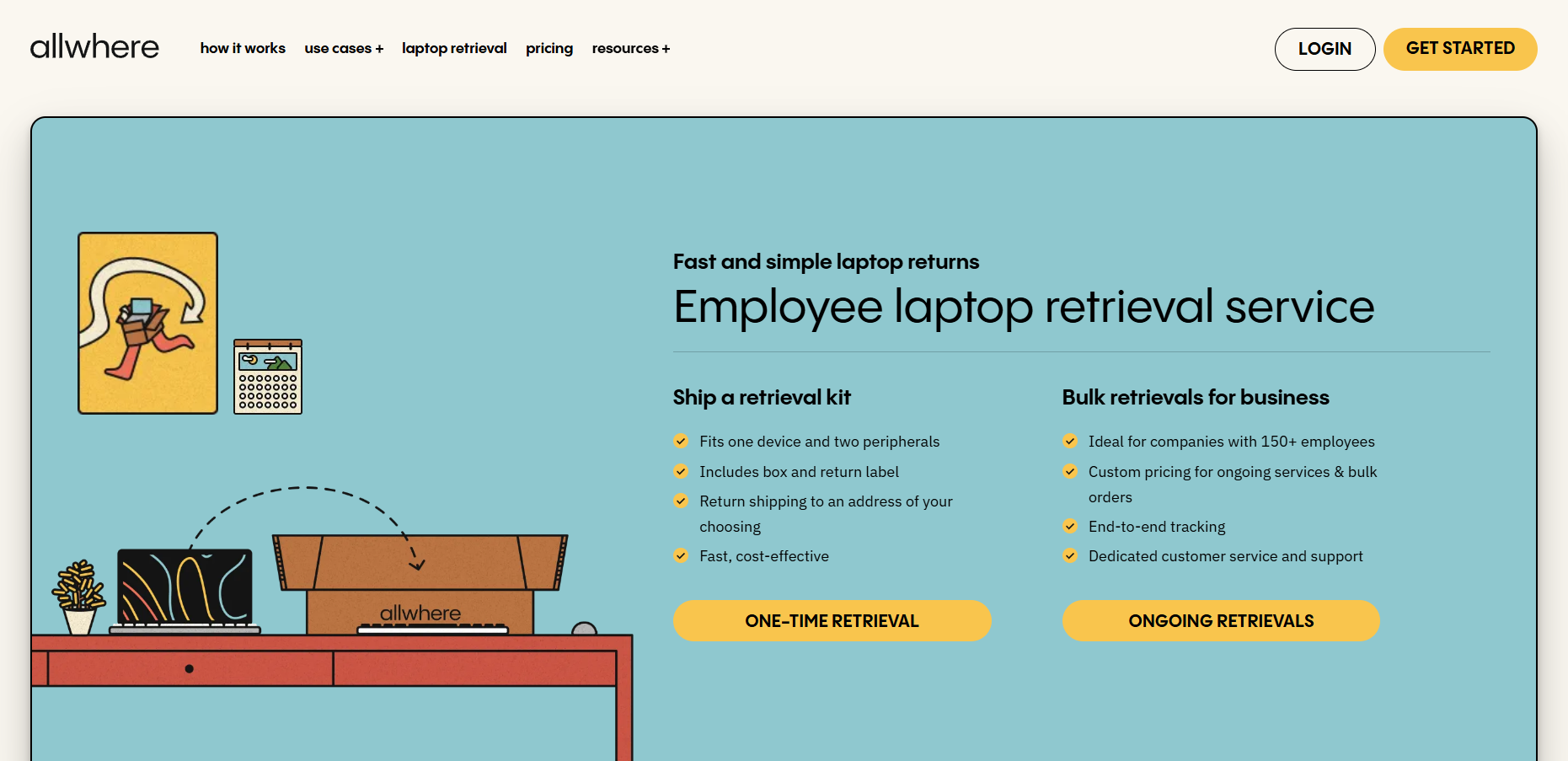
For users within the United States, Allwhere sends a padded box with packing materials, instructions, and a prepaid return label. The employees can pack the devices and have them picked up.
But this isn’t a standard practice. During my research, I found that for countries in the EU, Allwhere’s shippers don’t ship a return kit directly to the recipient’s address. Instead, the employee must pick up the retrieval kit from a nearby location, which can be inconvenient.
Plus, Allwhere supports returns in around 48 countries, which pushes enterprises looking for a wider global coverage away.
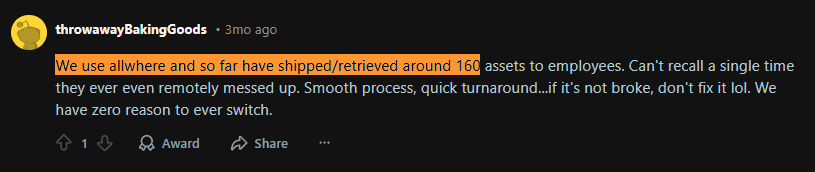
Due to limited third-party reviews, I also reviewed Reddit communities and found nothing but positive feedback about Allwhere. For instance, this user reports they’ve shipped/retrieved 160 assets and never faced a problem:
Source: Reddit
Winner: Workwize
Workwize supports significantly more retrieval locations than Allwhere. Plus, Workwize offers greater flexibility and a standardized experience for shipping retrieval kits and retrieving devices from employees.
IT Asset Disposal and End-of-Life Management
Workwize
Because Workwize offers end-to-end lifecycle management, it supports all the end-of-life activities after retrieval: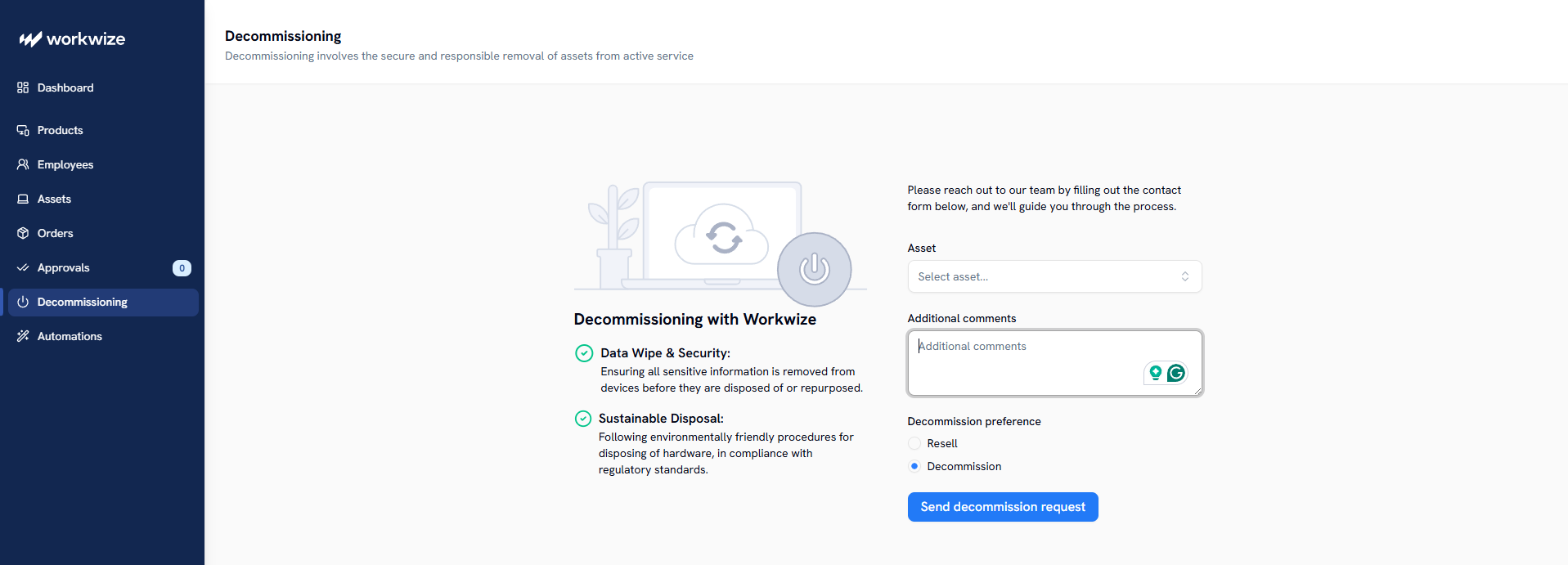
After retrieval, the devices are delivered to Workwize’s warehouses for certified data wiping (per NIST 800-88 standards), based on your preferences. You can then repurpose/reassign the devices, recycle, dispose of, or resell the devices to recover up to 45% of their residual value.
A great thing about Workwize is that it issues a credit note when you process a resale request and eventually credits the money to your account. This improves your ROI and reduces the device's overall cost of ownership.
Allwhere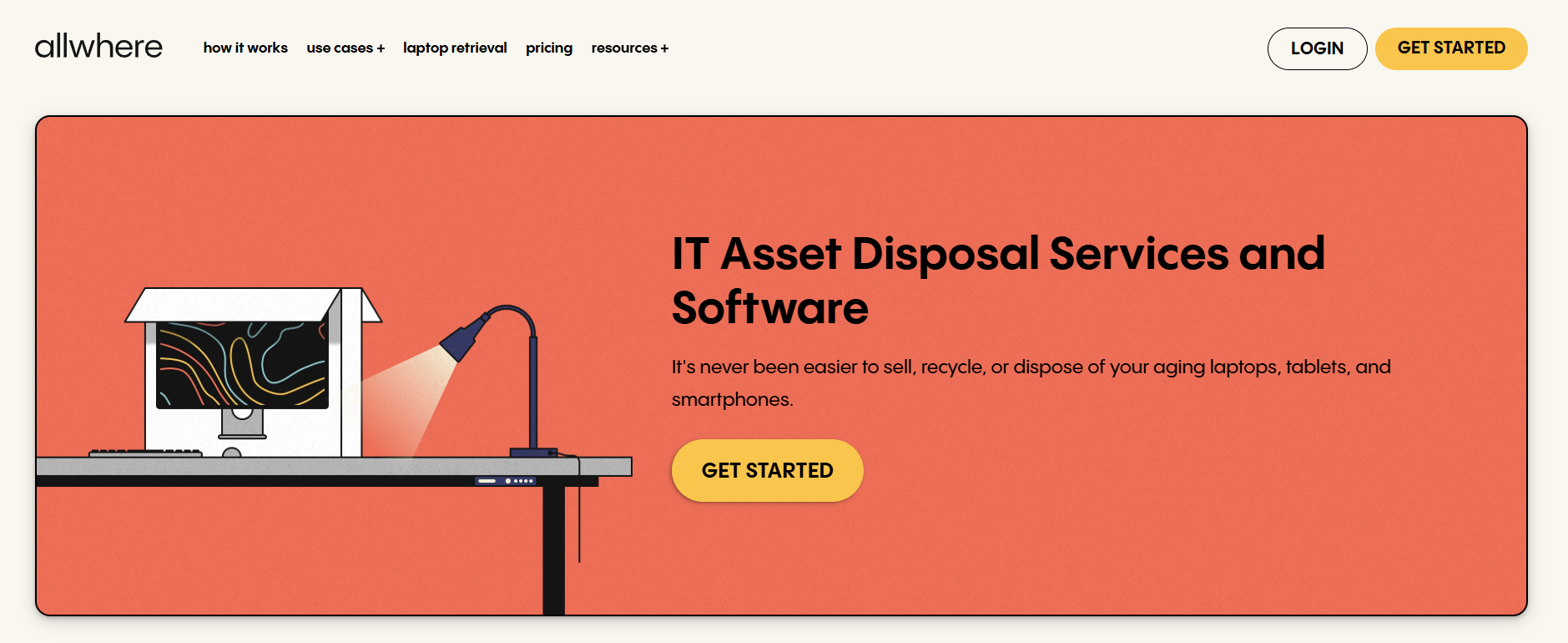
Allwhere also helps you perform the necessary end-of-life activities. You can recycle, resale, donate or dispose of the device, based on your preference. Similar to Workwize, each device is securely wiped in alignment with NIST 800-88 Rev. 1 standards.
What makes it different from Workwize is that Allwhere offers the resale value as platform credit and doesn’t send it into your account. So you kind of get locked into the platform for further procurement.
Winner: Workwize (for not locking in the users)
Both Workwize and Allwhere support end-of-life activities, including reassignment, disposal, recycling and resale.
But when it comes to reselling devices, Workwize lets the companies use the recovered value as they see fit. And Allwhere forces companies to use those funds when buying new equipment through their own platform, locking users in.

Ease of Implementation and Scalability
Ease of implementation is not something you can judge from the vendor’s marketing copy. That is why I went through tens of Reddit threads and real third-party user reviews to find the easiest platform to implement.
Workwize
Workwize is an enterprise-grade global IT asset management solution for fast-moving companies with hundreds or thousands of assets. Therefore, the implementation time is on the higher end.
But Workwize assigns a dedicated implementation expert who helps with the implementation, making it a breeze. Even this Workwize user on Capterra says the support team was available to help with the implementation:
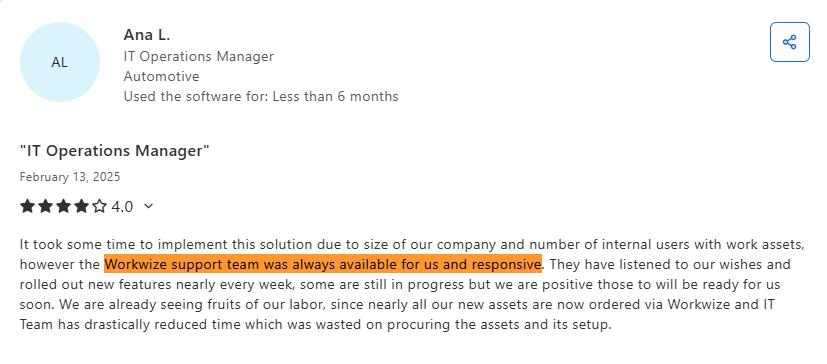
Source: Capterra
As stated earlier, Workwize is an enterprise-grade solution that works the same way for 500 or 5000 assets. Plus, the support for 100+ countries ensures you don’t have to switch providers when you expand to different regions, including LATAM, APAC, or EMEA.
Allwhere
While I could not find user reviews specifically talking about the ease of implementation, no one was complaining either. Most reviews mentioned how easy Allwhere is to use, as this Reddit user did.
Source: Reddit
Here’s another one:
Source: Reddit
While there is no conclusive evidence, Allwhere seems to have fewer mentions of implementation issues than Workwize.
But when it comes to scalability, Allwhere takes the back seat, since it does not support regions like Japan, the United Arab Emirates (UAE), Singapore and South Africa. So, if you’re expanding into these countries or already have a workforce here, Allwhere may not be the right choice.
Winner: Split
Workwize wins for scalability, as it supports more than twice as many countries as Allwhere. And Allwhere wins for ease of implementation.
Pricing and Support
Workwize
Workwize offers 3 primary subscription options:
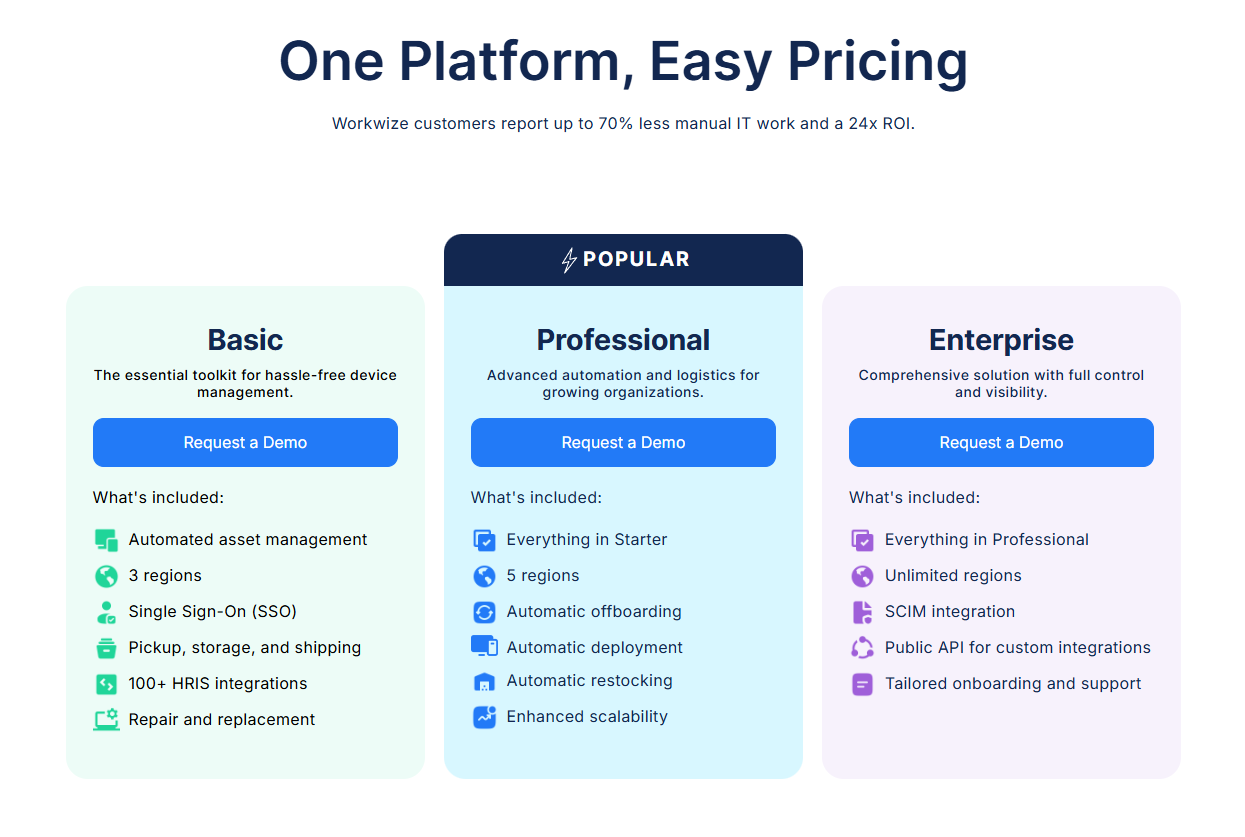
You can get started with the basic plan and gradually upgrade to the enterprise plan if you’re okay with 3 regions initially.
Use this comparison table to identify the right plan:
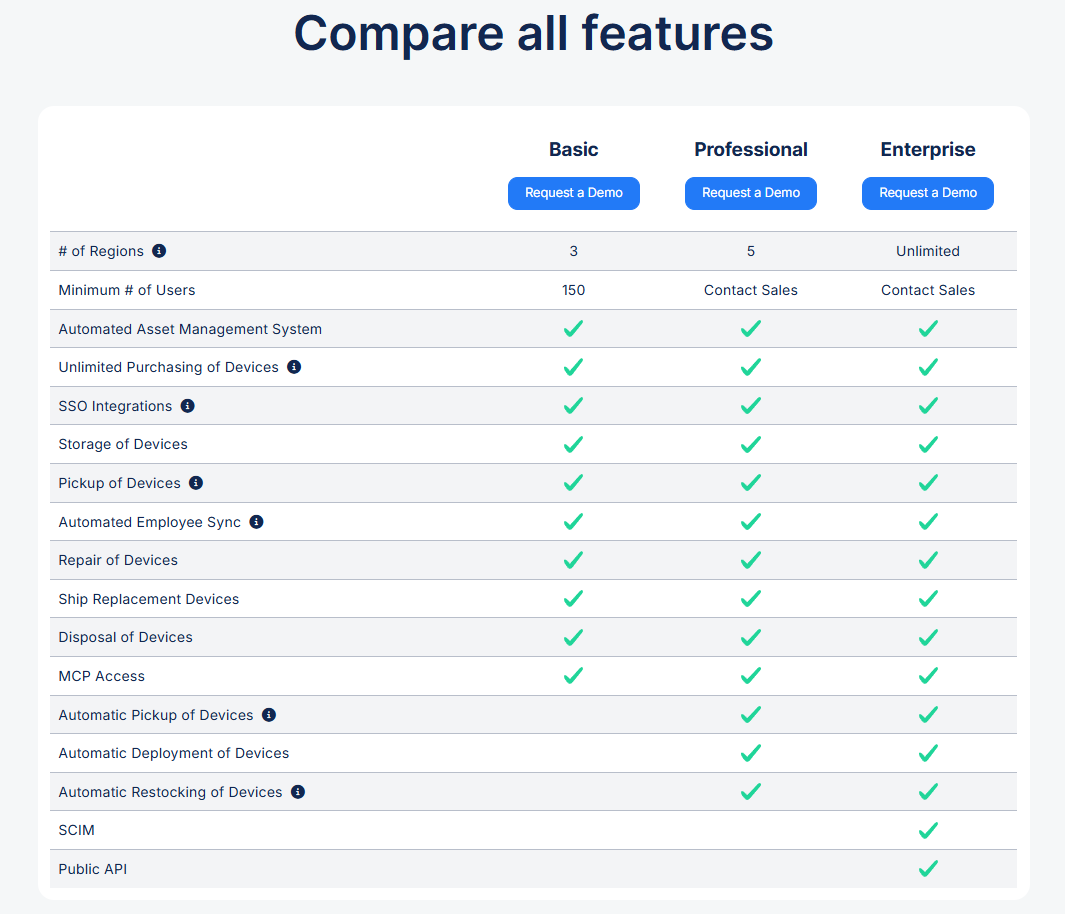
Workwize offers subscription-based pricing, which makes monthly or annual spend more predictable.
Coming to support, Workwize makes it very easy to access help. When you’re in the dashboard, you can access FAQs, raise tickets, or access 24/7 chat options. And you know what the best part is? You can connect to a live agent via chat at any time. 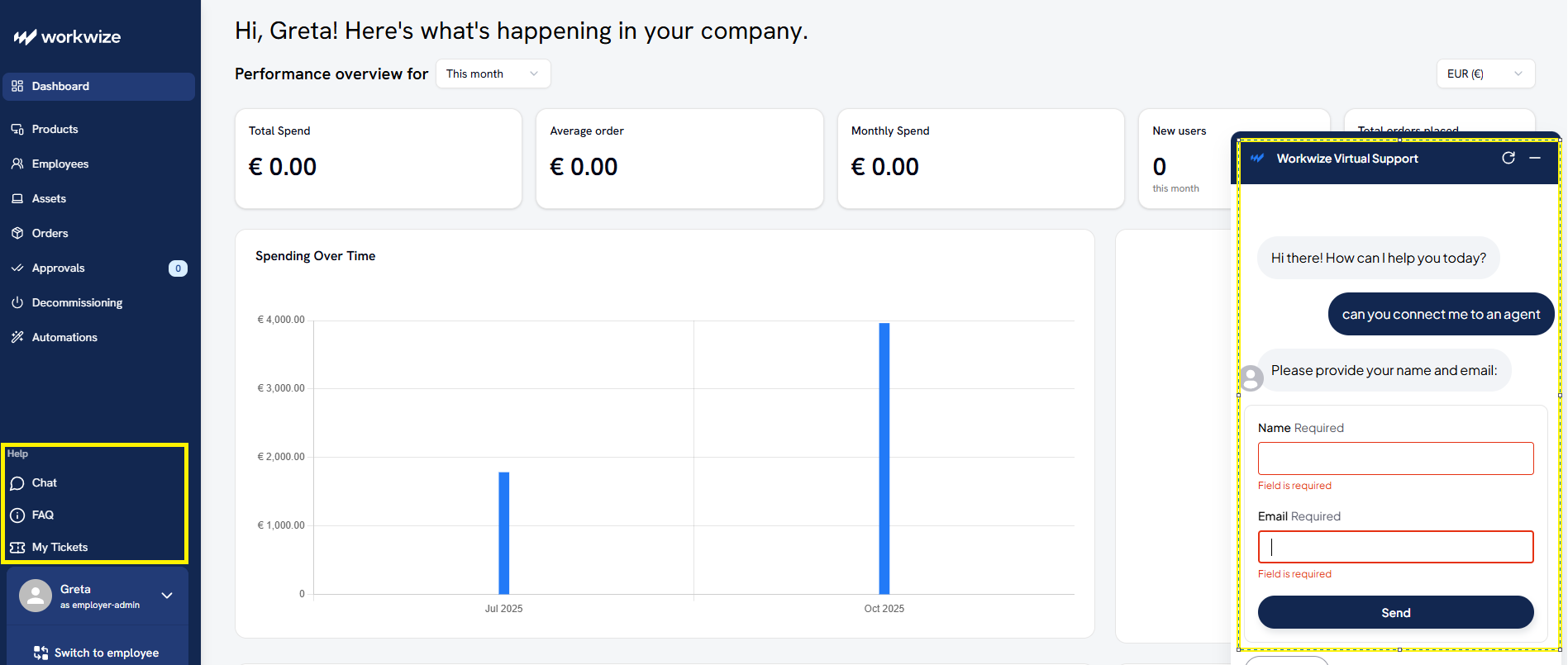
Even this user on Caperra says Workwize offers great support: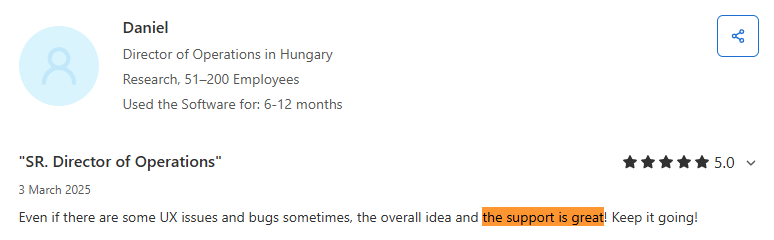
Allwhere
Allwhere is more flexible on pricing, as it lets you pay only for what you need. And this is ideal for smaller companies that want access to enterprise-grade asset management tools but want to keep the CapEx low.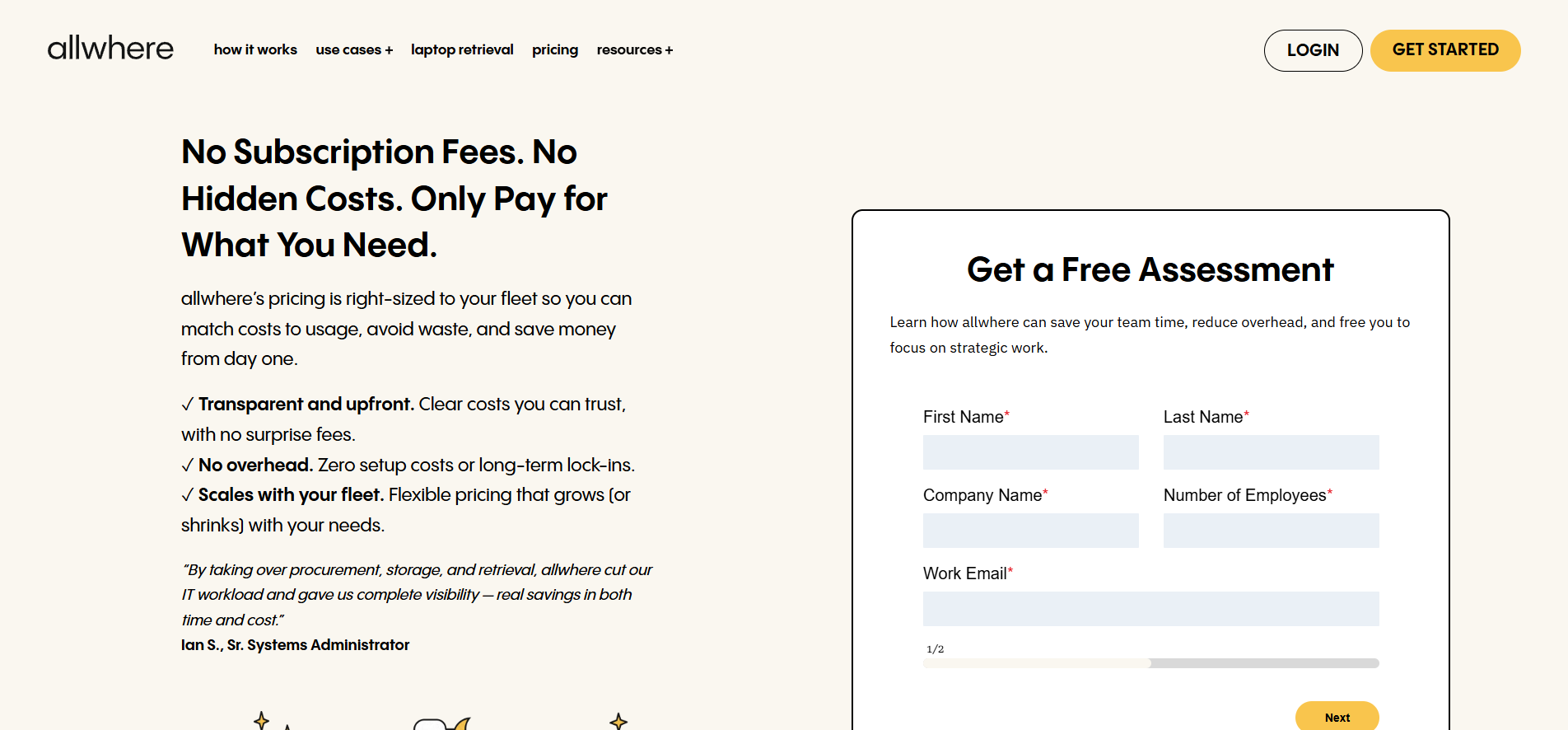
While the pay-as-you-go model is more flexible, transaction-based pricing makes it difficult to forecast expenses.
Regarding support, Allwhere gives you access to its in-depth FAQs section, which is better than Workwize. And you can even raise a ticket.
But what makes it a little less impressive is the chat support. While you’re greeted with an AI bot similar to Workwize, Allwhere doesn’t connect you to a live agent upon request. The chatbot says the support team will reach out via email.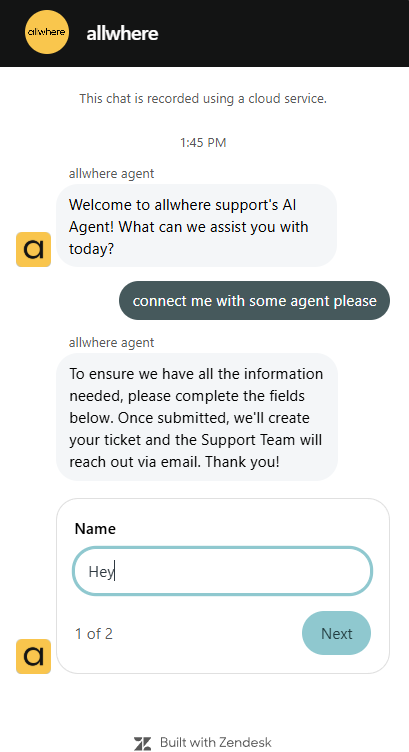
Winner (Tie for Pricing and Workwize wins for Support)
Different companies can have unique pricing requirements. For instance, those needing low capex can go for Allwhere and enterprises seeking predictable spending can go for Workwize.
But everyone wants significant support. While Allwhere offers decent support, there is no live agent available via the chat box. You have to wait for the support team to reach out to you via email, which is a bummer.
Workwize vs Allwhere: Pros and Cons Based on Real User Reviews
Workwize
Workwize holds a 4.4/5 rating on G2 and also 4.4/5 on Capterra. What users consistently applaud is the platform's centralized governance and its ease of integration with existing tech stacks.
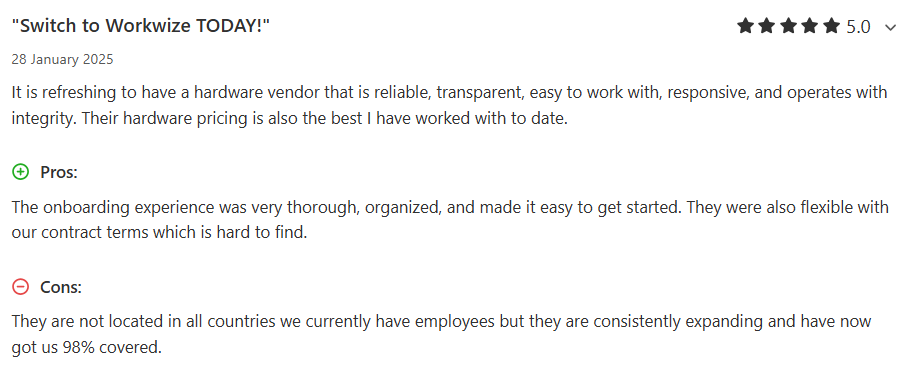
Via Capterra
One verified G2 reviewer highlights how the HiBob and Jamf integrations created seamless workflows:

Via G2
Another point to the smooth Workday and Okta connection that eliminates manual work:

Via G2
Audit-ready traceability and ISO 27001 compliance also earn repeated mentions, particularly from teams where IT asset management best practices connect directly into board-level reporting.
Even on Reddit, Workwize manages to collect positive sentiments:
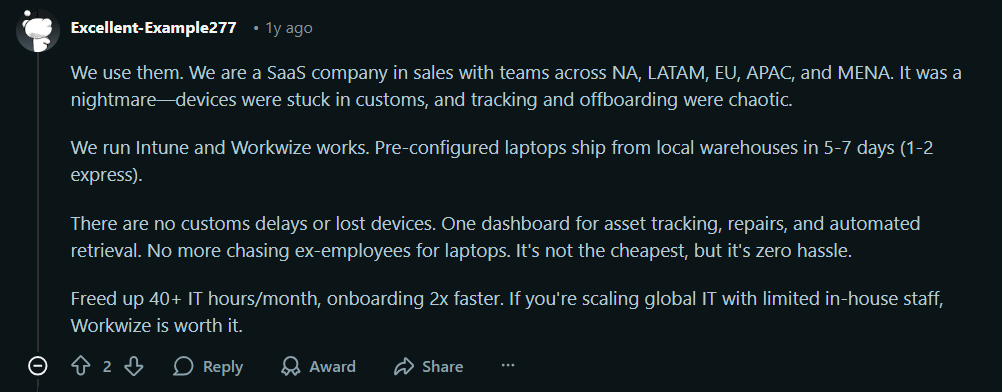
Via Reddit
Allwhere
Allwhere has a 4.6/5 rating on G2 and is consistently praised for the transparency and visibility it offers into your asset estate.
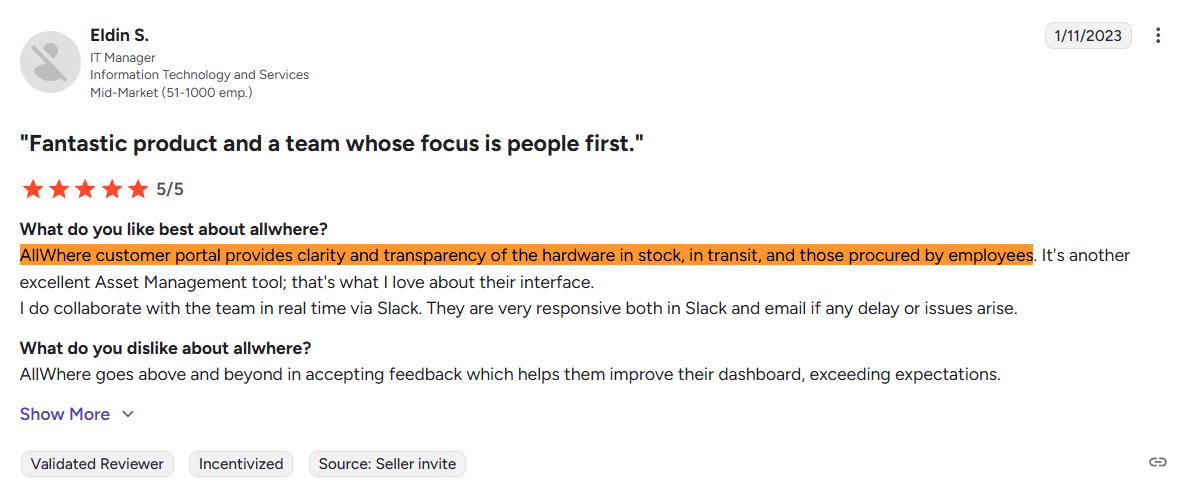
Source: G2
Users also like how supportive their customer support team is:
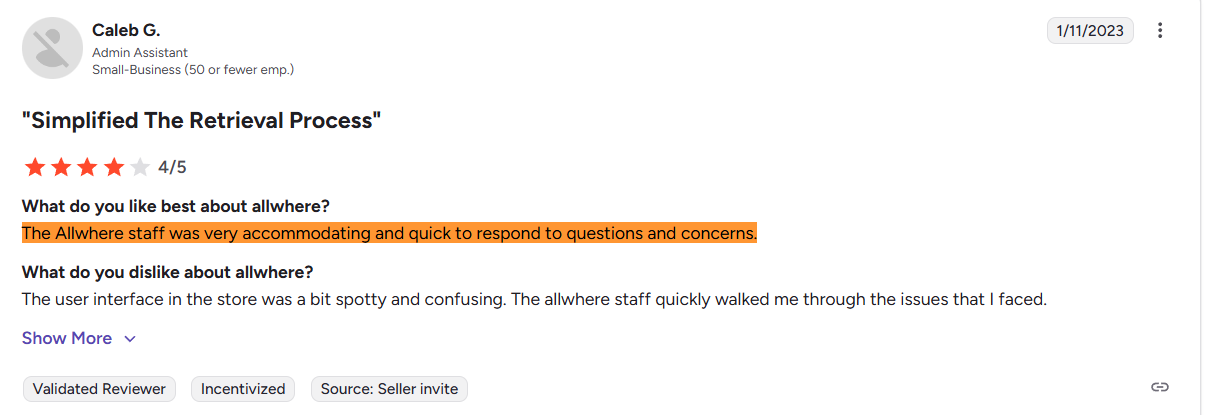
Source: G2
However, Allwhere supports 48 countries, while it calls itself global. And this can be misleading for users. For instance, this user signed up with Allwhere because they’re global, but Allwhere told them they don't support a specific country after they submitted a request.”

Source: Reddit
Workwize vs Allwhere: Which Platform Should You Choose?
Choose Allwhere if you:
- Operate mainly in the US, UK, Canada or a limited set of supported countries and do not need deep coverage across harder regions like Japan, Singapore, the UAE, or South Africa.
- Prefer a pay-as-you-go pricing model over a recurring subscription, especially if your device volume is low or hardware movement is infrequent.
- Are a smaller company or lean IT team that wants flexibility and does not need enterprise-grade standardization across 100+ countries.
- You mainly need procurement, deployment, tracking, and retrieval without making global scalability and predictable long-term cost control your top priority.
Choose Workwize if you:
- Need to support employees across Europe, North America, APAC, the UAE, Japan, Singapore, and other globally distributed regions without constantly checking whether a country is covered.
- Want predictable spending and easier budgeting through a subscription-based model, rather than variable per-transaction costs.
- Are an enterprise, scale-up or fast-growing distributed company that needs a platform built to govern and manage hundreds or thousands of assets.
- Want deeper HRIS and MDM-led automation, broader integrations, and less manual coordination across onboarding, offboarding, tracking, and retrieval.
- Care about standardized retrieval workflows, auditability, compliance tracking, and flexible end-of-life outcomes, including resale recovery without being forced into platform-only credits.
Why Workwize Is the Stronger Choice for End-to-End IT Hardware Management
Allwhere is a solid IT hardware management platform.
It covers the full lifecycle from procurement to disposal, offers flexible pay-as-you-go pricing and works well for companies operating within its supported markets.
But those strengths matter less as your operations become more complex.
If you expand into countries like Japan, Singapore, the UAE or South Africa, you need broader coverage, want more predictable spend or expect deeper zero-touch automation tied to your HR and IT stack, Allwhere is somewhat limited.
That is where Workwize becomes the stronger long-term choice.
Workwize supports 100+ countries, offers subscription-based pricing for easier forecasting and delivers deeper HRIS- and MDM-led automation. Moreover, Workwize offers enterprises a more standardized, audit-ready way to manage procurement, deployment, tracking, retrieval and end-of-life workflows at scale.
We can help your IT team spend 40% less time on manual IT tasks and achieve a net-positive ROI. Try Workwize now and see for yourself how we’re the right choice.


Establish a single source of truth for every IT asset across the globe.
.png?width=258&height=318&name=g10%20(5).png)
More related resources to help you stop firefighting hardware operations.

Get monthly insights into how other IT leaders are improving their ops.



.png?width=2880&height=1232&name=Group%202147262874%20(1).png)
Stop coordinating
hardware like it's 2012.
.svg)
.png?width=172&height=68&name=apple%20business%20patner%20(1).png)
.svg)
.svg)
.svg)
.svg)