




.svg)
.svg)

.svg)


.svg)





.svg)
.png?width=500&height=424&name=Style-1---V1-(1).png)
.png?width=1230&height=692&name=Vector%20(13).png)
Overview
Workwize
Workwize is an end-to-end IT asset management platform built for scaling mid-sized organizations (200+ employees) and enterprises with distributed teams. It combines procurement, deployment, asset tracking, logistics, and certified disposal into a unified workflow.
The platform's primary strengths are in automated hardware lifecycle from procurement to certified ITAD, deep HRIS and MDM integrations, local warehouses across 100+ countries, and strong compliance documentation.
However, it is not the best choice for smaller firms that need only procurement or delivery.
GroWrk
GroWrk also provides IT asset management services, but its offerings are better suited to companies with simpler needs.
It covers 150+ countries (with service availability varying by location) and offers a built-in marketplace for sourcing devices by region. There's also MDM support, but it promises 40+ native integrations.
Its flexible pricing, including a pay-as-you-go option, makes it a practical choice for teams that don't need a full enterprise platform and want to pay for what they use.
Workflow automations and security certifications are not its strongest suit, especially when compared to Workwize.

Feature-by-Feature Comparison
Let's break down the differences between Workwize and GroWrk, feature by feature.
Procurement
Both platforms handle procurement through regional supplier networks, provided locations are supported, and ship directly to employees and inventory locations.
GroWrk provides a marketplace feature on its asset management platform where teams can browse regionally available hardware. It shows real-time local pricing and allows users to place orders directly to employees or specific inventory locations.
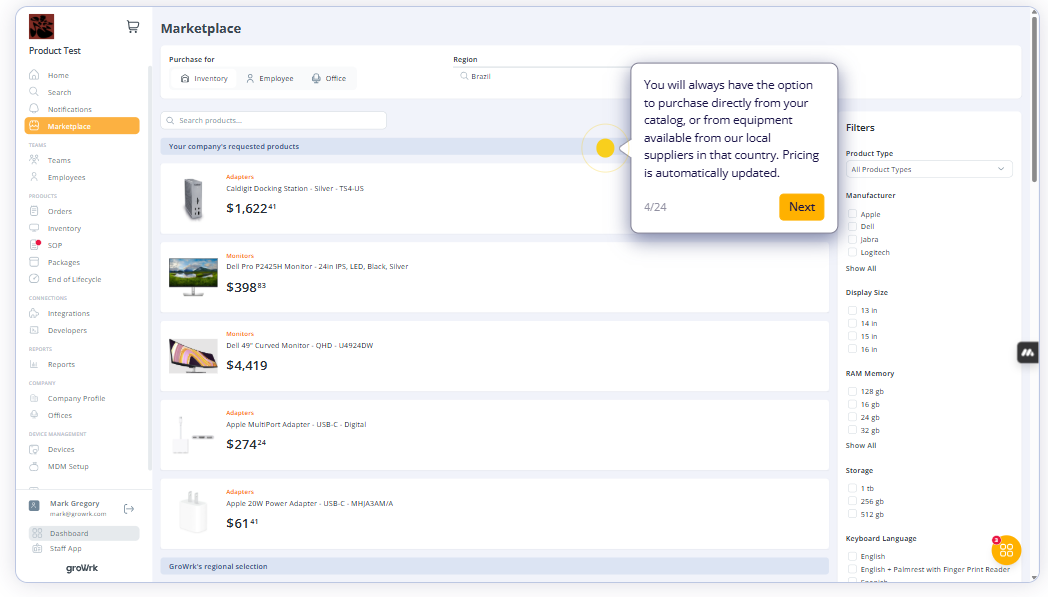
Image credit: GroWrk
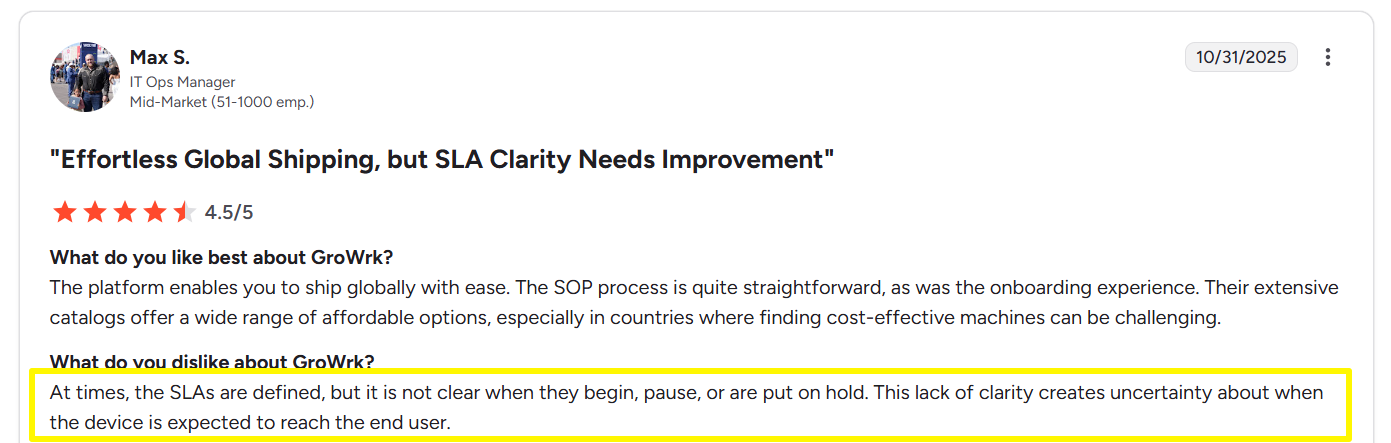
Cost and SLA transparency are where users, through review sites like G2, criticize GroWrk. They consider the marketplace pricing too expensive and the SLAs not clear enough to decode delivery mechanisms.
User complaints about shipping delays, which poke a hole in GroWrk's claims of 7-business-day deliveries across 150+ countries, also surface regularly.
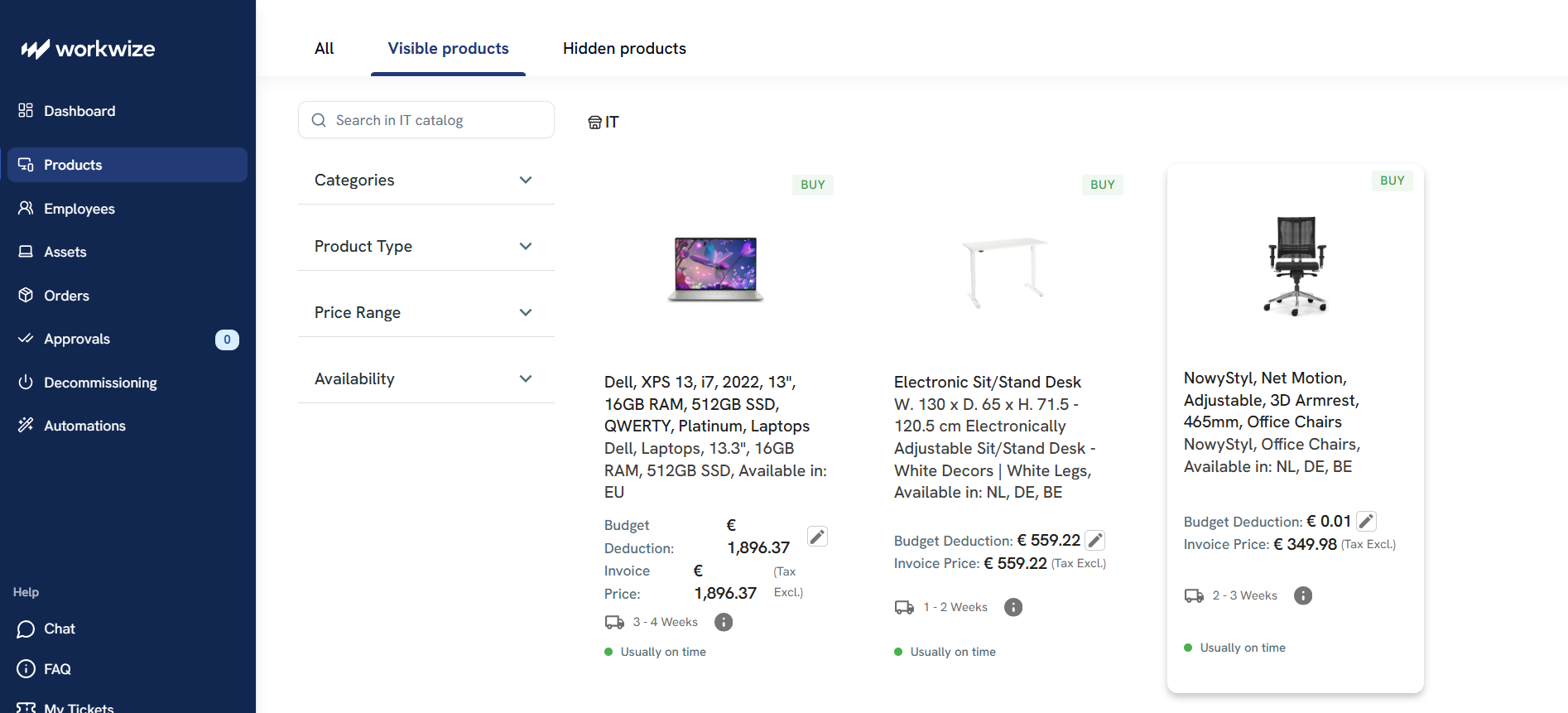
Workwize, on the other hand, relies on its network of local vendors and warehouses to facilitate faster deliveries. Companies can view a list of available products on the platform, along with their prices and estimated delivery dates, similar to GroWrk's marketplace.
It also integrates procurement into its zero-touch IT asset deployment process, in which employees receive devices with little to no input from IT staff.
Workwize's main limitation is that it is not quite suited to small teams that only want to purchase equipment and handle the other part of the ITAM process themselves. User reviews also point to minor delivery issues that have since been resolved.
Verdict:
- Workwize is the best option for teams that need end-to-end procurement services with local warehouses they can rely on.
- GroWrk is better positioned for teams looking for purchase-only options and willing to pay above-market prices for most items.
Device Lifecycle Management
Both platforms position themselves as device lifecycle management tools, but with different execution models. That means they can handle procurement, deployment, maintenance, redeployment, and decommissioning.
GroWrk promises a full-lifecycle experience through its asset management suite. User provisioning, which involves setting up and deploying devices to employees, is automated. There is also support for device management platforms like Jamf, so companies can manage devices remotely throughout their lifecycle.
Additionally, managers can initiate repairs, swaps, retrievals, and decommissioning through the platform.
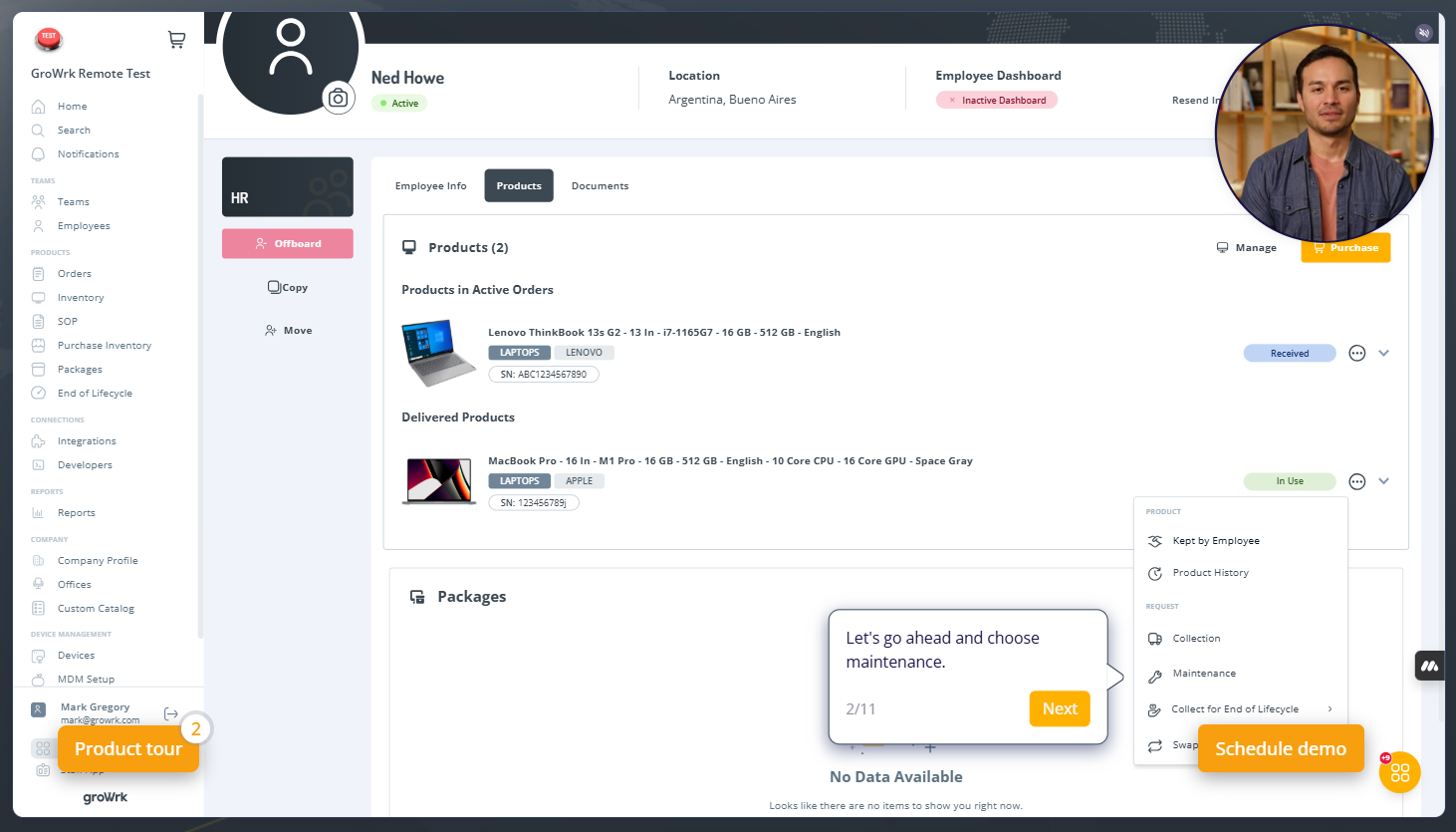
Image credit: GroWrk
The platform also ensures users can track the progress of any lifecycle stage, from the Orders page for incoming devices to the decommissioning status.
But customers have notably knocked GroWrk for its shortcomings in that area. One user review noted the need for better tracking, insights, and remote lifecycle management, but still gave GroWrk credit for its responsiveness to feedback.
Another user also pointed to GroWrk's weaknesses in managing the lifecycle of peripherals.
And while the provider also promises full automation across the device lifecycle, it doesn't provide detailed explanations or proof of exactly how it works, beyond automated user provisioning.
Workwize is open about its lifecycle automations. Integrations with HRIS platforms enable HR actions, such as employee offboarding, to trigger specific workflows, such as asset retrievals.
Updates happen in real time, too, thanks to the automations, and tracking information appears end-to-end, from procurement to disposal.
But the automation works well thanks to the platform's physical framework, especially the warehouse model, which enables device setup, deployment, maintenance, retrieval, and decommissioning.
And unlike GroWrk, where some user classes have access only to specific services, such as procurement or retrieval, Workwize's main business offering is full-lifecycle hardware management.
Verdict:
- GroWrk provides lifecycle management, but without the smoothest automations.
- Workwize provides automations, from its zero-touch asset deployment offering to lifecycle management actions, such as maintenance, retrieval, and disposal, triggered by personnel-related activities.
Automation and Integration
Zero-touch provisioning, automated deployment, limitless integrations, AI-powered workflows, and automated retrievals are familiar claims from both platforms. But implementation is a different story.
GroWrk supports integrations with HRIS, ERP, payroll, and security platforms, and as mentioned, promises automated user provisioning and lifecycle management.
But according to one user review on G2, GroWrk's automations leave a lot to be desired:
"Some of the shipping updates are out of date. It would be great to be able to have more real time [sic] feedback."
Workwize offers over 100 native integrations compared to GroWrk's promise of 40+. Those integrations allow companies to set up auto-deploy and auto-restock workflows in Workwize's Automation tab so actions can start immediately based on HR activities.
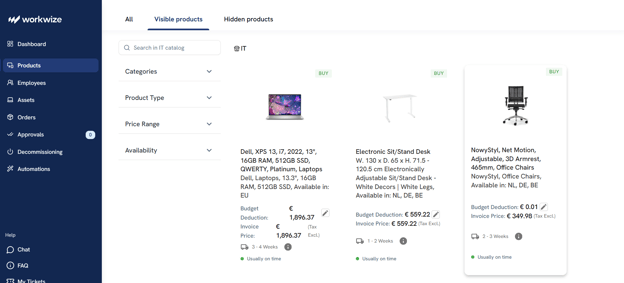
There's also native support for MDM tools like Jamf.
The company's MCP (Model Context Protocol) offering allows IT teams to integrate and build customized AI agents for customized automated workflows. For example, a simple prompt telling Claude, "Order an Intel Core Ultra x7-powered laptop for our new dev in London," initiates a procurement and deployment process for your London staff.
Verdict
- Both platforms claim to have automated workflows, but Workwize sports more advanced tech in that area, especially with its MCP.
Asset Visibility and Tracking
Both platforms offer asset-tracking capabilities from procurement to disposal. Each has an Orders tab where companies can view the status of every shipment, with Workwize's tab showing slightly more details.
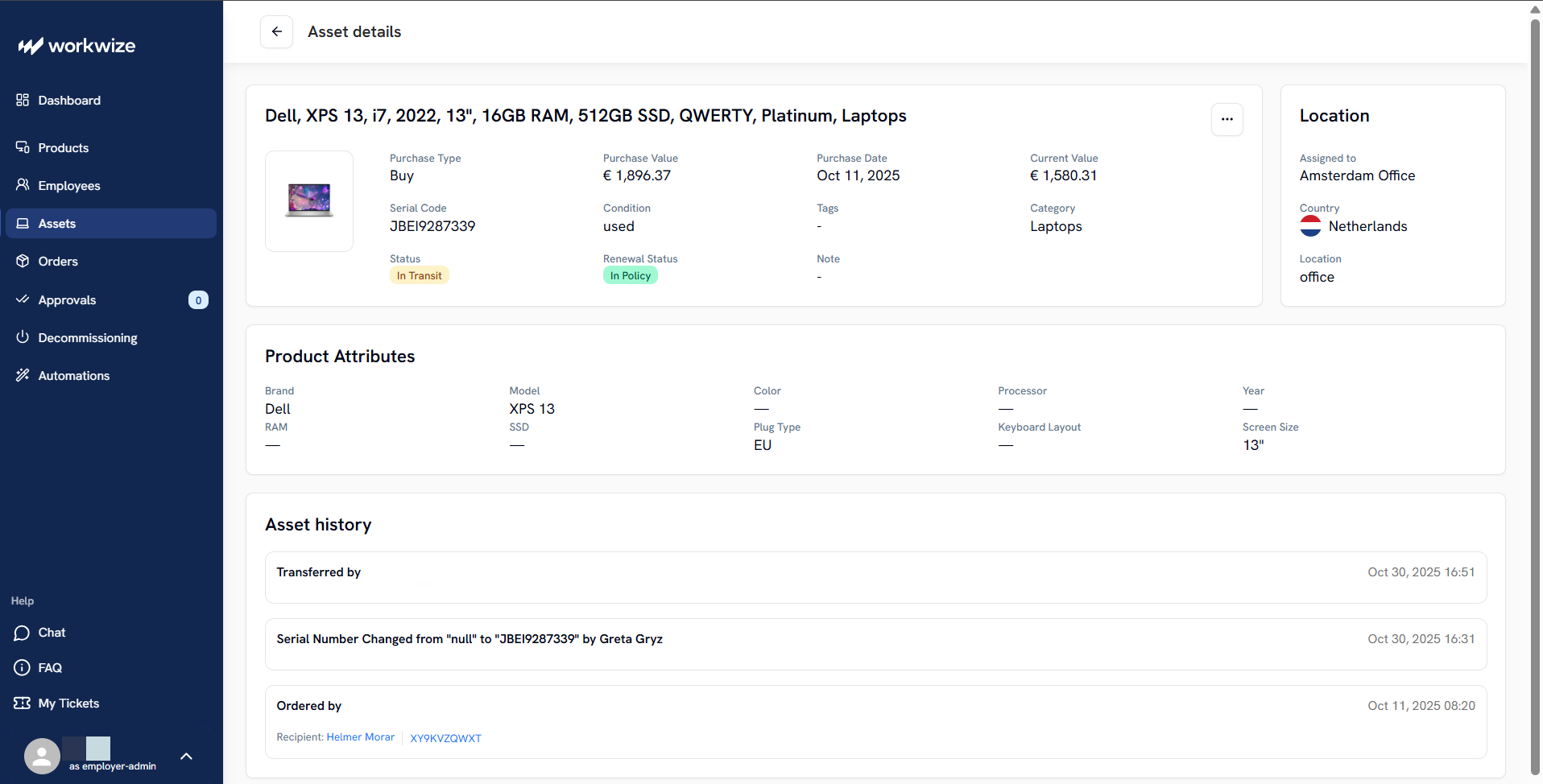
Workwize's Asset tab, where assets are grouped into categories, shows a company's entire inventory. The overview displays each asset's assigned employee, category, country and location, status, condition, and renewal status. Selecting one asset displays more information, such as purchase and current value, product details, and history.
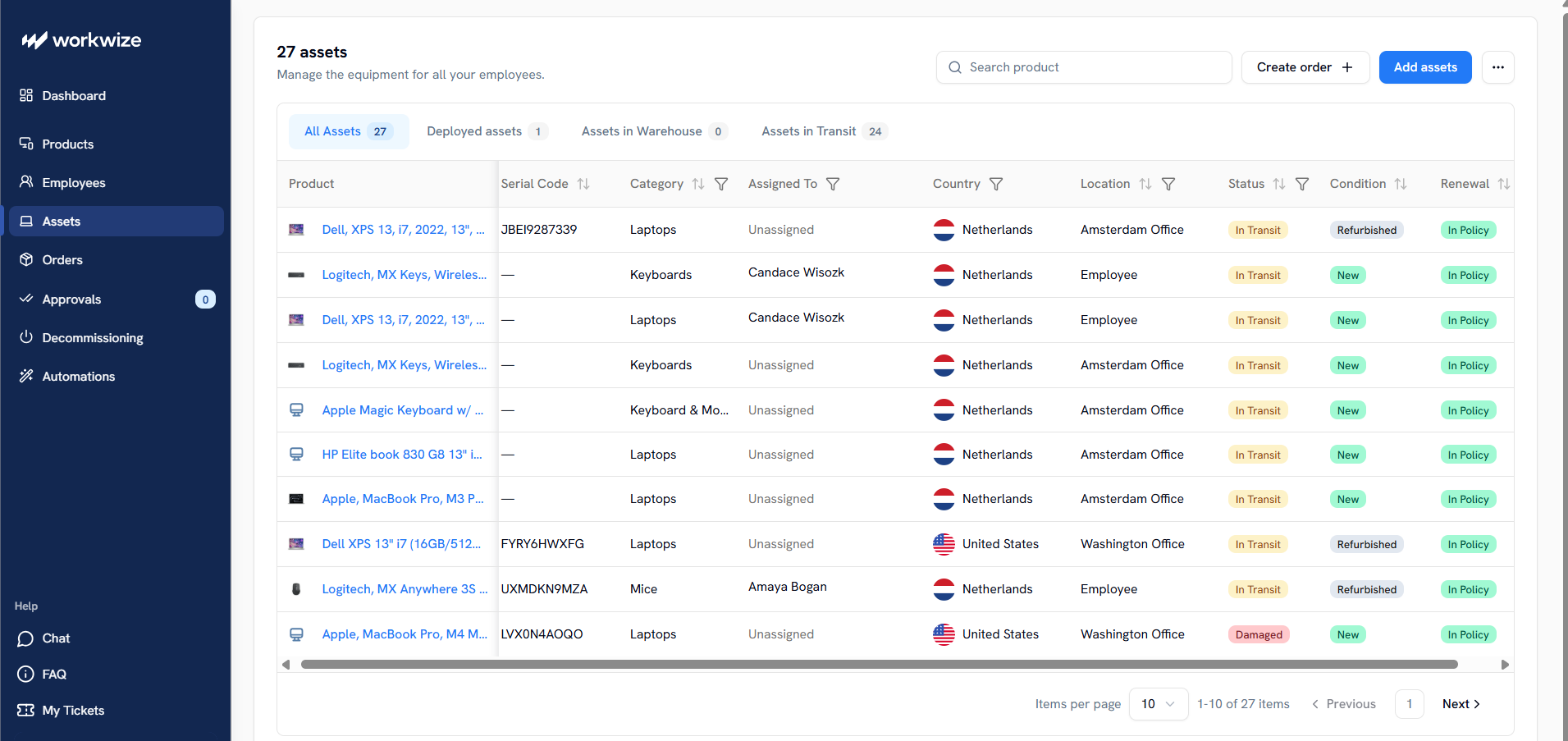
Every asset auto-updates based on lifecycle activities (from procurement to disposal), employee status, and the asset's condition.
GroWrk provides a similar level of detail, but without current value estimates. The Orders tab shows device information and order details, and the Inventory tab displays where assets are in their lifecycles, including procurement. The End of Lifecycle tab shows which devices are close to or at the end of their lifecycles, while the Employees tab displays employee profiles and details of assigned devices.
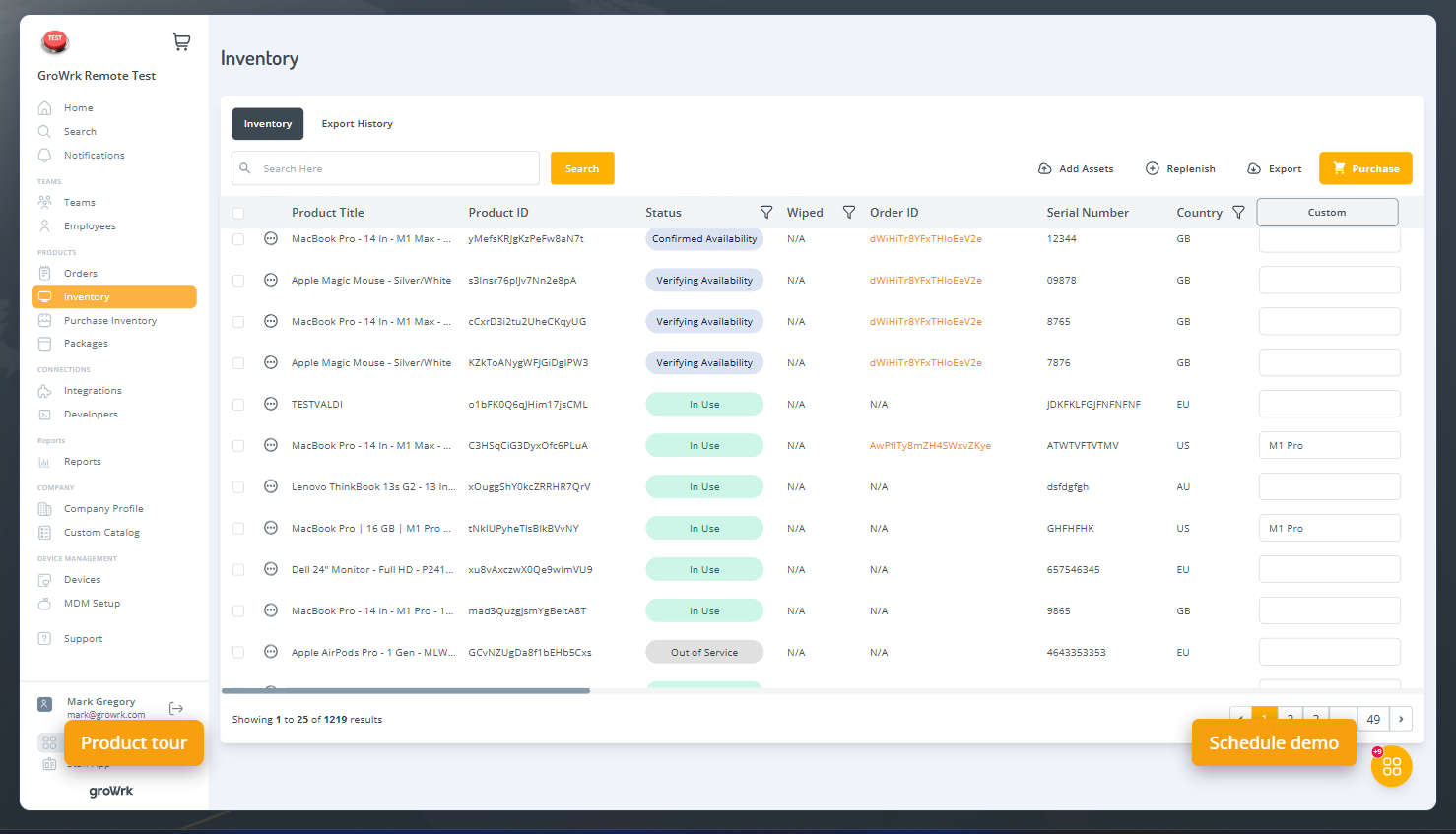
But feature offerings don't always translate to reliable implementation, as users have complained about delays in updating GroWrk's portal with shipment and retrieval information.
"I would like better tracking of our hardware shipments. Specifically, if something is shipped through a service like UPS/ FEDEX and requires follow-up, it would be great if GroWrk could handle the follow-up on our behalf."
Verdict:
- Workwize gives IT managers a more dependable and complete view of their fleet, with categorized, real-time data that does not require manual follow-ups to stay accurate.
- GroWrk covers the visibility basics, but the lag, data accuracy issues, and carrier blind spots make it a less reliable single source of truth at scale.
Offboarding and Retrieval
GroWrk has a dedicated offboarding control on its platform where IT and HR managers can start the process of deactivating departing employees and retrieving their assets.
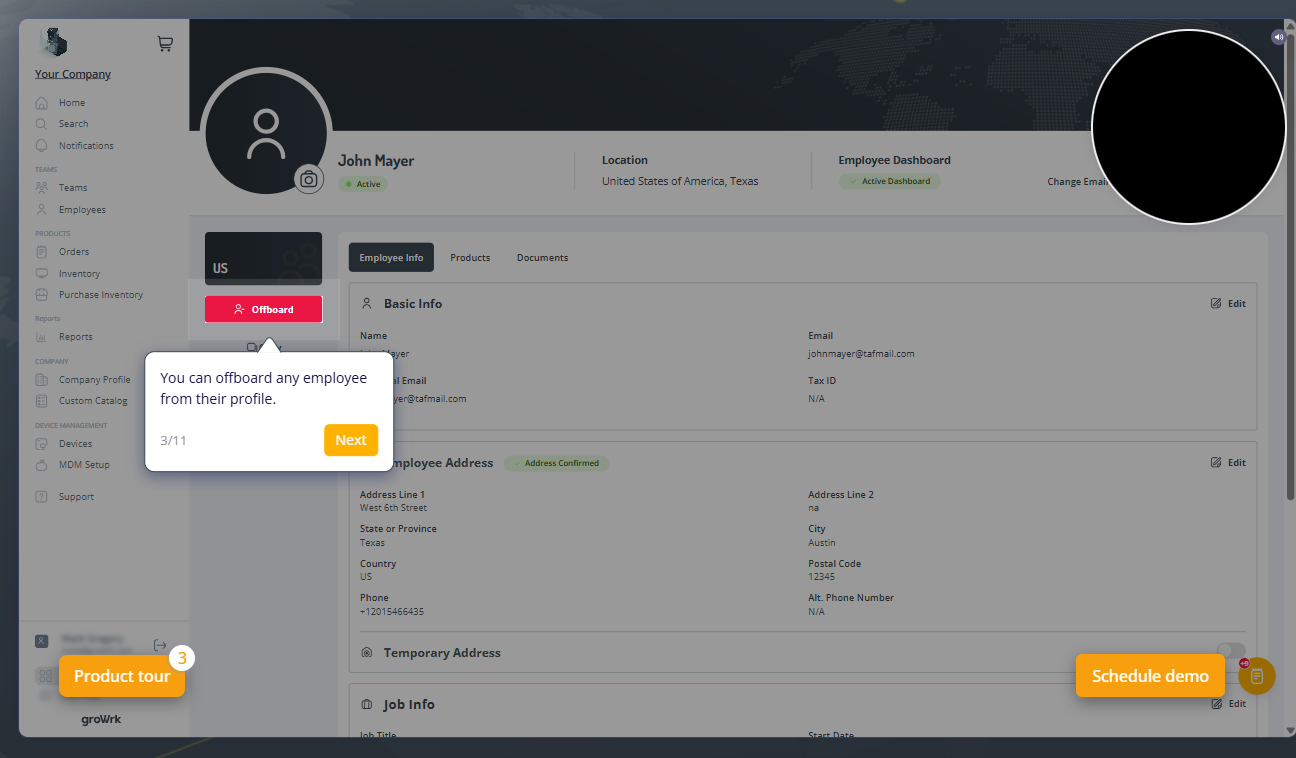
Image credit: GroWrk
The platform says it can handle retrieval from any of its supported countries for decommissioning and redeployment purposes.
However, an HR manager had the following to say about the platform's ability to keep them updated throughout the process:
"I find it challenging to understand where a device is in the retrieval process or the timeline for retrieval. There often seems to be a lag with the dashboard updating, which can be frustrating. Additionally, receiving follow-ups regarding a device when the information is already entered in the system can feel repetitive and redundant."
It's a different story with Workwize, where retrievals can automatically start when HR initiates an employee's offboarding in an HRIS. As for the portal itself, deactivation is a one-click action, although standalone retrieval is either unavailable or too costly for small teams.
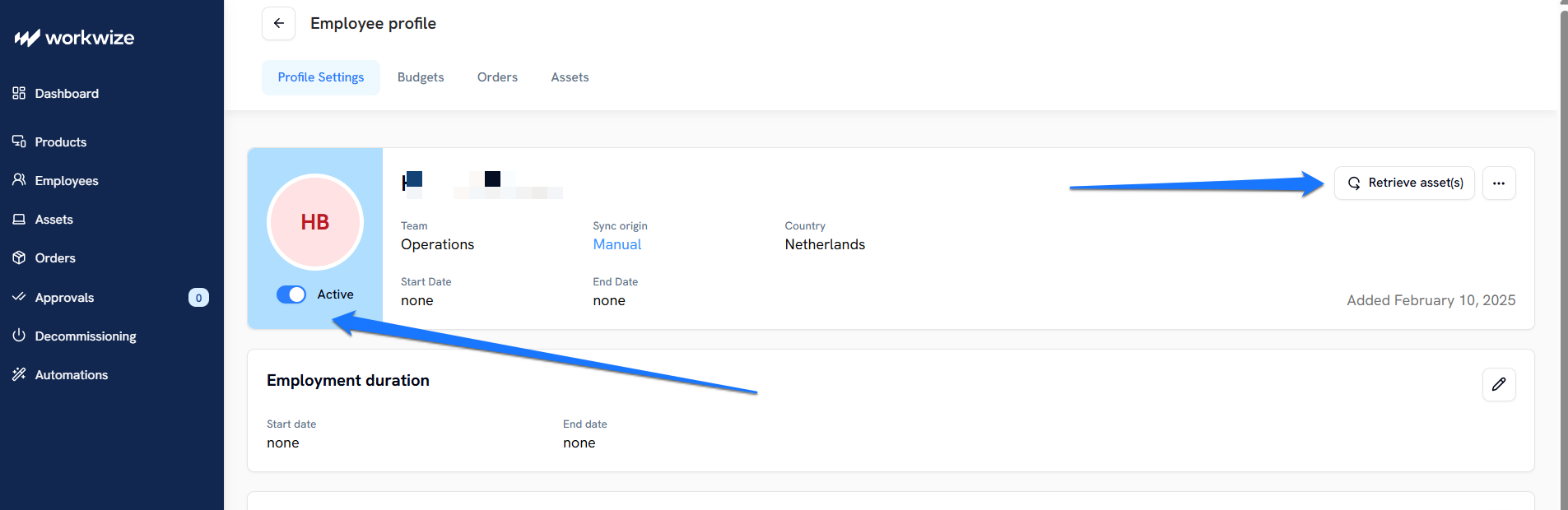
IT managers can also click the Retrieve asset(s) button to start that process manually if they so choose, especially when they need to recover a damaged or end-of-life device.
Verdict:
- Both Workwize and GroWrk position themselves as asset retrieval services, with GroWrk offering standalone options. However, Workwize is better for companies looking to integrate the retrieval process with other lifecycle workflows, from redeployment to destruction, since it offers stronger local support, security certifications, and automation.
IT Asset Disposition
Workwize's ISO 27001 certification and SOC 2 Type II attestation prove to companies that it handles IT asset disposition in accordance with international standards and regulatory frameworks. The platform also helps organizations meet their ESG goals by using eco-friendly recycling and disposition methods.
On top of that, Workwize ensures that organizations receive the maximum resale value available whenever they decide to remarket old devices. And whenever they want to donate to charitable causes, that option is available as well.
IT managers can start the ITAD process through the Decommissioning tab, where they can choose the Decommission or Resell option.
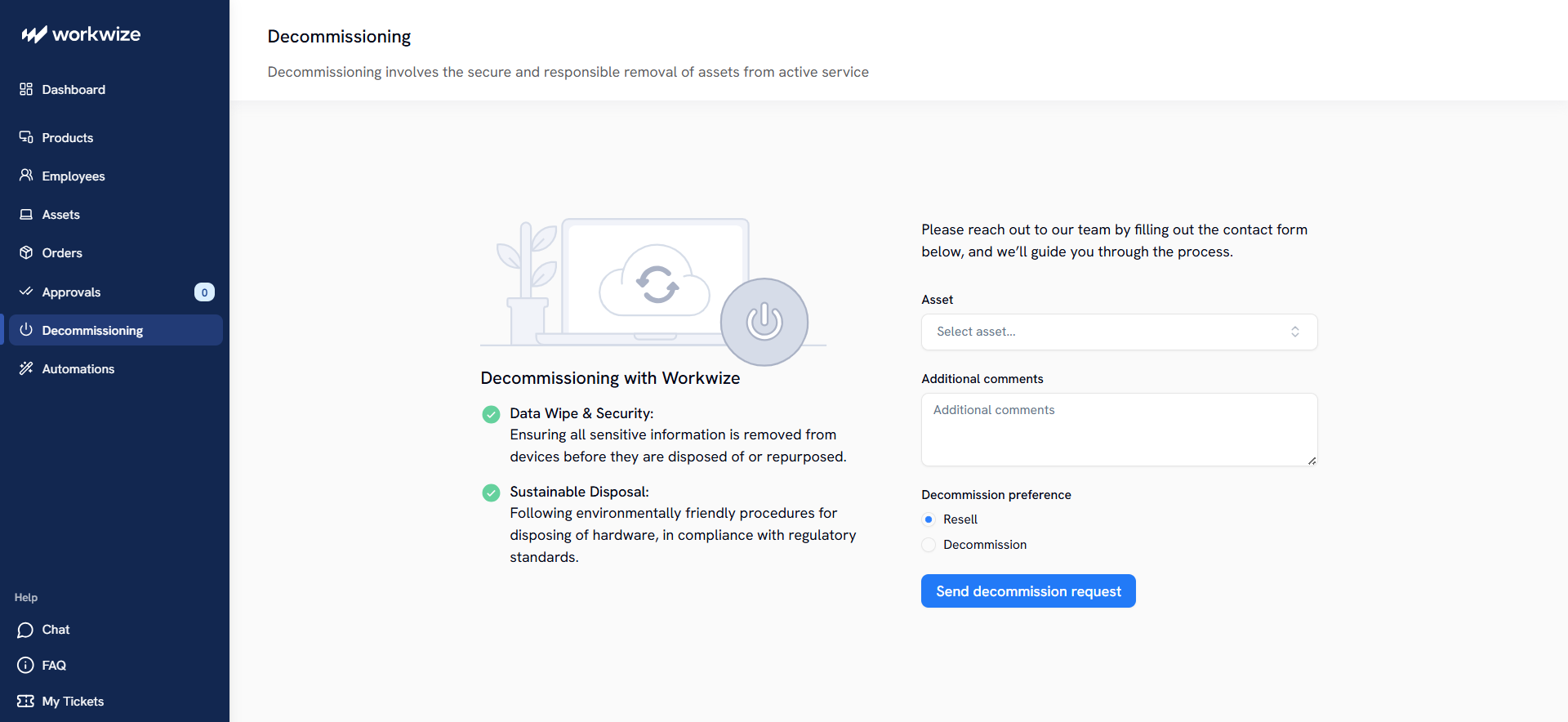
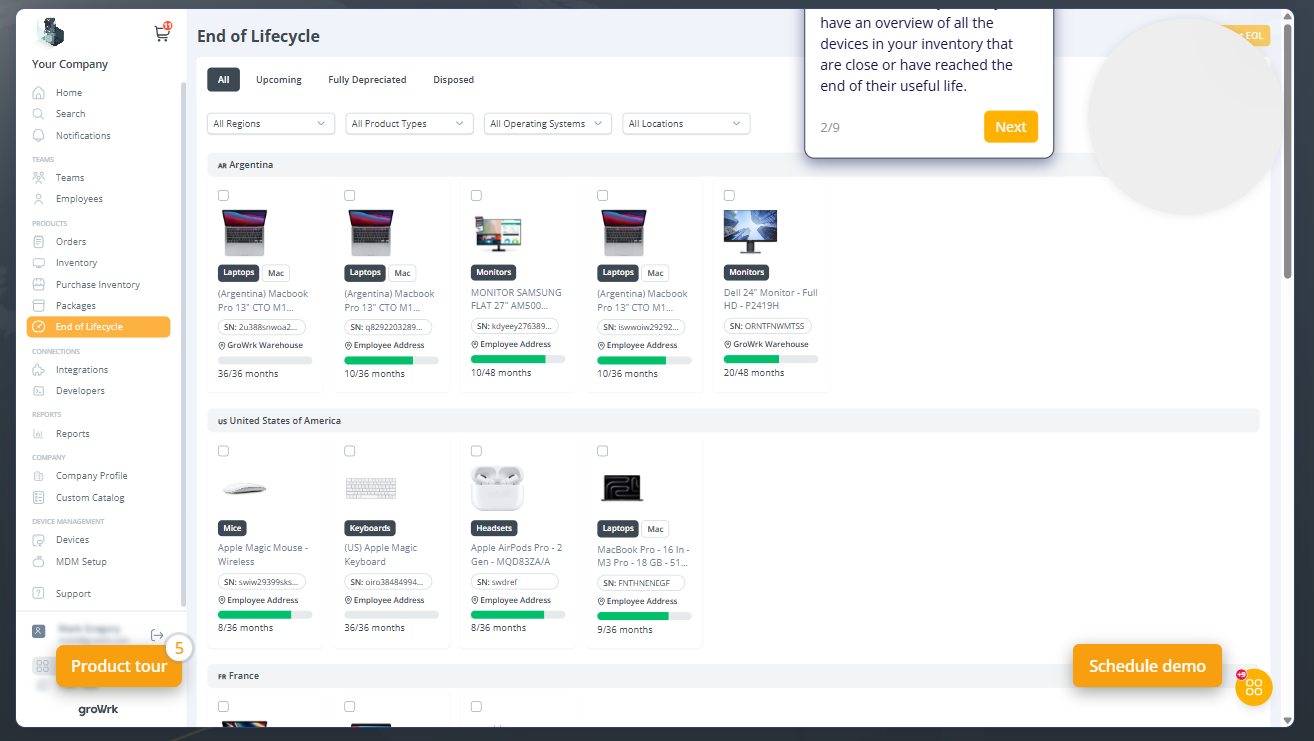
GroWrk also positions itself as a full-range ITAD provider, offering the same donation, destruction, resale, and recycling services as Workwize. Its portal features a tab that displays devices nearing or at the end of their lifecycles, something Workwize doesn't offer.
But unlike Workwize, GroWrk does not explicitly state that it has any certifications beyond its SOC 2 Type II attestation, even though it mentions that it complies with ISO 27001 standards.
Verdict:
- Both platforms offer reselling and destruction ITAD services, but Workwize provides better decommissioning certifications.
Reverse Logistics and Global Returns
Reverse logistics and global returns fall under each service's retrieval and redeployment processes.
Workwize allows companies to use its local warehouses as touchpoints for returns, which makes the process as smooth as possible.
Since those organizations use Workwize's warehouse for storage, they no longer need to ship devices halfway around the world to their company headquarters, which reduces costs and improves speed.
The only issue is that costs may rise or deliveries may take longer in areas without warehouses.
GroWrk has a dedicated asset recovery team responsible for global returns and retrievals. Customers start the returns process on the portal, assigned employees prepare devices for pickup, and the device is collected onsite or shipped to the return address.
Yet, shipping-related issues like this one are the most common we've seen in user reviews.
"Delays with shipment even if it [sic] the device in [sic] hand. Overnight shipping doesn't exist even with overnight shipping charges."
Add the lack of a warehouse model, and it's fair to say that reverse logistics is also a concern, especially with several complaints about retrieval.

Verdict:
- Companies that use Workwize for full device lifecycle management get to enjoy smooth reverse logistics and returns processes since the platform handled procurement and deployment in the first place.
- While GroWrk is more suited to smaller companies looking for one-off retrievals, international shipping delays may be a problem, as other users have experienced.
Reporting, Analytics and Cost Control
Reporting and analytics are among the most critical IT asset management best practices, and both platforms go the distance in that regard.
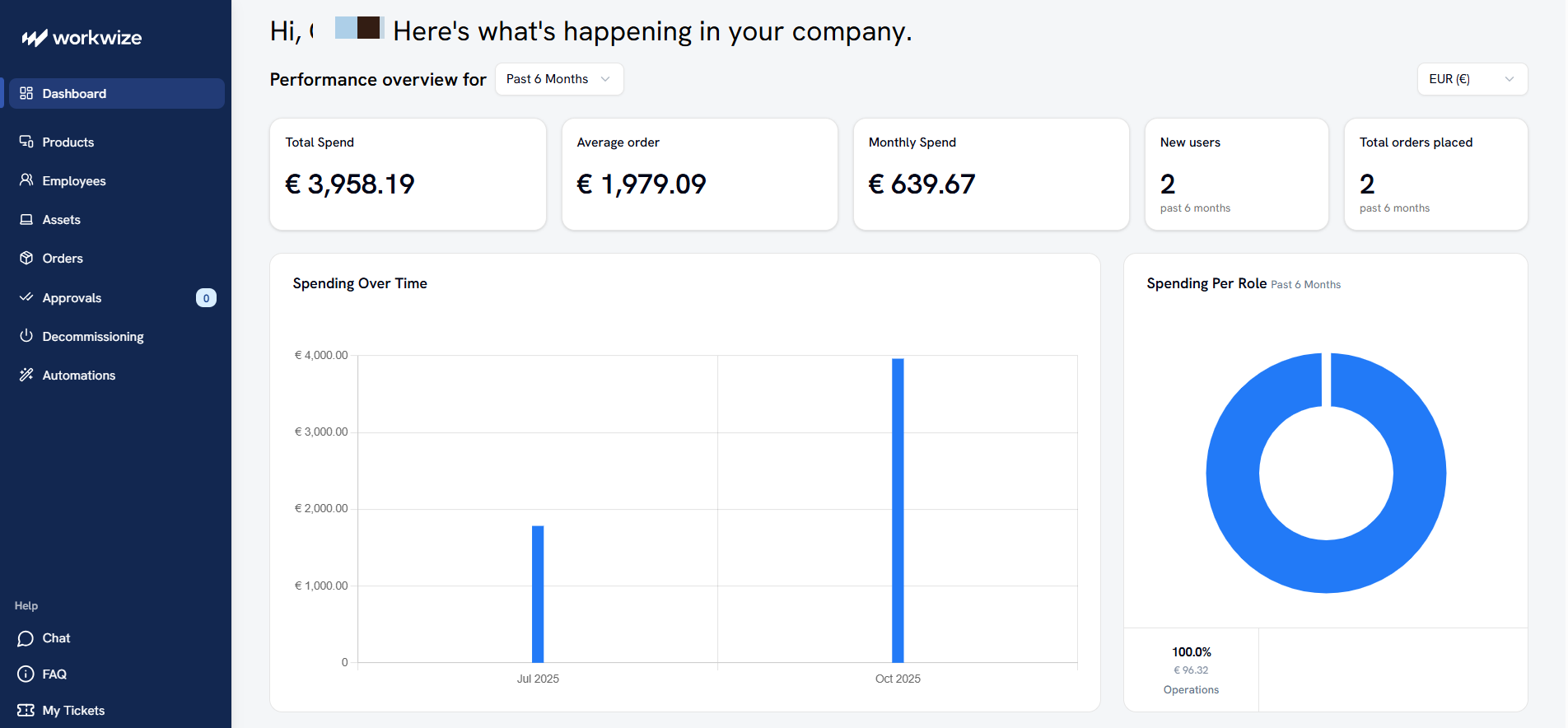
Workwize shows financial and lifecycle data in different portal interfaces. The main dashboard displays a rolling view of total spend, average order value, orders placed, and monthly spend, all broken down by department role.
Opening individual assets through the Assets tab, as mentioned earlier, displays each entry's purchase and current value, condition, renewal status, and full asset history with dates.
Employee data, such as budget, location, assigned devices, top-up histories, employment duration, and contact details, is also available. The portal displays details of incoming devices under the Orders tab.
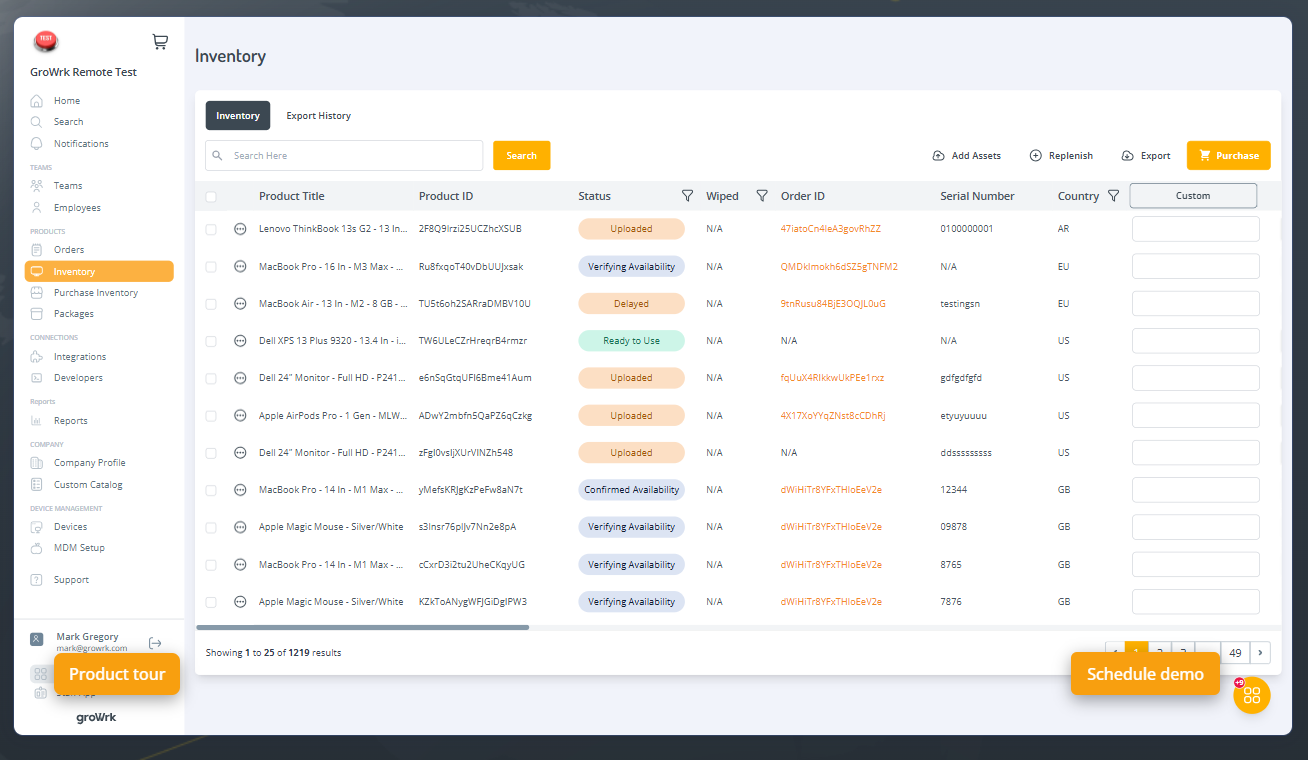
GroWrk also features detailed device data and reports across its Dashboard, Orders, Inventory, Purchase Inventory, Packages End of Lifecycle, and Teams tabs. Users can select any item or open an employee's profile to view more details about each device.
Verdict
- Both platforms try their best to break down lifecycle data. But the actual reporting performance, according to the user reviews we showed earlier, is quite spotty on GroWrk.
Implementation, Onboarding, and Time to Value
Workwize and GroWrk try to make the implementation and onboarding experience as smooth as possible. While implementing each platform for smaller teams is relatively easy, there might be hiccups with rollouts for larger enterprises. And user reviews highlight some of these struggles in both systems.
However, Workwize provides dedicated support for distributed teams to ensure issues are resolved immediately as they arise.
Onboarding is also smooth, thanks to the platform's zero-touch deployment, reliable shipping and tracking, and integrations with HRIS systems and MDM tools.
GroWrk promises the same type of support and onboarding on paper. Customers who do not intend to commit to the full lifecycle option can feel out the platform on the pay-as-you-go offering, and setup is pretty smooth.
But some users find it problematic in practice. For example, the shipping issues we mentioned earlier can derail the onboarding experience for new hires, and one user mentioned GroWrk changes account executives too often.
Verdict:
- Compared to GroWrk, Workwize provides a better time to value because companies will see an almost-immediate impact in spending reduction, burden on IT teams, and productivity.
Security and Compliance
As mentioned earlier, Workwize is ISO 27001 certified and SOC 2 Type II audited. GroWrk, on the other hand, has only completed a SOC 2 Type II audit.
That means Workwize has greater official recognition and is more likely to help companies maintain compliance when handling data throughout the device lifecycle.
Verdict:
- Workwize is the clear winner here for companies that want the best compliance coverage and IT asset disposition certificates.
Pricing, Scalability, and Support
Workwize does not provide exact pricing figures, nor does GroWrk. What they both do, though, is offer tiered pricing systems:
Workwize:
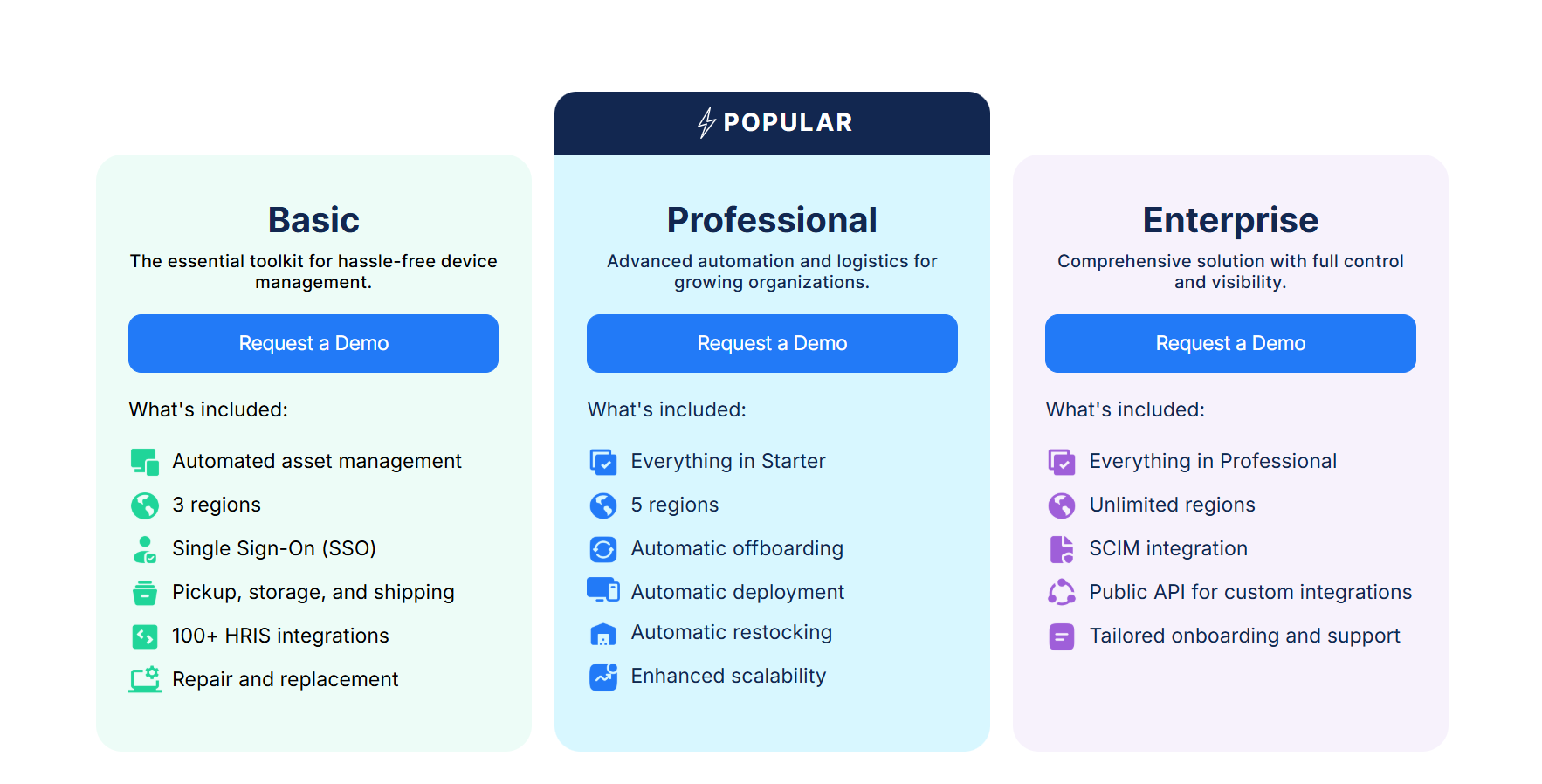
- Basic: Includes automated asset management, global delivery, support for 3 regions, single sign-on (SSO), and scalable storage solutions. Companies will also get access to pickup, storage, shipping, MDM integration, device setup, repair and replacement, and integrations to over 100 HRIS platforms.
- Professional: This tier provides everything in the basic plan plus automatic deployment, offboarding, and restocking. There's also enhanced scalability with support for 2 additional regions.
- Enterprise: The enterprise plan unlocks, in addition to everything in the professional plan, access to unlimited regions, SCIM integrations, custom integrations through Workwize's public API, and tailored onboarding and support.
GroWrk:
- A La Carte: Allows companies to access the platform for free for pay-as-you-go individual orders.
- Flex: The lower-full-lifecycle offering that provides access to integrations, zero-touch deployment, and customer services.
- All-in: Companies pay flat logistics and SaaS fees, will access offerings in the Flex and A La Carte plans, and also access custom reports, employee dashboard, ability to create country-specific catalogs, and 24/7 IT support.
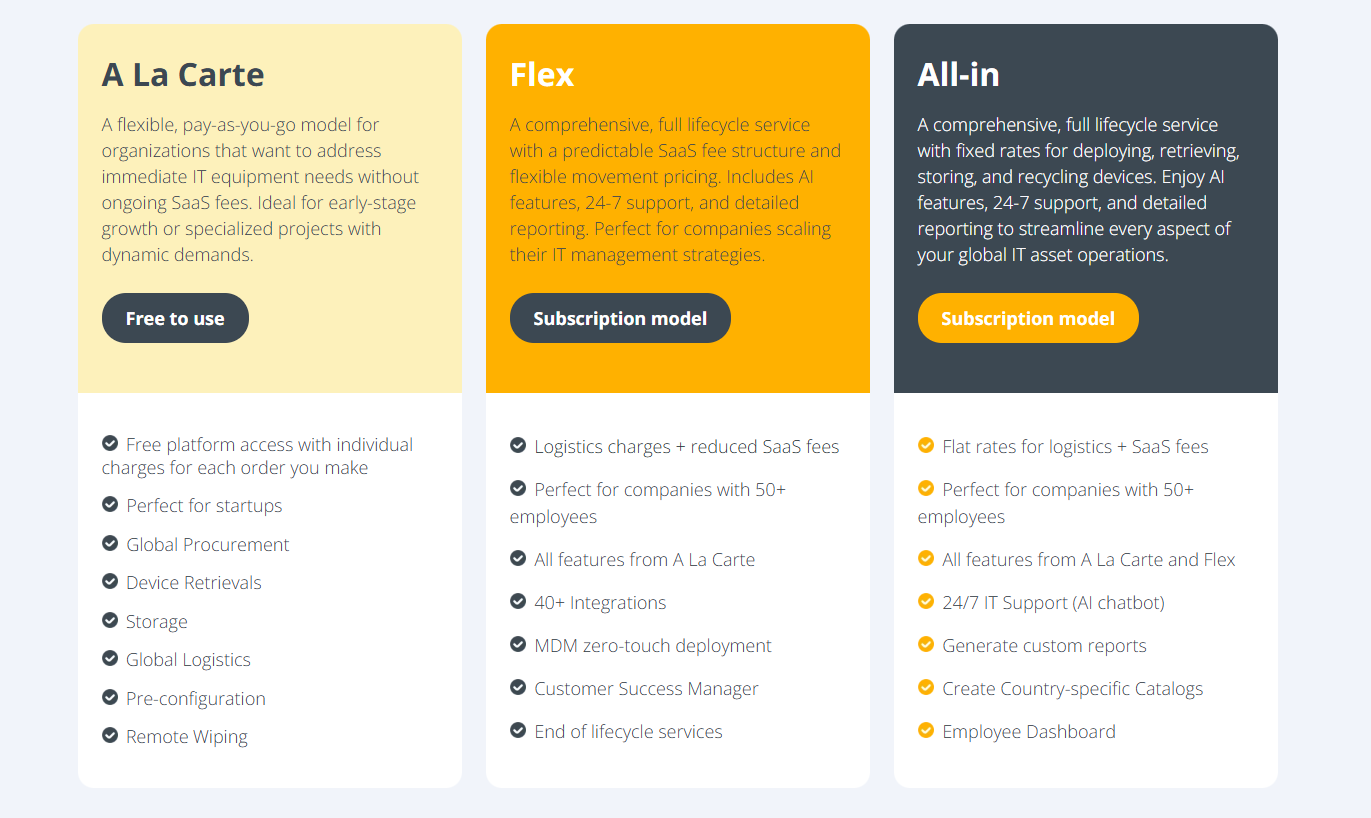
From the pricing descriptions, you'll notice that Workwize is more dedicated to providing ITAM services to companies pursuing immediate growth. The basic tier, although actual pricing between both services is different, already guarantees 100+ integrations and multi-region support.
GroWrk's lifecycle services, though not full-fledged, begin only with the middle plan, which lacks an employee dashboard.
Verdict:
- When your company starts scaling beyond 200 employees, Workwize is the best option because its price plans reflect that. For sub-150 employees, you can go with GroWrk, but you should still confirm whether it's worth paying for the top plan given the promise of 40+ integrations.

Workwize vs GroWrk: Pros and Cons
Workwize
Pros
- Caters to the entire device lifecycle management needs (from procurement to disposal) of any organization, especially globally distributed teams, with more than 200 employees.
- More than 100 integrations are available in the lowest-price category, including well-known HRIS and MDM platforms such as HiBob, BambooHR, Jamf, and Okta. There's also a public API available for custom integrations.
- Real-time asset visibility and full traceability, praised by reviewers as critical for internal audits and compliance.
- ISO 27001 certification and SOC 2 Type II attestation mean companies can rest easy regarding compliance with data protection laws
- The portal is clean, intuitive, and responsive.
- Workwize responds to user feedback fast, with reviewers noting regular product updates and new features shipping consistently to address raised issues.
Cons
- Smaller teams with fewer than 150 employees may find Workwize's offerings, which they must commit to, a lot more than they need. The platform caters to organizations with distributed workforces of meaningful size, ideally 200 employees and above.
- Teams looking only for procurement or delivery will be required to pay the platform subscription fee for a full-lifecycle system they will not fully use.
GroWrk
Pros
- GroWrk has a built-in marketplace with real-time regional pricing that makes global procurement accessible.
- It is flexible enough to serve smaller companies (fewer than 50) that may not be ready for the full lifecycle management experience.
- The à la carte price tier allows companies to use the platform for free and pay for the services they use.
Cons
- Users describe purchases through the marketplace as significantly more expensive.
- SLA compliance reporting is spotty, according to user feedback.
- GroWrk only holds a SOC 2 Type II attestation at the time of writing, which means it lacks ISO 27001 certification and has narrower compliance coverage than Workwize's.
- Retrieval updates, still according to G2 user feedback, aren't up to snuff.
- The portal throws a lot at users, with numerous navigation pane options.
Which Platform Should You Choose?
Now, which IT asset management vendor is best for your company?
|
Choose Workwize if |
Choose GroWrk if |
|
|
Why Workwize Is the Stronger Choice for End-to-End IT Hardware Management
This article's feature-by-feature comparison establishes that Workwize is the better choice for fast-growing companies with globally distributed teams. The platform scales better, offers more reliable lifecycle management options, and provides a cleaner, more user-friendly portal.
From the lowest price offerings, companies will get access to more than 100 integrations, unlike the 40+ integrations that GroWrk promises with its highest tier. Workwize's basic plan also offers automated asset management, single sign-on, storage and shipping, pickup, and repair and replacement.
Here's what you get with Workwize that's unavailable in GroWrk:
- Mature automations
- Agentic AI integrations through the MCP feature (use text prompts to start device lifecycle actions)
- ISO 27001 certification
- More native integrations
- Automatic asset depreciation reports
- Better scalability
Want to see how it works? Sign up for a demo today.

Samuel Mbanaso

Establish a single source of truth for every IT asset across the globe.
.png?width=258&height=318&name=g10%20(5).png)
More related resources to help you stop firefighting hardware operations.

Get monthly insights into how other IT leaders are improving their ops.



.png?width=2880&height=1232&name=Group%202147262874%20(1).png)
Stop coordinating
hardware like it's 2012.
.svg)
.svg)
.svg)
.svg)
.svg)