




.svg)
.svg)

.svg)


.svg)




.svg)
.png?width=500&height=424&name=Style-1---V1-(1).png)


.png?width=1230&height=692&name=Vector%20(13).png)
Remote Work in 2026: By the Numbers
Here are a few interesting insights on remote work in 2024:
- The Office for National Statistics reported that more than 28% of British adults had hybrid roles between January and March 2025. In the United States, the BLS estimates, using an 11-month average, that 22.4% of people teleworked in 2025.
- According to a Robert Half survey, only 16% of respondents considering new roles said they preferred in-office work, while 55% favored the hybrid option.
- Per SurveyMonkey research, 68% of hybrid workers and 72% of fully remote employees believe that remote work offers a better route to work-life balance.
- Flex Index's Q3 2025 Flex Report estimates that 67% of small U.S. businesses with less than 500 workers are fully flexible.
- The 2025 Owl Labs State of Remote Work for the United States reported that most managers (69%) believe that remote/hybrid work increased their team's productivity.
- 27% of employers surveyed for the World Economic Forum's 2025 Future of Jobs Report said they are increasing remote work availability across national borders to attract talent. 43% said they are doing the same within their countries.
How We Ranked These Countries
To rank these countries, we researched and evaluated the following factors:
- Physical and digital infrastructure,
- Safety,
- Quality of life,
- Cost of living,
- Visa and tax incentives for remote workers,
- Social standing
- Time zone coverage
- IT Procurement ease
The Top 10 Countries for Those Looking To Work Remotely
Here’s our list of the top 10 remote work countries.
Country 1: Spain
Best for: Well-rounded remote work

Top Destinations: Madrid and Barcelona are beautiful, bustling cities in Spain, with a religious obsession with football. Both cities are steeped in culture, architecture and amazing cuisine.
Remote.com ranked Spain as the best country to work remotely.
- High-speed Wi-Fi is common in almost every hotel and Airbnb throughout Spain. Even most Spanish cafes and parks have great Wi-Fi. Spain’s Wi-Fi download speeds are only slightly below France's at 274.21 Mbps.
- Spain has excellent transportation, with a state-owned, timely, and reliable railway, Renfe, that connects the entire country. Most trains are spacious, well-maintained and air-conditioned. Dependable and comfortable buses also run between all major cities and towns.
- Spain offers a Digital Nomad Visa for remote workers and freelancers, specifically for non-EU/EEA residents. This visa offers travel permits to the Schengen Area.
- Remote workers under the Digital Nomad Visa may choose to be taxed under the Non-Resident Income Tax rules for the year they move to Spain and the next five years. Employment is taxed at 24% up to €600,000 and at 47% on amounts above €600,000.
- Per Numbeo, the cost of living in Spain is 25% lower than in the U.S., and rent is 40% lower, with estimated monthly costs for single people at $826, excluding rent.
- IT procurement in Spain is straightforward for employers sourcing locally or moving hardware within the EU. However, non-EU shipping may be subject to friction because of customs and compliance requirements. For example, customs declaration and import VAT apply at the border for any hardware shipped into Spain from outside the EU.

Country 2: Portugal
Best for: Cost-conscious digital nomads and employers

Top Destinations: Lisbon and Porto remain the best options for nomads. Lisbon is one of the most vibrant and beautiful capitals in all of Europe and Porto is a stunning destination for people who prefer being close to the water.
- Portugal is still more affordable than much of Western Europe, but not as cheap as it once was. Rising popularity has made both cities noticeably more expensive, especially for rent. A one-bedroom apartment averages about €1,344 in Lisbon and €1,099 in Porto in city centers. It's €834 and €1,021 respectively outside of city centers.
- The weather is one of the country’s biggest selling points because it offers a mild climate and long sunny seasons.
- Portugal ranks among the top 25 countries globally in average fixed broadband speeds. Download speeds hover above 200 Mbps, and upload speeds are around 100 Mbps. There is also a high-speed internet infrastructure throughout the country.
- Portugal offers a digital nomad visa for non-EU remote workers earning at least about €3,680 per month from abroad. However, there are no tax benefits, except for certain qualifying activities, such as research and innovation.
- For employers that intend to support workers with hardware, Portugal is a brilliant choice if sourcing and procurement happen within the EU. But import VAT, customs declarations and handling fees can add friction and delay when bringing in hardware from outside the EU.
Country 3: Canada
Best for: Remote workers who want stability

Top Destinations: Toronto is Canada's energetic hub and a major hub for remote talent. Other notable locations for remote work are Ottawa, Calgary, Vancouver and Montreal.
Canada is popular among both remote workers and employers. It provides valuable access to North America and is known for its stable, people-first environment and strong social infrastructure.
- Canada provides the perfect mix of the urban and the natural. Gorgeous, untouched natural lands are always a drive away and the sprawling cities support the 10th-largest economy in the world.
- The Canadian government allows eligible remote workers employed abroad to stay in Canada for up to 6 months on a visitor status visa without a work permit. If offered a job by a Canadian organization during this period, they can transition to a work permit.
- According to the EIU's Global Liveability Index for 2025, Canadian cities such as Vancouver, Calgary, and Toronto rank among the top cities for quality of life.
- Canada has one of the fastest internet services in the West, with average download speeds exceeding 250 Mbps.
- The North American country is relatively employer-friendly for equipment logistics because it has free trade agreements covering 51 countries, including major economies like Japan, Germany, Mexico, and the United States. This makes it easier to bring in qualifying equipment, although employers must ensure the goods meet each country's rules of agreement.
Country 4: New Zealand
Best for: Lifestyle-first remote workers
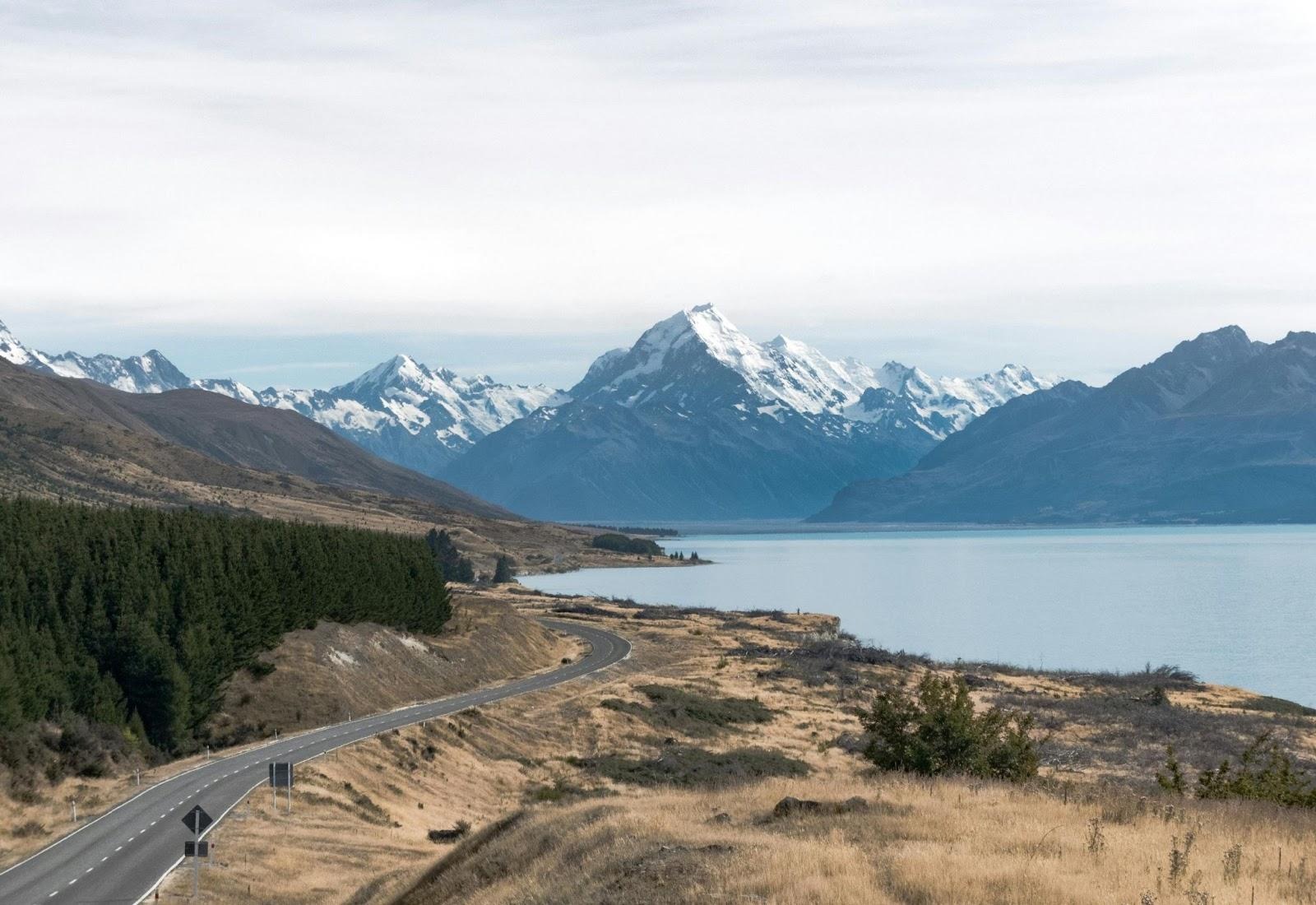
Top Destinations: Auckland, the thriving and busy metropolis, provides plenty of accommodation and outdoor activity options for remote workers and tourists. Less crowded but equally interesting cities include Christchurch, Hamilton, and Wellington.
Digital nomad-ing in the land of the Kiwis has its own charm. The country hosts some of the most gorgeous landscapes on the planet. If you want to be close to nature, there’s no better place to live and work.
- New Zealand stands out for its quality of life, safety, and access to nature. It is one of the strongest picks for remote workers who care about work-life balance and outdoor lifestyle as much as city infrastructure.
- Since 27 January 2025, people on eligible Visitor Visas can work remotely for overseas employers or clients while staying in New Zealand. As long as you're a non-resident on a short-term stay, your income from a non-New Zealand entity will be tax-exempt.
- The country's cost of living is high by nomadic standards. Current estimates put a one-bedroom apartment in the city center at about NZ$2,234 in Auckland, NZ$2,096 in Wellington, NZ$2,268 in Christchurch, and NZ$1,479 in Hamilton.
- Recent Ookla data puts New Zealand’s median fixed broadband download speed at about 206 Mbps, with mobile download speeds above 120 Mbps.
- IT logistics is a downside that intending employers must consider. New Zealand’s remote location can mean longer shipping times and higher freight costs for hardware disposal and replacement, especially compared with Europe or North America.
- The country's time zone also sits far ahead of both the U.S and Europe, which can make meetings and real-time collaboration more challenging for distributed teams.
- When it comes to compliance, employers must adhere to GDPR requirements to protect personal data. Portugal’s labor laws also require employers to formalize telework in writing, respect limits on working hours, provide at least 22 working days of paid annual leave, follow strict dismissal protections, and account for local social security, tax residency, and GDPR obligations when staff works from Portugal.
Country 5: Japan
Best for: Infrastructure and operational reliability

Top Destinations: Tokyo and Kyoto are diverse, beautiful cities worth exploring. Rural Japan offers an alternative, more grounded option for living and working.
Japan is a completely different world in itself and must be at the top of your remote working destination picks. Whether you want to live among the neon-soaked streets of Tokyo or experience a peaceful rural stay, there’s something for everyone in Japan.
- Japan remains attractive for remote workers because daily life is efficient, public transport is exceptional, and major cities are clean, safe, and easy to navigate once you settle in.
- The country can be cheaper than people expect outside the biggest hotspots. Sapporo, for example, is far more affordable than Tokyo, with a one-bedroom city-center apartment averaging about ¥72,000 per month (about $484), versus about ¥180,558 in Tokyo (about $1,213)
- Japan’s public transport service is easily one of the best in the world. You can reach every corner of Japan using public transport. The Shinkansen makes travel between major cities easy. As for inter-city travel, metros and buses are everywhere. There are even public biking services with dedicated bike lanes.
- Japan's quality of life is high. Japanese people are organized, disciplined, and progressive. Everything runs smoothly in Japan–there’s no litter, trains rarely get delayed, and things happen as they are supposed to.
- English is not widely used in Japan. Non-residents need to familiarize themselves with basic Japanese in order to get by comfortably.
- Japan’s digital nomad (designated activities) visa permits a 6-month stay with no renewal. The income threshold is JPY 10 million per year (about $63,000), and applicants need medical insurance coverage of at least JPY 10 million (about $63,000). There is no special nomad tax break, but short-stay holders are generally not taxed on foreign income in principle.
- For employers, IT procurement in Japan is more regulated. Some electronics need PSE certification before they can be legally supplied, so it is safer to source through local vendors or compliant distributors than to rely on foreign-bought hardware.
Country 6: France
Best for: Remote workers who value culture and city life

Top Destinations: Paris, the city of love, is a must-visit. However, it is expensive, and other cities like Nice, Lyon, and Toulouse are great alternatives.
France is becoming increasingly popular among remote workers. For most, experiencing the French way of life is a top bucket-list item. There are endless options of places to work from, and after work, you can wind down with the bustling nightlife.
- France remains attractive for remote workers because it combines strong infrastructure with a high-quality urban lifestyle. Paris is expensive, though: a one-bedroom city-center apartment averages about €1,379, compared with about €830 in Lyon and €1,011 in Nice.
- As a remote worker, you are allowed to stay in France for up to 90 days within a 180-day period without a visa. For long-term stays, you’ll need to explore the Profession Libérale or the long-stay visitation visa.
- France does not offer a special tax break for digital nomads. If you become a French tax resident, you're expected to pay taxes on your worldwide income, subject to tax treaties. If you remain a non-resident, France taxes French-source income, not foreign income.
- You or your employees won't have any issues with internet connectivity in France, as the country's broadband speed reaches 348 Mbps, per Ookla.
- France has excellent educational facilities, quality healthcare, modern malls and gyms; every convenience and amenity you can think of is covered. Internet access is fast and reliable; even cafe wifi reaches 450+ Mbps download speeds
- Equipment sourced within the EU reaches France with minimal friction, as intra-EU trade bypasses customs formalities entirely. Hardware imported from outside the EU, however, is a different story — a laptop shipped from the United States, for example, must clear French customs, incur 20% import VAT and pass compliance checks, including CE marking requirements.
- Employers hiring locally must also navigate GDPR enforcement by France's CNIL, as well as payroll obligations that can incur additional social charges on top of gross salary.

Country 7: USA
Best for: Employers hiring across a large domestic talent market

Top Destinations: The USA is like many countries in one. Its scale and richness are unimaginable and no other country in the world has such a diverse geography and population.
- Co-working spaces like Common Desk, Serendipity Labs and CoHatch are abundant in almost all American states. From cafes to specially designed workspaces, you have plenty of options to choose from.
- Cities like New York, San Francisco and Los Angeles are relatively expensive. If you decide to settle in smaller cities or towns, you can get by with a fraction of the cost. For example, a one-bedroom apartment in New York City center averages about $4,399 a month, compared with about $1,879 in Austin.
- The States enjoy some of the fastest fixed broadband speeds in the world, with median download speeds of above 300 Mbps. Public high-speed Wi-Fi throughout the country is an advantage for remote workers.
- The USA doesn’t offer a dedicated Digital Nomad Visa. For remote workers, the B-1/B-2 visa is the most sensible option. It is available to residents of most countries and grants a stay of up to 6 months.
- U.S. companies shipping within the U.S. will not experience hardware logistics issues. Customs and duty questions only arise when equipment is imported into the U.S., because imported goods must clear CBP and may be subject to duty.
Country 8: Taiwan
Best for: Affordable and high-functioning remote work

Top Destinations: Taipei, Taiwan’s capital, is one of the liveliest cities in Asia. For a more relaxed pace, cities like Kaohsiung and Tainan are better choices.
Taiwan is among the best destinations for remote work in Asia. This is partly because Taiwan is not (yet) a tourism-oriented country, which means there’s no price gouging and no concerns about getting scammed.
- Taiwan is one of the safest countries in the world for outsiders. Crime rates are low and public safety is excellent. Healthcare, too, is great; Taiwan’s national health insurance system covers both residents and migrants.
- Taiwan’s cost of living is relatively low, without compromising the quality of life. Rent in Taipei compares favorably to other global cities, but you can get even lower rates in other areas. A one-bedroom apartment in Taipei city center averages about NT$23,535 (about $740), compared with about NT$12,713 in Kaohsiung (about $400).
- Taiwan has some of the world’s fastest broadband internet speeds, with Ookla reporting an average fixed broadband speed of 269 Mbps in January 2026. High-speed Wi-Fi is widely available in cafes, coworking spaces and public areas.
- Taiwan’s Gold Card offers attractive visa programs for remote workers. The Gold Card combines a work permit, resident visa, alien resident certificate and a re-entry permit.

Country 9: Sweden
Best for: Work-life balance and dependable infrastructure

Top Destinations: Stockholm is known for its extreme winters. However, summers are long and lovely. Malmo and Gothenburg are also lovely cities to consider.
Tucked in the heart of Scandinavia, Sweden is a picturesque slice of heaven. In recent years, Sweden has accumulated a thriving digital nomad community. The Swedish lifestyle, with its focus on work-life balance and sustainability, lures remote workers to wind down here while getting work done.
- Sweden doesn’t offer a dedicated digital nomad visa. Sweden allows non-Schengen remote workers to stay in the country for up to 90 days using a Schengen visa. Eligible visa-free status applicants can also enjoy short-term stays. The country's Migration Agency says it is only in exceptional cases that someone may work in Sweden without a work permit. For longer stays, the relevant route is usually a work permit or, for people running their own business in Sweden, a self-employment permit.
- Swedish life means a high standard of living. Although the cost of living is high, you get your money’s worth with world-class public healthcare, transportation and infrastructure. A one-bedroom city-center apartment averages about SEK 16,136 (about $1,771) in Stockholm, versus about SEK 9,842 (about $1,080) in Malmö.
- Internet services in Sweden are fast and reliable. You consistently get 100-200 Mbps, even on public Wi-Fi. Coworking spaces like Helio, Knackeriet and Mindpark are littered around major cities like Stockholm, Malmö and Gothenburg.
- English is widely spoken throughout the country, which means that communication is a breeze for English-speaking remote workers.
- Sweden’s labor rules are protective, so hiring local residents usually entails stricter compliance. For example, the Working Hours Act states that people working in Sweden must have 11 consecutive hours of rest daily. The rest period must include hours between midnight and 5:00.
- If you want to hire Swedish residents, buying hardware for them is easiest from within the EU. If you import a laptop from outside the EU into Sweden, you need a customs declaration and must pay import VAT, which is 25% for most goods.
Country 10: Iceland
Best for: Safe and premium remote work

Top Destinations: Reykjavik, the capital city, lets you work amidst volcanic mountains and hot springs. Other popular areas include Akureyri, Stykkishólmur, Ísafjörður, Siglufjördur and Seydisfjördur.
Iceland has endless reasons to be on every digital nomad’s bucket list. From astonishing natural landscapes to top-tier infrastructure, the world’s northernmost capital is a great destination for remote workers.
- Introduced in October 2020, Iceland’s Digital Nomad Visa Program allows holders to stay and work in Iceland for approximately six months without interruption. This visa is granted to self-employed workers and those employed by a non-Icelandic company
- For more than a decade, Iceland has consistently been ranked as one of the safest countries in the world. Iceland has no army, and crimes, be they petty theft or more serious, are nonexistent.
- Iceland has fantastic internet infrastructure (about 347 Mbps download speeds and 312 Mbps upload speeds for fixed broadband). Satellite-powered facilities connect remote areas outside of cities. But the country can be quite expensive. A one-bedroom city-center apartment averages about ISK 294,842 (about $2,348) a month.
- Iceland's protective labor rules set a general 40-hour workweek, require 11 consecutive hours of daily rest, and say pay and core terms cannot fall below the relevant collective agreement. Employers handling employee data must also comply with Iceland’s Data Protection Act, which applies GDPR-level rules.
- Hardware imported into Iceland can attract VAT, duties, and other charges, so replacing or shipping laptops from abroad can be slower and more expensive.
Country Comparison Overview
| Country | Internet Speed (Avg Mbps) | Cost of Living (Monthly USD) | Visa Duration | Tax Benefits? | English Proficiency | Best For |
|
Spain |
274 Mbps |
$800- $2,000 |
1-year visa |
Yes |
Medium-High |
Well-rounded remote work |
|
Portugal |
245 Mbps |
$1,500-$2,200 |
4 months, 2-year residence permit, renewable up to 5 years |
No |
High |
Digital nomads and cost-conscious employers |
|
Canada |
274 Mbps |
$1,200-$1,800 |
Up to 6 months on visitor status for remote work |
Income is tax-exempt under visitor status |
Native |
Remote workers who want stability |
|
New Zealand |
214 Mbps |
$1,000-$1,400 |
Visitor visa up to 6 or 9 months |
Depends on the duration of stay |
Native/ fluent |
Lifestyle-first remote workers |
|
Japan |
249 Mbps |
$800- $1,200 |
6 months, no extension under digital nomad route |
Yes |
Moderate |
Infrastru-cture and operational reliability |
|
France |
348 Mbps |
$1,000-$1,300 |
90 days (short stay) 3 months to a year (long stay) |
Yes |
Moderate |
Remote workers who value culture and city life |
|
United States |
306 Mbps |
$1,000-$2,000 |
Only through temporary visitor routes |
Yes |
Native |
Employers hiring across a large domestic talent market |
|
Taiwan |
259 Mbps |
$700- $1,000 |
Gold Card valid for 1, 2 or 3 years |
Yes |
Moderate to high in major cities |
Affordable, high-functioning remote work |
|
Sweden |
203 Mbps |
$1,000-$1,200 |
Self-employment residence permit up to 2 years |
Yes |
Very high |
Work-life balance and dependable infrastructure |
|
Iceland |
306 Mbps |
$1,300-$1,600 |
90 to 180 days |
Yes |
Very high |
Safe, premium remote work |

Decision Framework: Choosing Where to Hire
Which country solves the biggest remote work challenges for your IT team? The following considerations will point you in the right direction.
1. Evaluate Time Zone Coverage
Determine the ideal availability required for the roles you want to fill. For example, if your remote workers need to be awake for synchronous client communication, it's best to hire based on your clients' time zone. If you're hiring a tech support team, hire from countries whose work hours sync with the people they'll support.
2. Review IT Procurement Complexity
If your operation requires you to purchase or move equipment when onboarding new remote workers or supporting existing ones, consider countries with easy logistics.
That means looking into places where you have strong local vendor support, fewer shipments and customs frictions, friendly local regulations, and robust IT infrastructure to support ongoing support.
For example, hiring within the EU should be a top choice if you are based within that jurisdiction or have local suppliers there.
Using provider storage facilities like Workwize's EU warehouse can also be a smart move.
You can also focus on countries that share free trade agreements with your domiciled country.
3. Consider Tax Implications
If you intend to use contractors, review local worker-classification rules to avoid misclassification risk and weigh things against your domiciled country's tax laws regarding remote hiring.
Also, check whether digital nomad or expat tax programs, such as Portugal’s NHR, Spain’s regime or Taiwan’s Gold Card, create meaningful advantages. That's because these could affect your hire's salary demands.
4. Evaluate Long-Term Costs
Avoid the mistake of judging by salary alone because some long-term operational costs like hardware deployment and support, compliance support, and mandatory benefits can give you an expensive reality check when you least expect it.
You should also add geopolitical factors to your list of considerations, as rising tensions and policy uncertainties can increase costs. For example, the U.S. had a major tariff shakeup that saw it go at odds with countries with which it already had existing trade relationships.
Taiwan is another country to consider, as tensions with China may have unpredictable effects on its economy.
More Findings About Remote Work Across Nations From Our Internal Research
Although we’ve tried to be as objective as possible with our list, we couldn't include all the great countries for remote work within the scope of this article.
Other great destinations for remote work exist around the world, and businesses looking to hire remotely must conduct their own research before setting out on a remote hiring spree.
Here are our key findings:
- While Northern European countries still dominate the top, our analysis reveals that Asia Pacific (Japan, Malaysia, Thailand, and Vietnam) and the Middle East and North Africa (e.g., UAE, Israel, and Pakistan) are on the rise.
According to a Native Teams report, 25% of its US-based clients employ remote workers in the APAC region, and 38% of companies with 5,000 workers plan to increase APAC talent on their payroll.
- Infrastructure improved noticeably in several markets. Among the countries we reviewed, the UAE remains one of the strongest connectivity stories. Its 327.56 Mbps median fixed broadband and 614.42 Mbps median mobile speed represent major growth, according to DataReportal. South Korea also saw increases of up to 59% in median mobile internet download speeds, reaching 225 Mbps.
- Europe also added a couple of fresh entries outside our list. Italy’s digital nomad/remote worker visa is now live for non-EU citizens working remotely while living in Italy.
- Slovenia also launched its first digital nomad residence permit on November 21, 2025, allowing eligible remote workers to stay for up to 1 year. But it cannot be extended immediately and requires a six-month gap before beneficiaries can apply again.

IT Considerations When Hiring Across Borders
According to Payoneer CEO John Caplan, “The rhetoric about the globalized opportunity is powerful, but it doesn’t make any difference to the business you’re doing unless you actually have the utilities and tools to do it.”
A country may look perfect in talent, labor costs and remote-work appeal, yet still create serious operational friction if sourcing, shipping, replacing, and retrieving devices is difficult.
That is why IT procurement should be part of any cross-border hiring decision.
EU (Spain, Portugal, France, Sweden)
The EU is one of the easier regions for cross-border hardware deployment, especially when companies are hiring across multiple member states. Shipping is fast and the ease of moving equipment through customs within the EU removes one of the biggest causes of delay.
Pros
✅ Fewer customs barriers within the EU
✅ Strong supplier and courier networks
Cons
❌ VAT complexity across countries
❌ Country-specific compliance or certification requirements
❌ Warranty and support terms may still differ by market
Typical timeline: 3 to 5 business days within the EU
North America (USA, Canada)
North America benefits from a mature logistics infrastructure and relatively predictable hardware sourcing, especially in the US. But cross-border movement between the US and Canada can still introduce delays and additional paperwork, depending on product origin and trade qualifications.
Pros
✅ Strong logistics and fulfillment networks
✅ CUSMA can simplify US-Canada trade
✅ Broad access to hardware vendors and support services
Cons
❌ Canada Customs can delay non-CUSMA goods
❌ Cross-border paperwork can slow delivery
❌ Costs may rise when duties or brokerage fees apply
❌Unpredictable political shakeups may cause sudden fee spikes
Typical timeline: 2 to 3 days in the US, 5 to 7 days in Canada
APAC (Japan, Taiwan, New Zealand)
APAC offers strong remote hiring opportunities, but hardware procurement is often less predictable across markets. Import rules, local product requirements and longer shipping routes can make deployment more complex than in Europe or North America.
Pros
✅ Strong local IT vendor ecosystems in several markets
✅ Excellent internet infrastructure in countries like Japan and Taiwan
✅ Good availability of quality business hardware
Cons
❌ Import restrictions or regulatory hurdles in some countries
❌ Longer delivery times in markets like New Zealand
❌ More variation in procurement processes from one country to another
Typical timeline: 7 to 14 days, depending on customs and destination
What to Plan For
Comparing salaries and time zones should not be your only concern when you're hiring workers across borders who need hardware support. Plan for local certification requirements, import duties that can significantly raise hardware costs, plug and voltage differences, warranty coverage gaps and device retrieval needs.
How Workwize Helps
Workwize helps companies manage the IT side of global hiring by handling procurement, local vendor coordination, logistics, customs support and device delivery across countries. Instead of treating hardware as an afterthought, businesses can equip international hires without letting procurement delays and operational complexity slow expansion.
Equip Your Global Workforce With Workwize from Day 1
Remote work may have gone mainstream, but equipping workers with the right equipment and support is still far from minimal friction.
Between customs forms, import duties, MDM enrollment and shipping delays, it can take 3-4 weeks to get a laptop to a new hire in Tokyo. By then, they've lost momentum or accepted another offer.
That's why companies hiring across 10+ countries use Workwize. We handle procurement, customs, deployment and retrieval across 130+ countries—so your new hire in Lisbon, Canada or Taiwan gets their laptop pre-configured and ready to work from day 1.
Book a Workwize Demo now to see how we simplify global IT deployment.


Establish a single source of truth for every IT asset across the globe.
.png?width=258&height=318&name=g10%20(5).png)
More related resources to help you stop firefighting hardware operations.


Get monthly insights into how other IT leaders are improving their ops.



.png?width=2880&height=1232&name=Group%202147262874%20(1).png)
Stop coordinating
hardware like it's 2012.
.svg)
.png?width=172&height=68&name=apple%20business%20patner%20(1).png)
.svg)
.svg)
.svg)
.svg)