




.svg)
.svg)

.svg)


.svg)




.svg)
.png?width=500&height=424&name=Style-1---V1-(1).png)
.png?width=30&height=30&name=image%20(57).png)
.png?width=1230&height=692&name=Vector%20(13).png)
The short answer
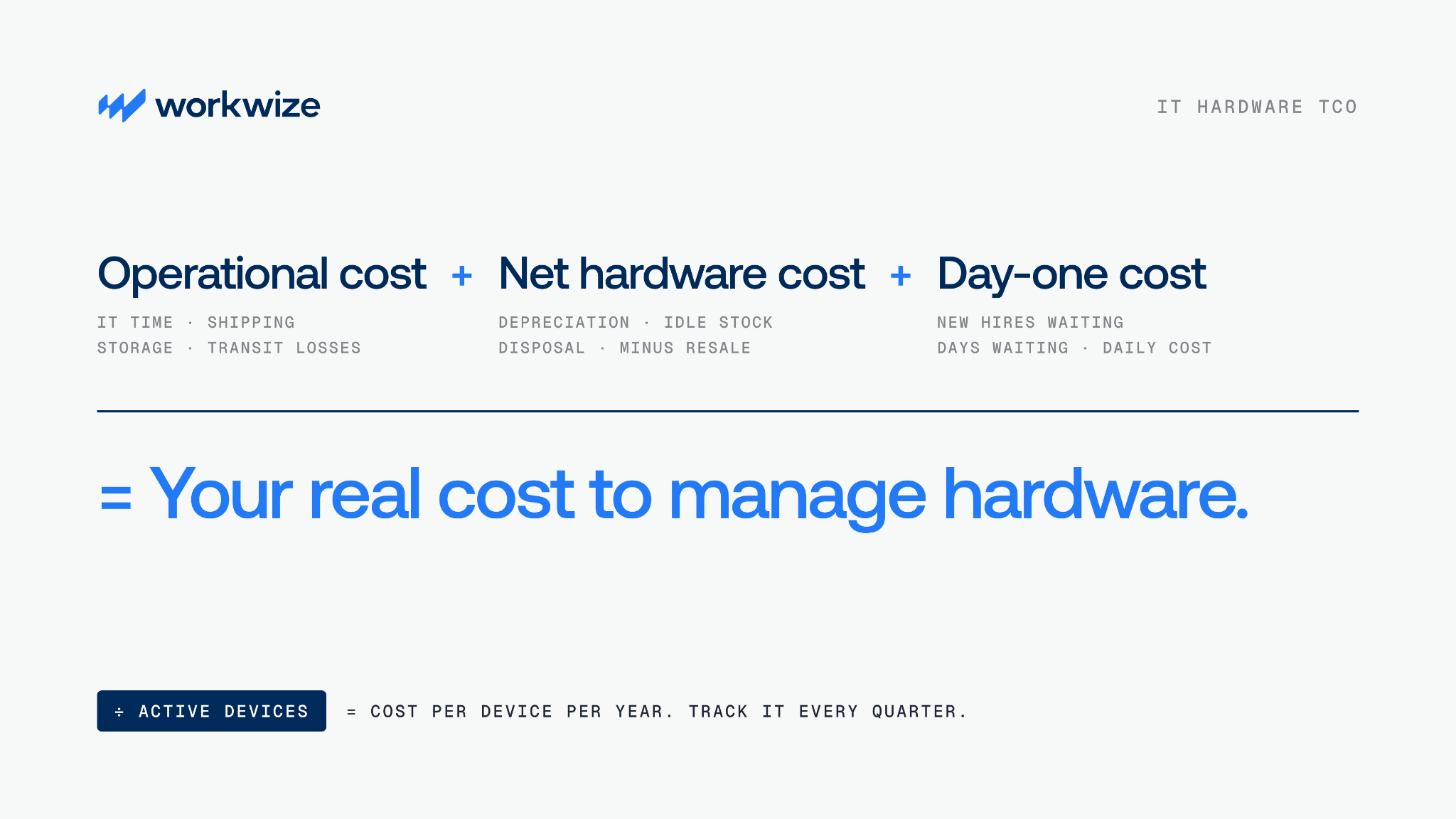
IT hardware total cost of ownership (TCO) is what it costs each year to buy, move, store, support, and retire your devices, not just their purchase price. Add the three costs, then divide by active devices to get a cost per device per year:
- Operational cost: IT time, shipping, storage, and transit losses.
- Net hardware cost: depreciation, idle stock, and disposal, minus resale recovered.
- Day-one cost: productivity lost while new hires wait for a working device.
This article is based on David Foxen's interview with Jason Sinyor on the SAM Beast YouTube channel. David is the founder of SAM Beast Consulting and has spent his career building ITAM programs. Quotes are lightly edited for clarity.
Laptops are about to get a lot more expensive. Gartner expects average PC prices to rise 17% this year, and hardware budgets aren't keeping up.
Two ways to close the gap. Either your team gets fewer devices, or you stop paying for the ones you can't see.
Most companies pay for a lot they can’t see. There’s the office closet full of laptops nobody’s counted. There’s the spreadsheet that’s three weeks behind, the courier claim nobody filed, and the new hire who spends day one on full salary without a laptop. None of it shows up on a purchase order, so none of it gets cut.
And when Finance asks what your hardware really costs, the purchase price isn't enough.
Hardware cost stops at the purchase order.
Ask an IT leader what a laptop costs and you'll hear the unit price on the last purchase order.
That's the number that gets negotiated, approved, and reported. Far less gets tracked after it.
Software is different. Audits pushed teams to track licenses and contracts, so the records exist. Hardware never had that pressure. As David put it: "We spent millions of dollars on hardware, and you're telling me that there's no mechanism in place with the reseller or with the internal customer to actually track what you've purchased? That would never happen in the software space."
So I ask large companies a simple question: when a new hire is coming, how do you know whether you need another laptop? The answer I hear is, "Well, I walk to this closet, and I open it up." And that's where it breaks.
That closet is where the waste hides. Devices depreciate there while the team buys new ones. Returns collected without automated offboarding wait to be wiped.
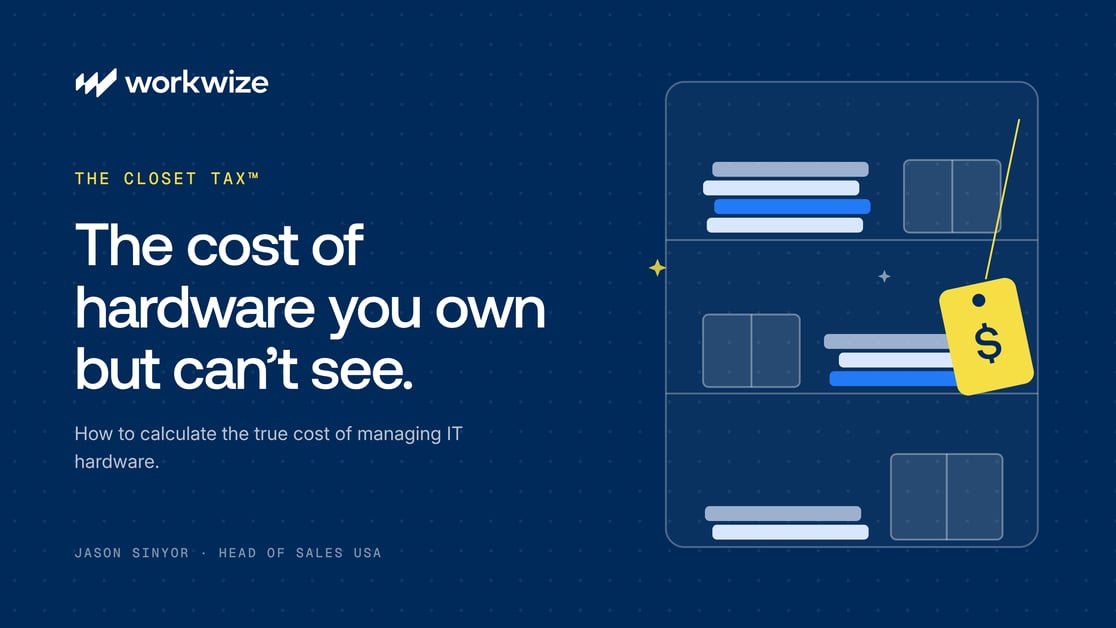
Often, nobody knows which machines are due for refresh. Let's call this the Closet Tax™: the cost of hardware you own but can't see.
Prices rose just as budgets shrank.
For years, the Closet Tax was easy to ignore. Laptops were cheaper, lead times were short, and buying another one was faster than finding the old one.
2026 changed that. Gartner forecasts that combined DRAM and SSD prices will rise about 130% by year-end and PC shipments will fall 10.4%. Gartner analyst Ranjit Atwal called it "the steepest contraction in device shipments witnessed in over a decade."
David hears the squeeze from ITAM managers every week. One answer he shared summed it up: the hardware budget was cut, standard laptop prices rose 26%, lead times stretched to 6 to 12 weeks, and refresh targets slipped. We hear it too. A company has one reseller in Singapore and another in India, and three months later, lead times are six weeks and new hires are waiting.
Gartner also expects enterprises to keep PCs about 15% longer. That's the right instinct, but you can only stretch a life cycle you can see. Nine out of ten companies I speak to aren't managing refreshes the way they should. They tell me they have 400 refreshes to do and no central way to see which ones are coming up.
David named the cost of doing it by hand: "That's a human, or multiple humans, who have to prep 400 laptops and talk to 400 people to arrange a date to send it back."
Your MDM is not an asset register.
When we ask how teams track devices, the most common answer is "our MDM." But an MDM can't see the devices that make up the Closet Tax.
An MDM sees a laptop while it's on and checking in. After that, as I told David: "As soon as that laptop closes, it hits an office and a human being has to update it. Your asset tracker is behind reality." In a 2020 Ivanti survey of more than 1,600 IT professionals, 43% tracked assets in spreadsheets, and more than 60% were missing purchase, contract, or warranty data.
The gaps sit exactly where a calculation needs data:
- Offline stock. Spares, returns and broken devices are invisible until someone counts them.
- In transit. A device between pickup and delivery belongs to nobody's system. If a box arrives with bricks instead of a laptop, you find out last.
- Purchase history. What you paid and how long it depreciates often sits in a reseller's inbox.
Asset tags don't fix this. A sticker says a laptop is yours, not where it is or when it's due. The serial number already identifies the device. What's missing is IT asset tracking that records every movement.
How to calculate IT hardware TCO
Once you can see the Closet Tax™, you can put a number on it, and that's what Finance wants. The CFOs and CIOs we speak to are clear: "We don't just want time back. We want to see that it's going to affect our P&L and our balance sheet."
So we start every conversation with Finance teams the same way: what does it cost to manage a laptop today, and what should it cost? The answer has three pillars. Purchase price is only one input to the second.
|
Pillar |
What goes into it |
How to work it out |
|
Operational cost |
IT time, shipping, storage, transit losses |
IT hours × hourly rate + shipping + storage + losses |
|
Net hardware cost |
Depreciation of the fleet and idle stock, disposal, resale |
Depreciation + disposal − resale recovered |
|
Day-one cost |
New hires waiting for a working device |
New hires × days waiting × daily cost |
Day-one cost is the easiest to miss, and automated onboarding and zero-touch device deployment remove it. Thirty minutes before our interview, I spoke with a company whose new hires work on a virtual desktop for half a day, then go buy their own laptop. That's a day-one cost too, even if it never shows up as a budget line.
Calculate it in 5 steps
- Count active devices. Check your MDM against a physical count of spares and returns.
- Work out net hardware cost. Use purchase orders, resale reports, and your depreciation policy.
- Add operational cost. Pull the last 12 months from hardware tickets, courier invoices, facilities costs, and claims logs.
- Add day-one cost. Use onboarding tickets for the waits and HR salary bands for the daily cost.
- Divide by active devices. Track your cost per device per year every quarter.
The 16 numbers you need
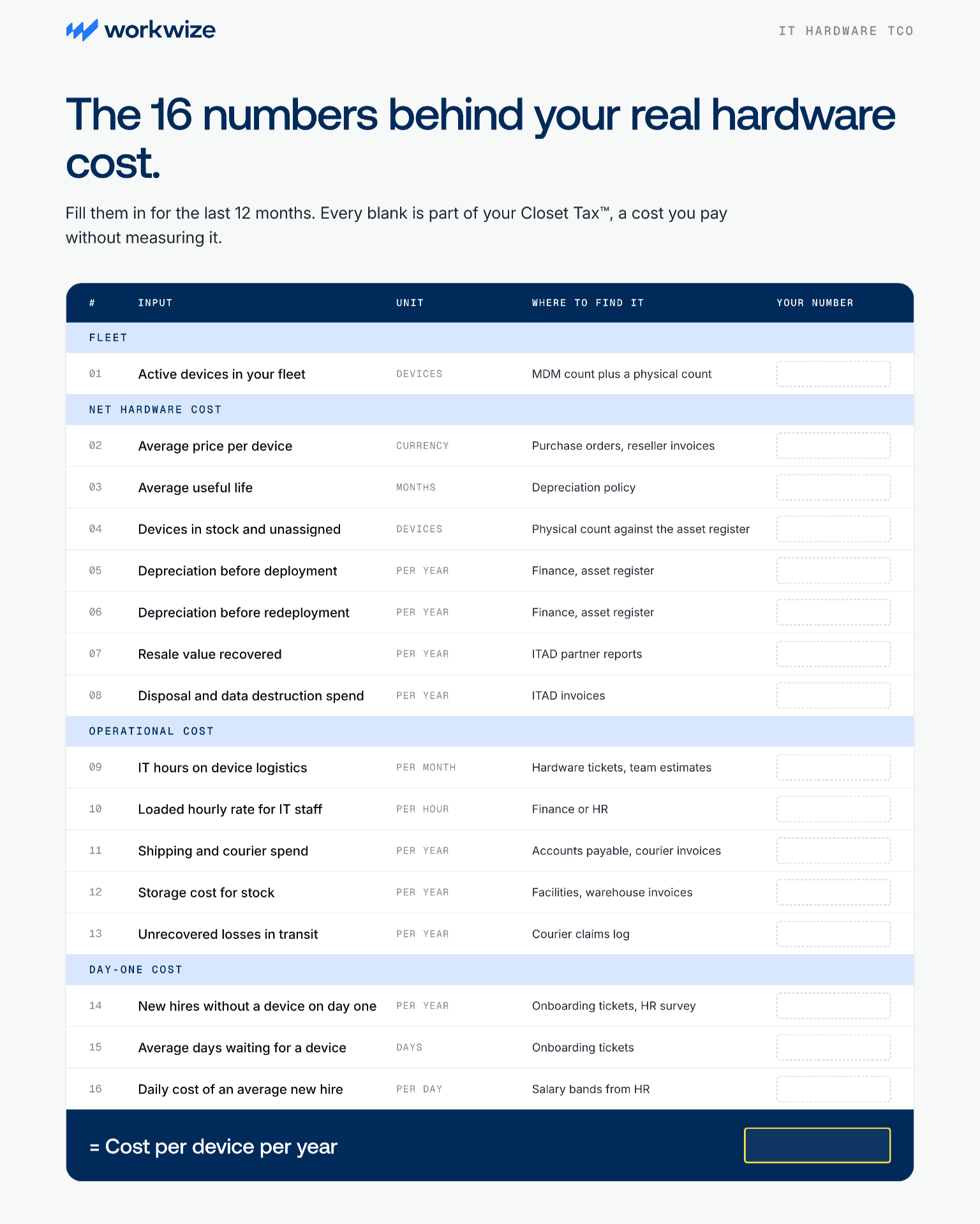
Want help with the numbers? Book a custom 30-min call, and we'll take you through each calculation and show you where Workwize can move your P&L.
A smaller budget is fine if you can see your fleet.
When companies tell us their hardware budget went down, we say: that's okay.
Most fleets already hold the answer. In-cycle laptops sit in a closet in one country while a new hire waits in another. Run what you own through 36, 48, or 60 months, and the cut stops hurting. Or as I put it to David: "Know where all your laptops are and run them as long as you can. That's how you get the most out of it."
Three things make that possible:
- One record per serial number. Price, depreciation, owner, location, and refresh date in one place, updated by every movement, not by someone with a spreadsheet.
- Refresh on schedule, not on breakdown. If a device is due at 36 months, the replacement ships in month 35 and IT asset retrieval brings the old one back. Then refurbish it and redeploy it, or send it to IT asset disposal with a data destruction certificate that follows NIST SP 800-88.
- Stock that restocks itself. Set a minimum level per region and use global IT procurement across several suppliers, so one reseller's lead time doesn't stall hiring.
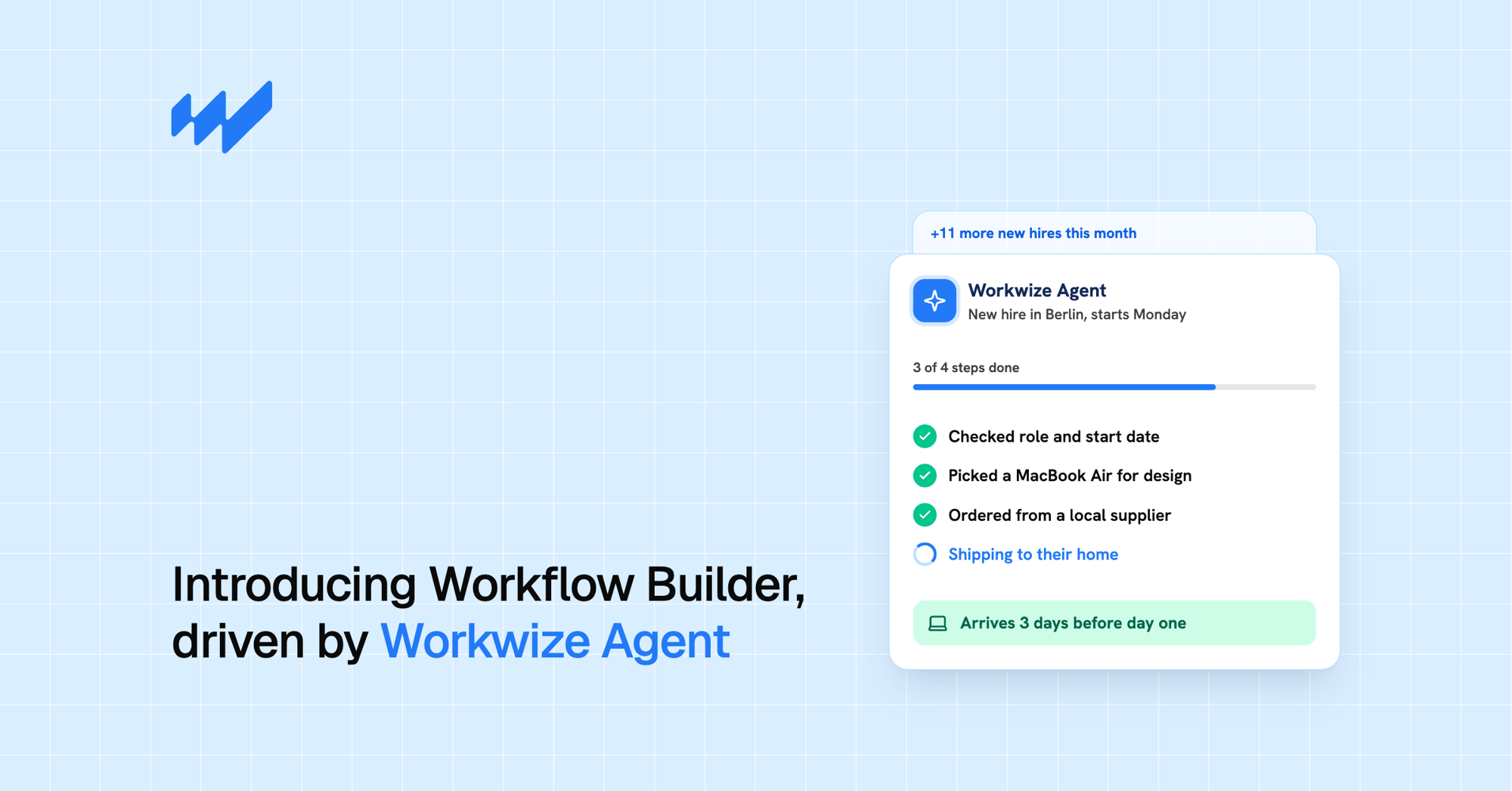
That's how we built Workwize. We scan every returned device by serial number at our warehouses, and track every courier movement through APIs. Each customer's catalog spans several suppliers, so we can swap an out-of-stock model for one with similar specs. Our workflow builder triggers refreshes, restocks, and retrievals from your HRIS, MDM, and ITSM data through our integrations.
For seven more ways to stretch a shrinking budget, read how to protect your 2026 IT budget from rising hardware prices.
So here's my challenge
Before you ask for more hardware budget, work out these 16 numbers. If you can't find half of them, you don't have a budget problem. You have a visibility problem, and the teams that fix it first will run leaner fleets while everyone else keeps paying the Closet Tax.
Book a 30-min demo to see how Workwize runs procurement, deployment, retrieval, and resale from one platform, so you stop paying the Closet Tax™.
Frequently asked questions
What is IT hardware TCO?
IT hardware total cost of ownership (TCO) is the full cost of a device across its life cycle: purchase, deployment, support, storage, shipping, retrieval, refresh, and disposal, minus any resale value recovered. Express it as a cost per device per year to track it over time.
How do you calculate a laptop's total cost of ownership?
Add three costs for a 12-month period: operational cost (IT time, shipping, storage, transit losses), net hardware cost (depreciation, idle stock and disposal, minus resale recovered), and day-one cost (productivity lost while employees wait for devices). Divide the total by active devices.
Why is purchase price a poor measure of hardware cost?
Purchase price captures one moment in a device's life. It misses IT time, storage depreciation, duplicate purchases, unrecovered resale value, and new hires waiting for equipment.
What is the Closet Tax™?
The Closet Tax™ is the cost a company pays for IT hardware it owns but can't see: devices depreciating in office storage, duplicate purchases, late refreshes, and unrecovered resale value. Workwize coined the term.
How do rising memory prices affect hardware TCO?
Higher DRAM and SSD prices raise the cost of new devices. Gartner expects average PC prices to rise 17% in 2026 and enterprises to keep PCs about 15% longer. Running devices longer only lowers TCO if you can see which ones are still in their life cycle.
Can an MDM track hardware TCO?
Not on its own. An MDM tracks devices while they're online, but loses offline stock, devices in transit, and purchase history. TCO needs a record per serial number with cost, depreciation, location, and every movement.
.png?width=50&name=image%20(57).png)

Establish a single source of truth for every IT asset across the globe.
.png?width=258&height=318&name=g10%20(5).png)
More related resources to help you stop firefighting hardware operations.


![10 IT Asset Management Challenges [2026 Updated]](https://www.goworkwize.com/hs-fs/hubfs/10-IT-Asset-Management-Challenges%20(3).png?width=360&height=200&name=10-IT-Asset-Management-Challenges%20(3).png)

Get monthly insights into how other IT leaders are improving their ops.



.png?width=2880&height=1232&name=Group%202147262874%20(1).png)
Stop coordinating
hardware like it's 2012.
.svg)
.png?width=172&height=68&name=apple%20business%20patner%20(1).png)
.svg)
.svg)
.svg)
.svg)