




.svg)
.svg)

.svg)


.svg)




.svg)
.png?width=500&height=424&name=Style-1---V1-(1).png)
.png?width=1230&height=692&name=Vector%20(13).png)
Workwize has been named a Representative Vendor in the 2026 Gartner® Market Guide for Hardware Asset Management Tools.
This recognition reflects a broader structural shift in how enterprises approach Hardware Asset Management.
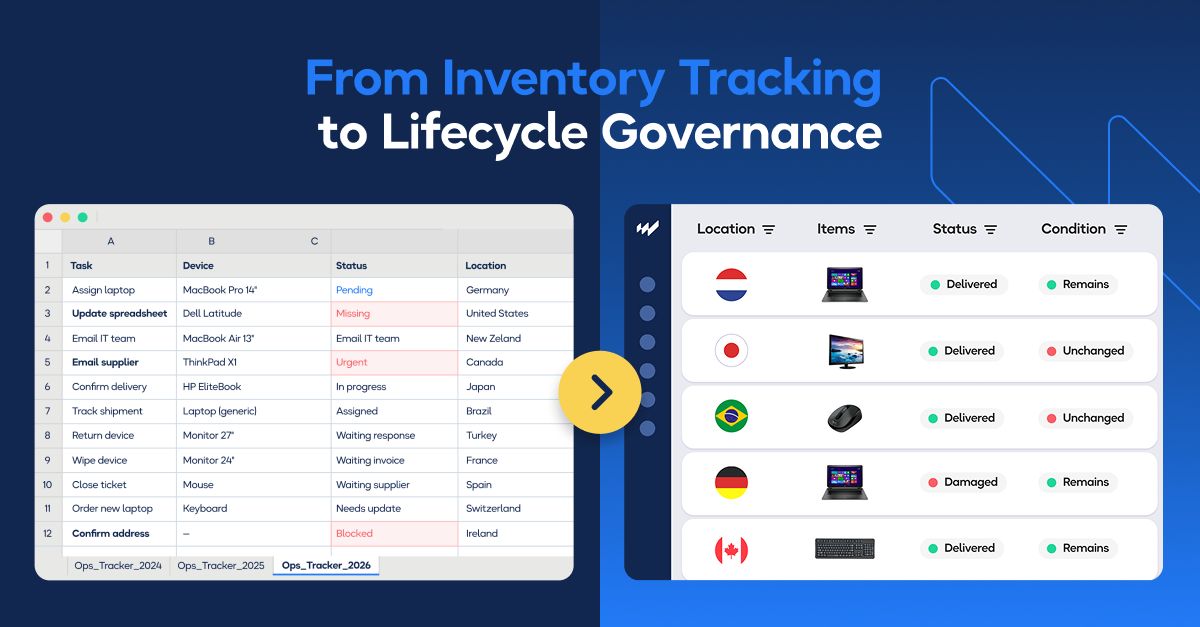
The market has evolved beyond basic inventory tracking toward full lifecycle governance, automation, global coordination, and compliance oversight.
For global organizations managing distributed teams, Hardware Asset Management is no longer an operational task.
It is a strategic control function that intersects with finance, security, compliance, and sustainability.
TL;DR
- Workwize is recognized as a Representative Vendor in the 2026 Gartner® Market Guide for Hardware Asset Management Tools.
- Hardware Asset Management has shifted from inventory tracking to full lifecycle governance.
- Enterprises now require global procurement, automated deployment, centralized asset visibility, secure retrieval, and compliant IT asset disposal within a single system.
- Lifecycle control reduces audit risk, hardware loss, and operational overhead.
- HighLevel saved $1.4 million per year after consolidating its global hardware lifecycle.
- Workwize is a unified global platform for the entire IT asset lifecycle from procurement, deployment, management, retrieval, and disposal.
What Is Hardware Asset Management in 2026?
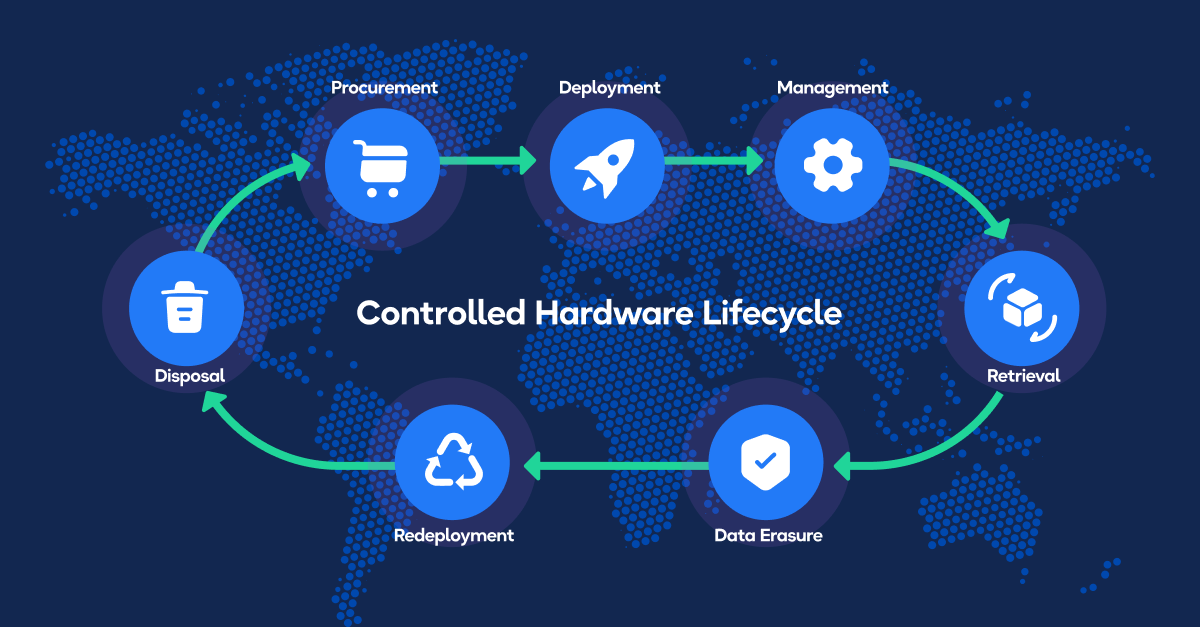
Hardware Asset Management, often abbreviated as HAM, is the governance of physical IT assets throughout their entire lifecycle.
This lifecycle includes procurement, configuration, deployment, tracking, maintenance, retrieval, certified data erasure, and final disposal.
In earlier models, Hardware Asset Management focused primarily on inventory accuracy. In 2026, that definition is incomplete. Modern Hardware Asset Management software must support global lifecycle orchestration, financial visibility, compliance documentation, automation, and sustainability reporting.
Enterprises are no longer asking whether devices are recorded. They are asking whether the lifecycle is controlled.
Why Traditional Hardware Management Models Break at Global Scale
Many multinational organizations still operate under a fragmented model:
- Regional suppliers manage procurement
- Local IT teams coordinate deployments
- Offboarding is handled manually
- Finance reconciles device spend after movement
- Disposal processes vary by country
This structure introduces operational and compliance risk.
As companies expand internationally and remote work becomes permanent, hardware logistics become more complex.
- Customs regulations vary by region.
- MDM enrollment must occur before shipment.
- Offboarding requires secure retrieval across time zones.
- Disposal must meet local legal standards.
- Sustainability goals demand emissions tracking and higher reuse rates.
When these processes are not centralized, administrative workload increases, hardware losses rise, audit exposure increases, and cost predictability declines.
Hardware Asset Management, hence, becomes governance.
Key Trends in the 2026 Market for Hardware Asset Management Tools

The 2026 research signals a structural evolution in the category. Enterprises are prioritizing platforms that deliver:
Full Hardware Lifecycle Management
Support for procurement through disposal within a single system rather than disconnected tools.
Centralized and Reliable Asset Data
Real-time asset visibility integrated with HR, MDM, identity, and finance systems.
Workflow Automation
Automated onboarding and offboarding processes that reduce manual coordination.
Audit and Compliance Readiness
Documented proof of ownership, custody, data erasure certification, and disposal compliance.
Financial Governance
Clear reporting on device spend, depreciation, leasing structures, and asset recovery value.
Sustainability Reporting
CO2 tracking, reuse metrics, and responsible recycling documentation.
Visibility is no longer enough. Enterprises require control.
How Workwize Aligns With Modern Hardware Asset Management Requirements
Workwize was designed around global IT hardware lifecycle management rather than standalone asset tracking.
The platform consolidates procurement, deployment, management, retrieval, and IT asset disposal into one coordinated system.
Global IT Hardware Procurement
Organizations can purchase or lease devices through a global supplier network while sourcing locally. This reduces customs friction, shortens delivery timelines, and stabilizes regional pricing.
Device standardization becomes enforceable across countries rather than dependent on local vendors.
Automated Global Deployment
Devices are configured and enrolled in MDM before shipment. Integrations with HR and MDM systems enable automated onboarding workflows.
New employees receive devices within days. IT teams reduce manual coordination and ticket volume.
Centralized IT Asset Management
Workwize provides a single dashboard for global asset visibility.
Capabilities include real-time tracking, repair-and-replacement workflows, centralized invoicing, and local buffer-stock management. Existing inventory can be added to maintain continuity.
Enterprises move from spreadsheet reconciliation to structured lifecycle governance.
Secure Retrieval and Lifecycle Recovery
Offboarding introduces both financial loss and security exposure.
Workwize automates communication with departing employees, schedules global pickup, stores devices in local facilities, performs certified data erasure, and prepares devices for redeployment.
Recovered hardware is cleaned, tested, repackaged, and reassigned where possible, increasing reuse rates and reducing loss.
Compliant IT Asset Disposal and Value Recovery
When devices reach end of life, structured IT asset-disposal workflows are triggered.
This includes secure wiping, certification, responsible recycling, and local resale opportunities. Disposal becomes auditable and financially measurable.
HighLevel Saves $1.4M Per Year with Centralized Hardware Asset Management

At enterprise scale, lifecycle consolidation produces measurable outcomes.
HighLevel, a rapidly growing SaaS company with over 60,000 customers across 140 countries and nearly 1,000 employees, previously relied on multiple MSPs across the US, India, and the Philippines to manage IT hardware procurement and distribution.
This fragmented model created operational friction. Time zone differences caused communication delays of up to 18 hours between responses. Pricing and product availability varied across vendors. Ordering processes involved multiple steps and markups. Maintaining hardware standardization across regions became increasingly difficult.
So by replacing this multi-vendor structure with a centralized Hardware Asset Management platform, HighLevel unified procurement, deployment, asset tracking, retrieval, and disposal into a single lifecycle system.
The results were measurable:
- 70 percent yearly time savings on IT equipment operations
- 24.5 times annual return on investment
- 35,454 kilograms of annual CO2 reduction
In total, HighLevel reports saving $1.4 million per year in IT hardware management costs while reducing administrative workload, eliminating cross-region vendor complexity, stabilizing pricing, and improving global hardware standardization.
This case illustrates what happens when Hardware Asset Management shifts from distributed coordination to structured lifecycle governance.
Frequently Asked Questions About Hardware Asset Management
What is Hardware Asset Management?
Hardware Asset Management is the structured governance of physical IT devices across their full lifecycle. It includes procurement, deployment, tracking, maintenance, retrieval, certified data erasure, and disposal. Modern platforms integrate with HR, MDM, and finance systems to automate workflows and maintain accurate asset records.
What does Hardware Asset Management software do?
Hardware Asset Management software centralizes and automates the coordination of IT hardware across its lifecycle. Core functions include asset tracking, procurement workflows, onboarding and offboarding automation, repair management, IT asset disposal tracking, financial reporting, and compliance documentation.
What is the difference between IT Asset Management and Hardware Asset Management?
IT Asset Management is a broad discipline covering both hardware and software assets. Hardware Asset Management focuses specifically on physical devices such as laptops, desktops, and peripherals. Software Asset Management focuses on licenses, subscriptions, and compliance tracking.
What is IT asset disposal (ITAD)?
IT asset disposal, or ITAD, is the secure and compliant end-of-life management of IT hardware. It includes certified data wiping or destruction, resale or value recovery, responsible recycling, and environmental compliance documentation.
Why is Hardware Asset Management important for global companies?
Global companies operate across multiple regulatory environments and vendor networks. Without centralized lifecycle control, they face hardware loss, inconsistent pricing, compliance exposure, and poor financial visibility. Structured Hardware Asset Management reduces operational risk and improves governance across regions.
How does Hardware Asset Management reduce security risk?
Hardware Asset Management reduces security risk by ensuring accurate device tracking, controlled onboarding and offboarding workflows, secure device retrieval, certified data erasure before redistribution or disposal, and audit-ready documentation of asset custody.
The Strategic Implication for IT Leaders
The mandate for IT leaders has changed.
It is no longer enough to confirm that asset records exist. Organizations must demonstrate full lifecycle control from procurement through disposal across every region in which they operate.
That means clear proof of ownership, visibility into lifecycle stage, financial tracking, secure offboarding, certified data erasure, and compliant, sustainable disposal.
Hardware Asset Management now sits at the intersection of IT operations, finance governance, compliance, and ESG accountability.
Recognition in the 2026 Gartner Market Guide for Hardware Asset Management Tools reflects alignment with this new enterprise standard. Workwize is built for that reality.
Book a demo with one of our Hardware Asset Management consultants to see where your IT strategy is creating hidden risk, unnecessary cost, and operational complexity, and how to turn it into a controlled, scalable global lifecycle.


Establish a single source of truth for every IT asset across the globe.
.png?width=258&height=318&name=g10%20(5).png)
More related resources to help you stop firefighting hardware operations.




Get monthly insights into how other IT leaders are improving their ops.



.png?width=2880&height=1232&name=Group%202147262874%20(1).png)
Stop coordinating
hardware like it's 2012.
.svg)
.png?width=172&height=68&name=apple%20business%20patner%20(1).png)
.svg)
.svg)
.svg)
.svg)