TABLE OF CONTENTS
 Edited & Reviewed
Overview
Workwize
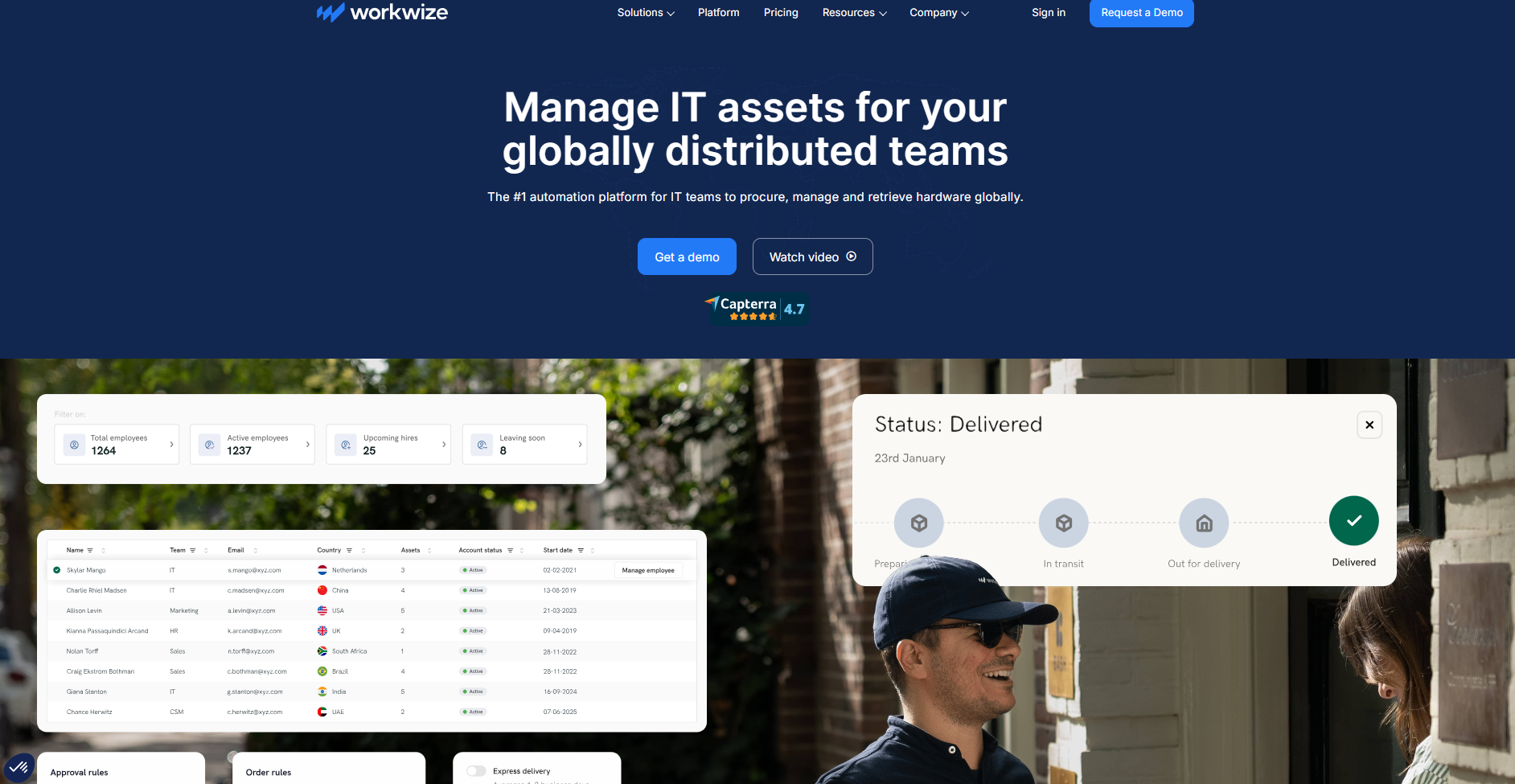
Workwize is one of the leading global IT asset management providers, with a focus on automation and warehousing provisions for customers. Its 100+ native integrations allow IT managers to automate lifecycle processes, from procurement to disposal.
The procurement process uses Workwize's zero-touch deployment, which means devices are delivered to employees ready to use, with no input from IT teams.
The platform has a presence in over 100 countries, with warehouses available in different regions to fast-track deployment and returns. The warehouses also provide safe storage for companies that intend to maintain buffer stock or store devices for redeployment later.
For IT asset disposition, Workwize aids companies in reselling devices, donating to charities, and destroying data-bearing hardware while ensuring compliance, thanks to its SOC Type II attestation and ISO 27001 certification.
The platform is ideal for fast-growing to large enterprises, with globally distributed teams of 150 to 5,000+ employees.
Tequipy
Tequipy also positions itself as an end-to-end provider of IT asset lifecycle management for globally distributed teams. It offers services to both small and large companies, claiming it can handle everything from single-purchase services to full hardware asset management.
It also claims to automate the deployment process, ensuring devices are ready to use when they reach employees.
However, the company's IT asset disposal and security certifications are not well-documented.
Feature-by-Feature Comparison
Now, let's see how these platforms stack up against each other on a feature-by-feature basis.
Procurement
Workwize integrates with popular HRIS platforms, from BambooHR to HiBob, ensuring procurement workflows can automatically start once HR begins onboarding a new hire. IT managers can also order assets and assign them to employees on the platform.
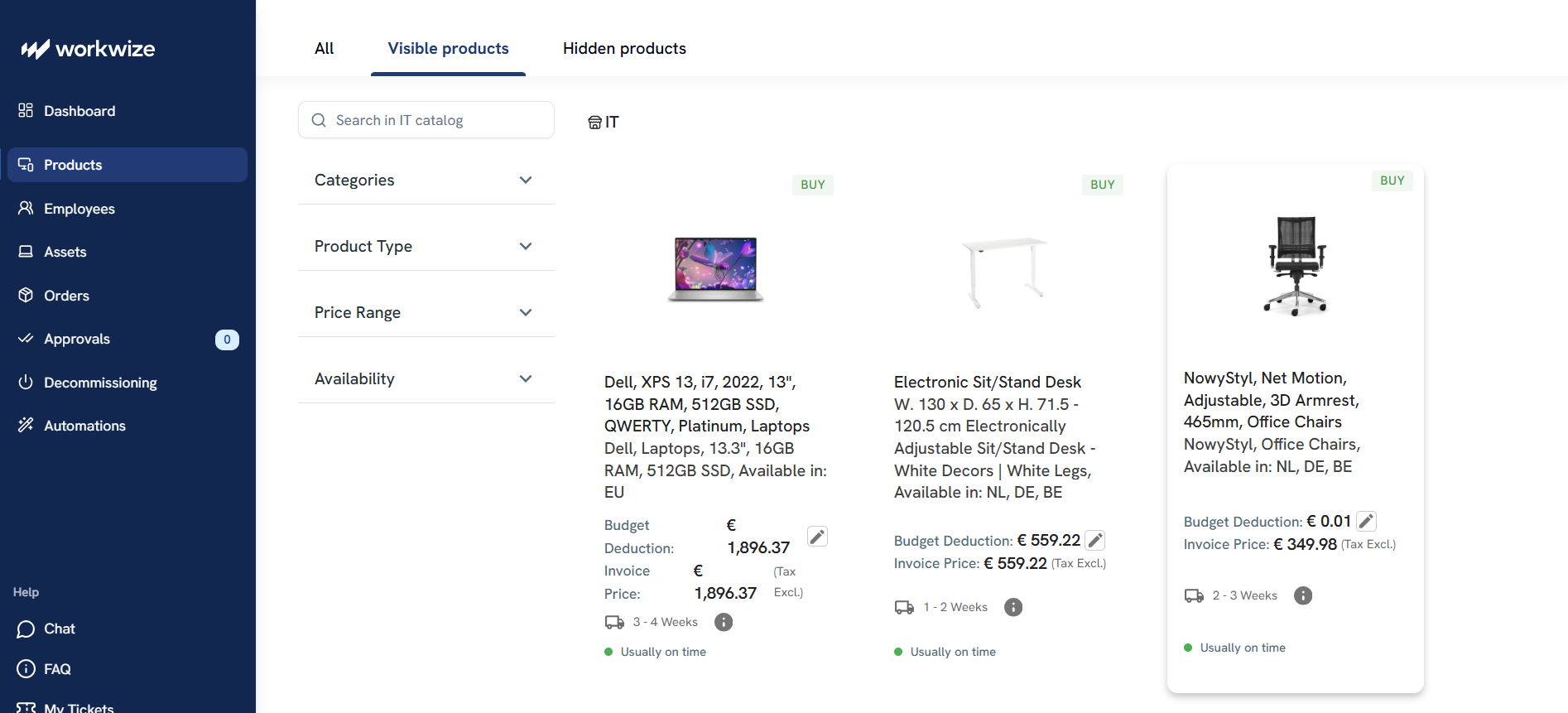
Once the workflow begins, Workwize handles the sourcing, vendor management, and SLA before the user provisioning process takes over. During this process, the platform uses your company's MDM and identity management systems to configure devices so employees can start working immediately after receiving their hardware.
Other procedures dedicated to completing the end-to-end procurement process, such as cross-border logistics, tariffs, and customs, are also automated. However, as mentioned, Workwize uses local warehouses in multiple regions to avoid the rigors and delays of international shipping.
Tequipy offers a similar purchase process but without automations since it doesn't integrate with HRIS systems. Its user provisioning method also uses MDM platforms, although these are not integrated to pre-configure devices before they are shipped.
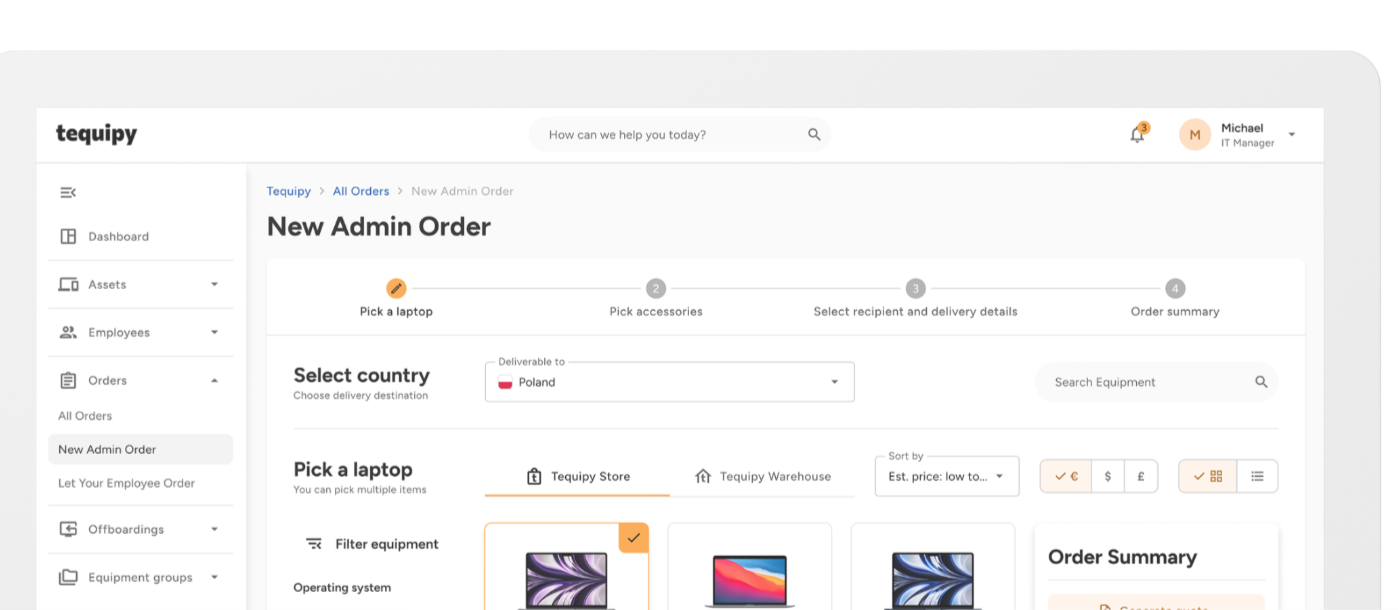
According to Tequipy, it ensures that companies can purchase equipment at local prices without markups. Customers can also procure devices without committing to the entire lifecycle management arrangement.

Key distinctions:
- Workwize's IT procurement model supports automations that allow events in HRIS platforms to trigger new purchase and deployment workflows. Its user provisioning process ships ready-to-use hardware to employees, and the shipped devices easily slot into the ongoing lifecycle management structure.
- Tequipy offers automated user provisioning but not automated procurement because its integrations are limited. It allows customers to procure devices without committing to a full lifecycle management partnership.
Verdict
Tequipy is better for one-off procurement needs, especially for small companies. However, Workwize is the ideal option for large, globally distributed workforces that need to deploy multiple devices to multiple countries with minimal input from IT teams. It's also the better of the two if your company needs ongoing asset management for the devices you procure.
Device Lifecycle Management
Both Workwize and Tequipy position themselves as end-to-end device lifecycle management platforms, but their strengths show up in slightly different parts of the lifecycle.
Workwize
Workwize's device lifecycle management involves automated processes that cover the entire process from procurement through end-of-life disposal. The automation approach ensures IT teams do as little as possible while devices are treated as long-term assets.
The procurement process is end-to-end, from sourcing to deployment, and the platform tracks each device throughout its lifespan. Local vendors and warehouses are used to handle lifecycle activities, such as repairs, refurbishment, returns, and reassignment, to ensure everything moves fast.
The platform is SOC 2 Type II audited and ISO 27001 certified to make sure companies are audit-ready and compliant, protected against data breaches, and environmentally responsible.
Tequipy also claims to handle end-to-end lifecycle management for companies. The process similarly includes procurement, deployment, maintenance, and disposition. Customers can store items at storage locations worldwide, although the platform does not mention whether it maintains warehouses.
Their ITAD offering includes a sell-back arrangement that helps companies recover value from end-of-life devices. However, Tequipy does not indicate whether it performs data destruction on data-bearing devices.
Key Distinctions
- Workwize manages the entire device lifecycle through automated workflows that minimize manual input. It notably offers local warehouses to ensure the entire lifecycle process runs smoothly. The platform's ITAD process also covers resales, donations, and destruction, and its security certifications ensure customers' data protection and compliance.
- Tequipy, on the other hand, provides regular lifecycle management services but does not specify whether it automates any process beyond user provisioning or provides data destruction during asset disposal.
Verdict
Workwize is the stronger choice for organizations that want an automated, compliance-focused lifecycle system with built-in ITAD, refurbishment, and structured end-of-life processes. Tequipy stands out for its flexible offerings and ability to accommodate companies that may only want one part of the lifecycle management process.
Automation and HRIS / MDM Integration
Automation and tight integration with HR and device management platforms are the difference-makers for eliminating repetitive manual tasks.
Workwize automates the entire lifecycle using preset, plug-and-play workflows and 100+ integrations. Devices automatically transition between lifecycle stages when certain HR events or requests occur in HRIS systems, device management tools, or the Workwize platform.
For example, Workwize automatically starts retrieving devices from workers when HR sets offboarding dates in HR systems such as HiBob and BambooHR. During onboarding, which automatically begins when there's a new hire, Workwize automates device deployment since the company's MDM and SSO platforms are integrated with the system.
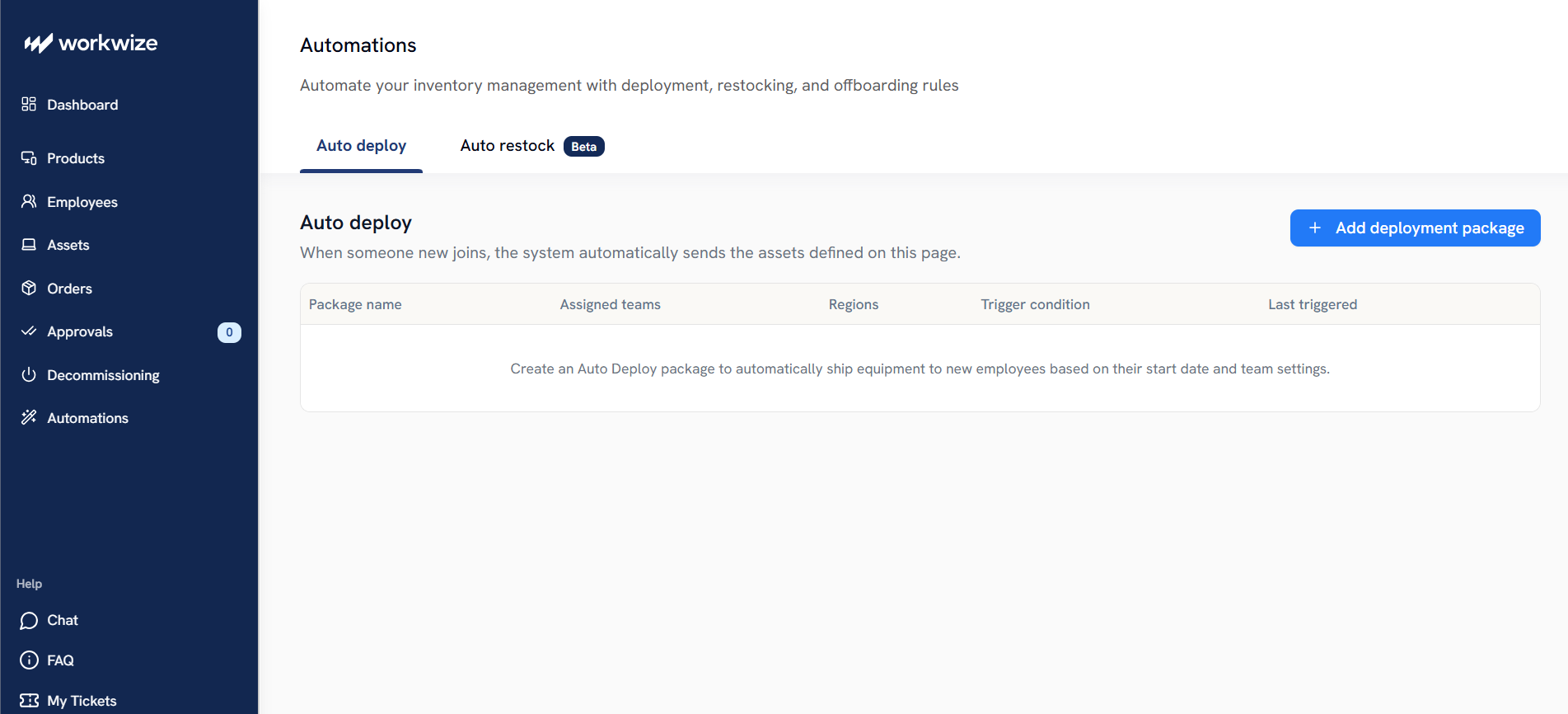
IT managers can also set specific automatic workflows under the platform's automations tab.
Tequipy handles automations at the user-provisioning level, but does not provide specifics on how that happens. When it comes to integrations, the platform mentions only Slack.
Key Distinction
- Workwize’s integrations are broader and deeper. It connects to over 100 platforms, including popular HRIS platforms like HiBob, communications systems like Slack, identity platforms like Okta, and mobile device management tools like Jamf.
- Tequipy automates device management but doesn't specify how and only integrates with Slack, according to the official documentation.
Verdict
Workwize is the clear winner here, as it automates the entire device lifecycle and offers more than 100 integrations. Tequipy lags behind with its lone Slack integration and lack of automation across the entire asset lifecycle.

Asset Visibility and Tracking
Tequipy says it provides real-time tracking from procurement through recovery, with location information and ongoing asset condition updates. It also shows which employee has what device.
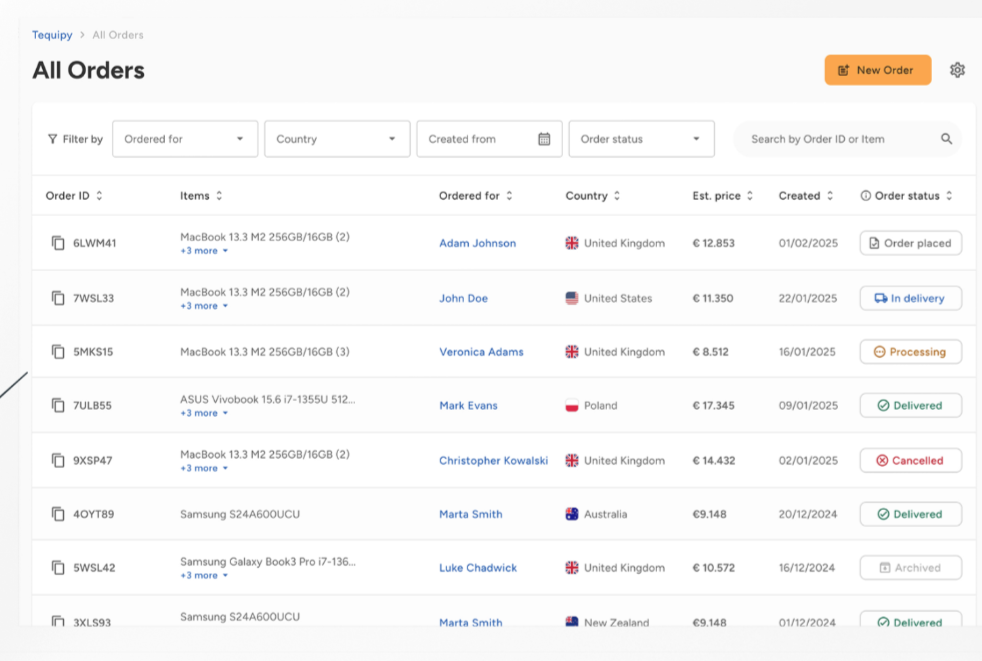 Image credit: Tequipy
Workwize's platform has detailed asset tracking information across different interfaces. It also offers options for notifications.
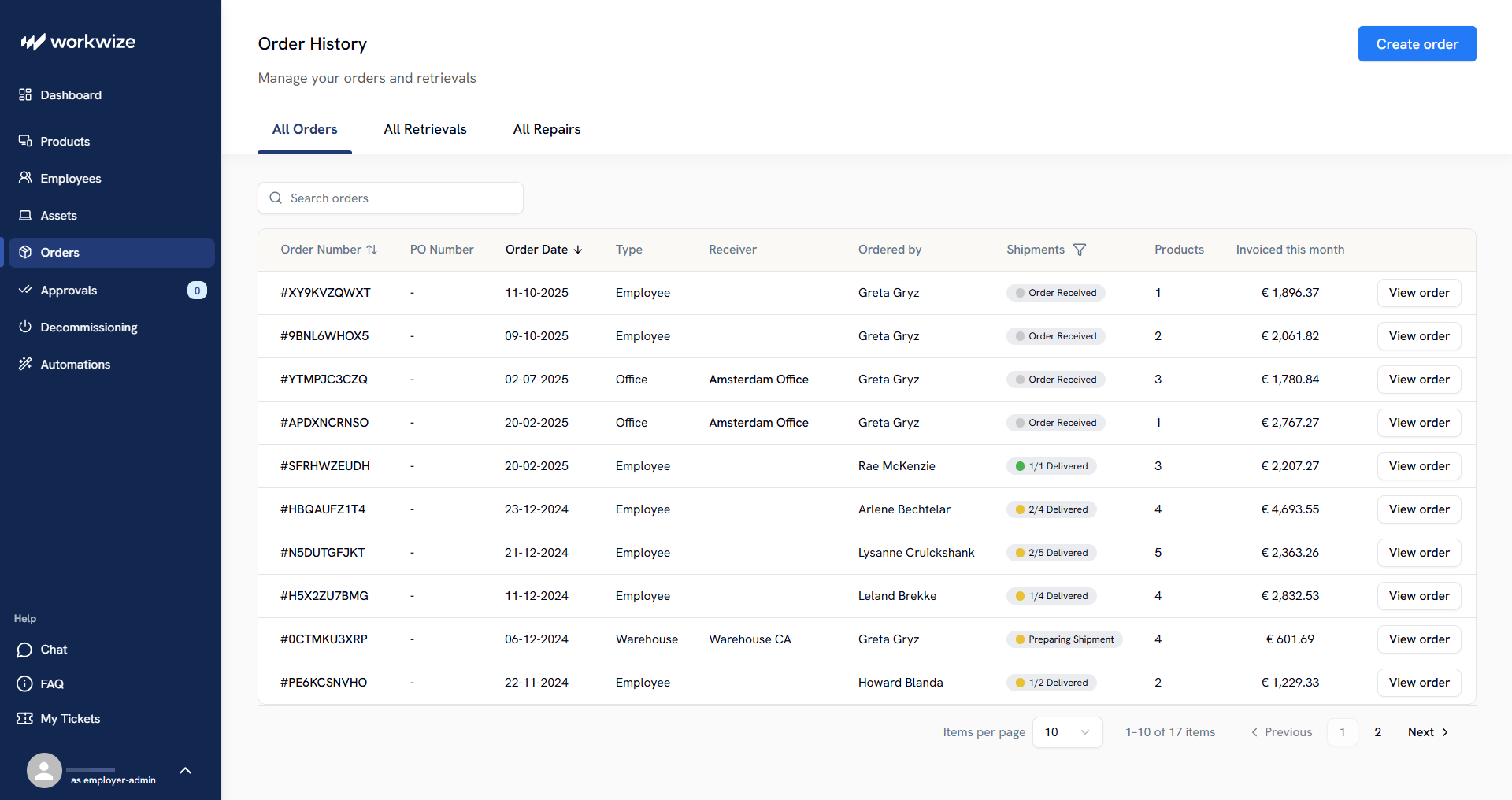
The Orders tab, for example, shows procurement and delivery status for every device.
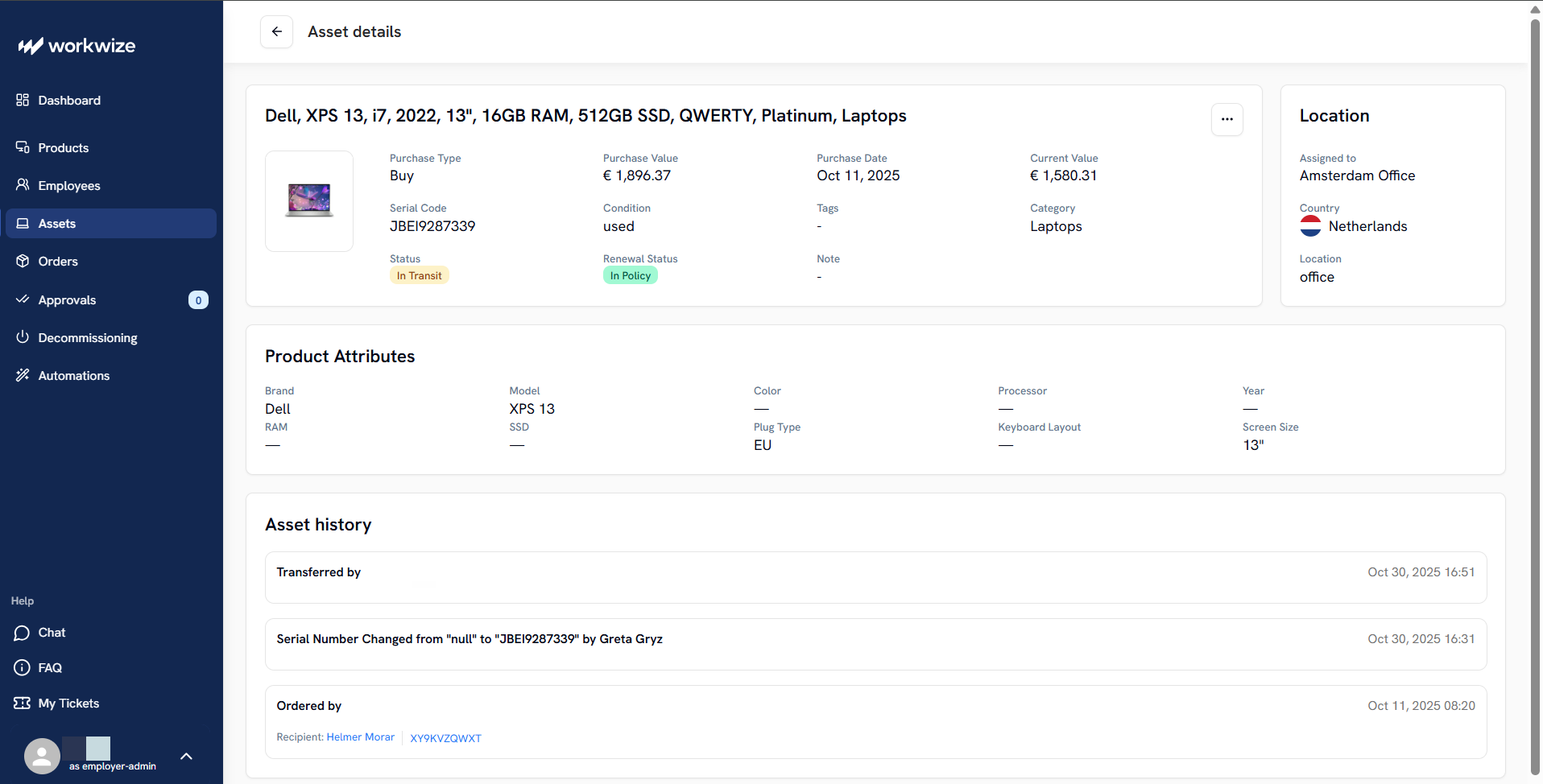
The Asset tab displays each device's status (whether in transit, deployed, or damaged), purchase condition (brand new or refurbished), location, assigned employee, and renewal policy.
More details, such as asset history and current value, are available when users open each device's dedicated page.
Key Distinctions
- Tequipy promises real-time tracking with details about location and assigned employees. However, there are no mentions about asset history and device condition.
- Workwize provides detailed information about every device's condition and status, including assigned employees and histories.
Verdict
While Tequipy mentions real-time tracking, its official documentation doesn't go into detail on how the platform provides visibility. Workwize delivers real-time asset tracking with deep dives that show asset depreciation and history.
Offboarding and Device Retrieval
Offboarding is where most companies incur losses due to unrecovered devices and security exposure.
Retrieving a device from a departing employee in one piece allows you to clean it up and preserve it for the next hire. It also protects you from security risks because when devices remain with departing employees, especially those containing company data. Otherwise, they serve as entry points for attacks.
Workwize's automated lifecycle management automatically starts the offboarding process when HR sets a date for an employee's departure. The platform connects with the company's MDM system to revoke the team member's access to company accounts and backup sensitive data.
Asset retrieval follows and is handled through Workwize's global returns process. Most of the time, the device is picked up from the employee and secured at the nearest regional warehouse, where it is securely wiped and destroyed or renewed and held until its next deployment.
Note: In cases where wiping is necessary before retrieval, such as for devices that may take longer to recover, Workwize can also initiate the process through the company's MDM.
Tequipy also offers offboarding and promises a 100% recovery rate, significantly higher than the industry standard.
It also says customers can store devices in its global facilities until those devices are needed again. However, it does not mention whether it performs secure wipes, handles offboarding automatically, or arranges pickups.
Key Distinction
- Workwize's offboarding and retrieval processes can be triggered by offboarding events in HRIS platforms, after which they'll go through its established logistical coordination. It has self-return options that allow employees to coordinate with Workwize using specialized return boxes.
- Tequipy promises high recovery performance, but it offers the same generic offboarding and retrieval promises without specific details about what sets it apart.
Verdict
Both platforms offer offboarding and retrieval services. But companies looking for an automated, more streamlined process that integrates into the device lifecycle should choose Workwize.

Reverse Logistics and Global Returns
Reverse logistics and global returns refer to the processes of moving assets back from the field into central operations for refurbishment, repair, reuse, or resale.
Tequipy is light on details about its reverse logistics and global returns. However, the platform claims to offer these services across over 140 countries. And, as mentioned earlier, it uses local facilities to store returned devices.
Workwize supports global reverse logistics through its established warehouse infrastructure and centralized coordination model. When devices need to move across regions, whether from remote offices or home users, the platform manages the entire movement.
From pickup scheduling to routing through international carriers and into designated hubs, there are well-planned, region-specific methods.
That way, customers can move devices without exceeding their budgets or running into compliance issues.
Key Distinction
- Workwize provides a reverse logistics process that integrates with its lifecycle management structure. Employees can use self-return boxes or choose automated courier services. Whichever option employers pick for returns, details are tied back to the specific device's history and updated on the platform.
- Tequipy also offers global returns and storage facilities, but it does not specify whether employees will ship the devices themselves or the platform will arrange pickup.
Verdict
Your company can coordinate reverse logistics and global returns using each platform. However, Workwize integrates the process more effectively into your existing lifecycle management process and offers more user-led and platform-coordinated options.
IT Asset Disposal, ITAD, and End-of-Life Management
How devices are retired when they reach the end of their usable lifespan matters for security, compliance, sustainability and cost recovery. Workwize and Tequipy both offer paths for handling aging or obsolete equipment, but they differ in emphasis and execution.
Tequipy focuses on resale and value recovery options and does not mention certified data destruction.
Workwize, on the other hand, offers value recovery and resale options in addition to certified disposal, sustainable recycling, and compliance. The process can begin manually or automatically, depending on the user's settings.
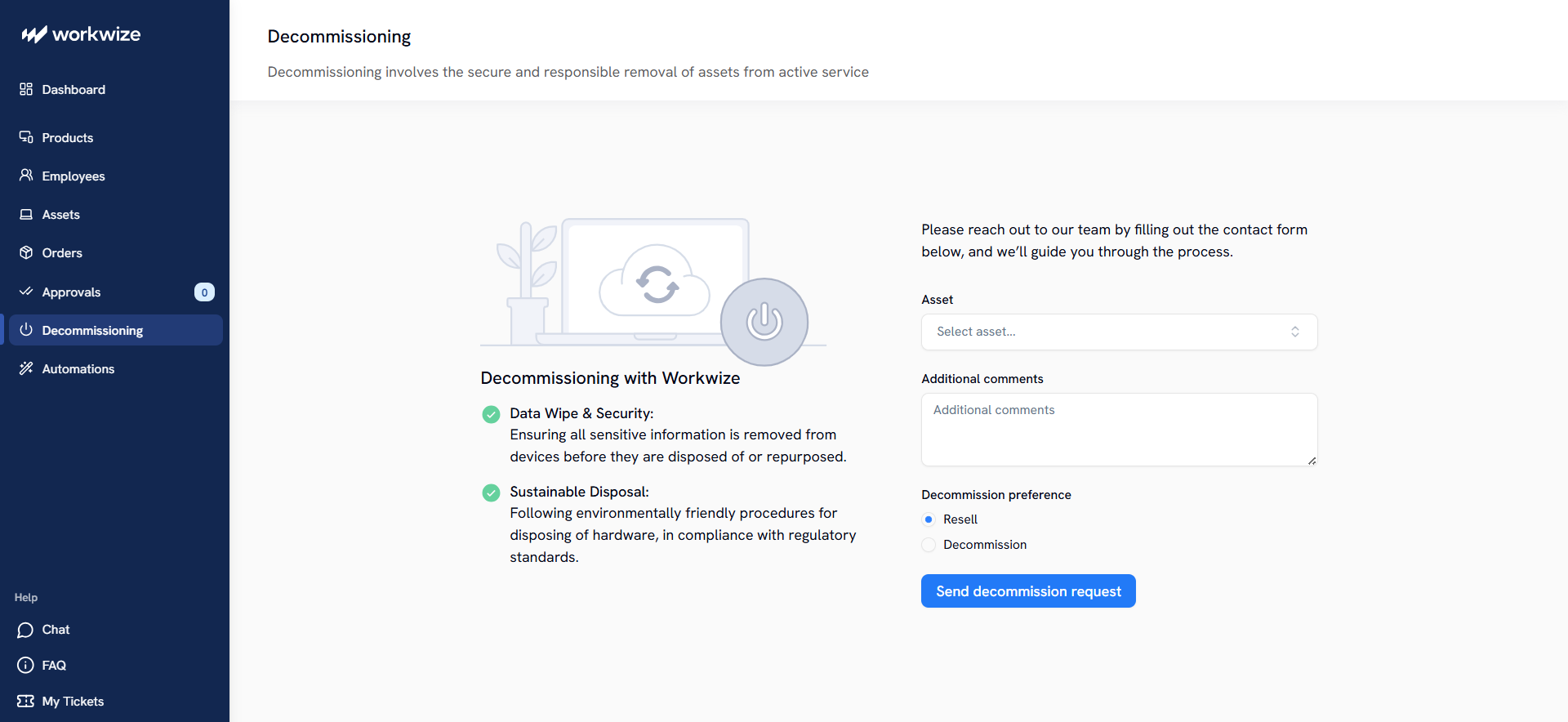
The company's ISO 27001 certification and SOC 2 Type II attestation provide additional peace of mind that data is handled in accordance with internationally recognized standards. They also ensure that companies are audit-ready, especially since Workwize provides data destruction certificates.
Key Distinction
- Workwize's data destruction certificates, international security standards, sustainable recycling offerings, and structured reporting make it ideal for organizations where ESG, compliance, and risk management are top priorities.
- Tequipy prioritizes value recovery through resale and sell-back workflows. Although it mentions helping a client achieve ISO 27001 certification and SOC 2 attestation, this refers to the client's own certification and attestation, not Tequipy's.
Verdict
For organizations where compliance, data security, and ESG reporting are critical, especially in highly regulated industries and regions, Workwize delivers stronger assurance and documentation.
Reporting, Analytics, and Cost Control
Both platforms show detailed reporting about device status, locations, and assigned employees.
Tequipy says these details are readily available on-platform and updated in real time.
But Workwize takes reporting and analytics a bit further with advanced insights around company spend and device value that help with cost control and asset management.
The dashboard shows, with charts and graphs, how much companies have spent over a specific period. It also categorizes the spending by department.
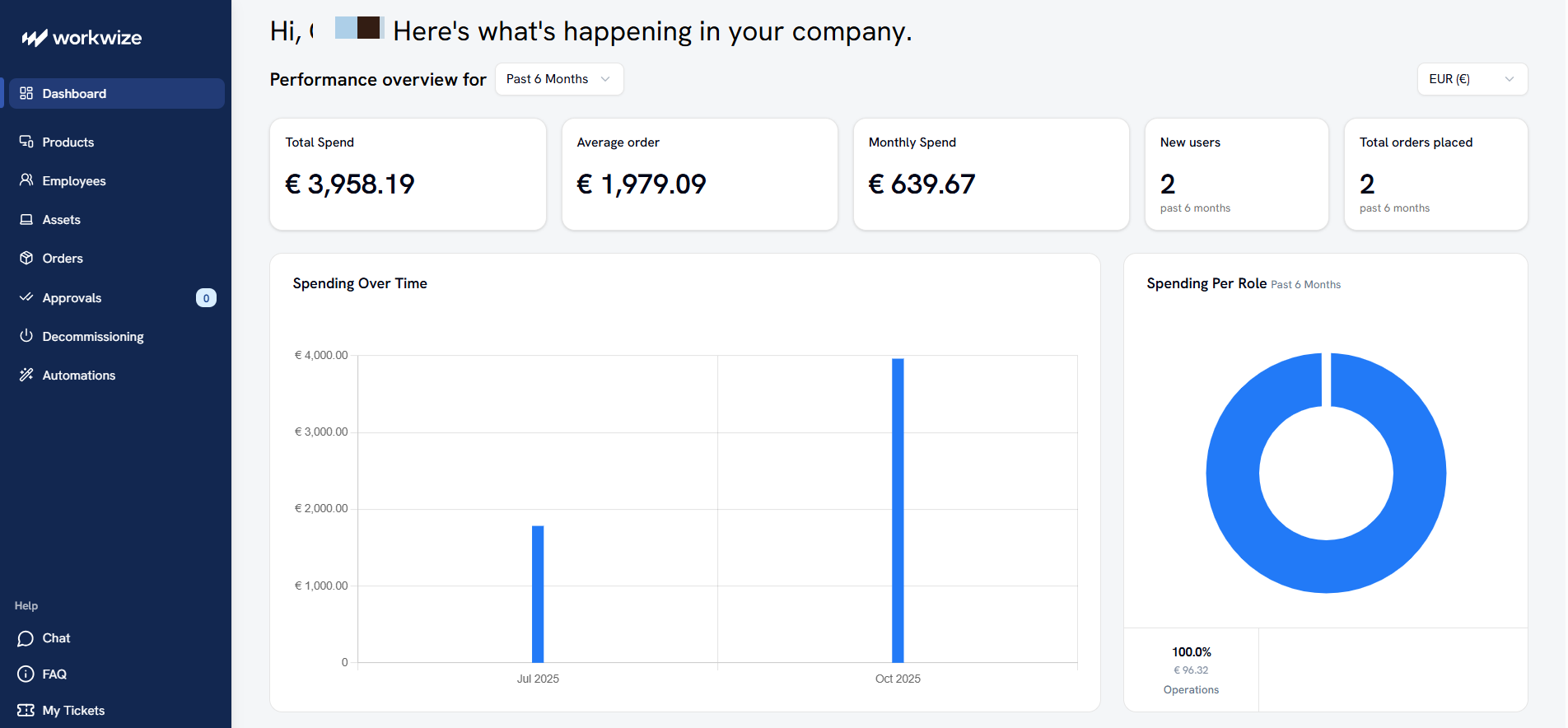
Additionally, IT managers can view a device's dedicated page to see its current value relative to its purchase price.
Key Distinctions
- Tequipy's analytics and reporting focus on telling IT managers about device location and status.
- Workwize provides, alongside the regular status and location information, a deeper analysis of company spend, device depreciation, and historical details.
Verdict
If your goal is strategic IT planning with robust financial visibility, particularly around lifecycle cost, depreciation and spend optimization, Workwize provides stronger insights.

Implementation, Onboarding, and Time to Value
Each platform's implementation and onboarding process determines how fast you can properly outsource your IT asset management and see a return on your investment.
They both offer demo accounts that let customers see how their systems work before committing to a long-term plan.
Tequipy allows customers to migrate their old stock to its platform and manage it from there. However, it does not discuss integrations beyond Slack, nor does it mention a public API for custom connections to a company's existing systems.
Workwize also helps companies inventory their entire existing hardware stack on its platform during onboarding. But unlike Tequipy, it offers more than 100 native integrations that allow you to immediately connect your HRIS, MDM, identity, and communication systems.
Even if you use platforms outside the 100+ official integrations, the platform offers an API and will provide support for custom integrations.
Key Distinctions
- Workwize provides a more guided, structured rollout with deeper upfront planning and system integration. While some users say it took time due to their large tech stack, they saw great results in the end.
- Tequipy promises quick time to value, but this may be tough in reality, given the lack of integrations beyond Slack.
Verdict
Workwize offers the best implementation and onboarding quality for growing and large companies that need to migrate equipment and existing HRIS, MDM, and other platforms. With Tequipy, your time-to-value will be faster only if you want a one-off service or have very limited equipment to manage or purchase.
Pricing, Scalability, and Support
Workwize uses a tier-based platform subscription model plus custom ITAM fees. Customers will see the prices of goods on the platform before placing orders. They'll also see payment plans and fees if they want to purchase devices from specific suppliers.
Tequipy, on the other hand, provides the following fee structure, but its services are quote-based:
- Platform fee: Free for up to 100 devices and $99 per month for over 100 devices
- Offboarding: $70 to $150
- Storage: $12 per month per device
- Redeployment (delivery included): $70 to $150, depending on the country
Pros and Cons
Let's cover where each platform shines and lags behind.
Tequipy
Tequipy doesn't have real-world user reviews from platforms like G2, Trustpilot, and Capterra, unlike Workwize. However, one can assess its pros and cons based on what its official documentation says it offers.
Pros
- Offers flexible ITAM options for small companies
- Provides a demo account to allow intending customers to preview the system
- Shows pricing upfront
- Offers free MDM and ABM assignment
Cons
- Lacks integrations beyond Slack, which can scuttle automation efforts
- Shows certification and regulatory badges on its website, but does not explicitly mention whether Tequipy has these certificates or how it meets those regulatory requirements
- Does not mention ESG support and reporting
- ITAD offerings do not indicate certified destruction or sustainability efforts like recycling
- Website lacks details about IT asset management specifics
Workwize
Pros
- Automates the entire asset lifecycle and saves IT teams from manual processes
- Provides 100+ native integrations for smooth onboarding and automatic ITAM
- Workwize is ISO 27001 certified and has an SOC 2 Type II attestation
- Workwize's ITAD offerings include certified destruction, value recovery and donations
- Provides local warehouses for fast deployment and retrievals
- Demo account is available to show prospects how the system works
- Provides deep insights and analytics, including asset depreciation
Cons
- Not cost-effective for smaller teams with fewer than 150 employees

Which Platform Should You Choose?
Choosing between Workwize and Tequipy ultimately depends on the scale of your organization, how complex your IT environment is, and whether your priority is enterprise control and compliance or operational simplicity.
|
Choose Workwize if |
Choose Tequipy if |
|
|
Why Workwize Is the Stronger Choice for Distributed Teams at Scale
Workwize’s biggest advantage is its ability to automate the entire device lifecycle across global teams. From procurement and zero-touch deployment to retrieval, redeployment, and certified IT asset disposition (ITAD), it creates a continuous operational flow that reduces fragmentation between HR, IT, and finance systems.
Customer feedback highlights how this end-to-end structure and deep integrations with external systems significantly save IT teams substantial time in day-to-day operations.
Tequipy does not offer this level of automation across the device lifecycle, nor does it offer anything close to Workwize's number of native integrations.
Workwize is also the better choice for companies that must maintain audit-readiness and ESG compliance. The platform's asset disposition, unlike Tequipy, offers companies certified destruction and sustainability reports.
Sign up for a demo today to see how the platform works.
Workwize vs Tequipy FAQs
What is the main difference between Workwize and Tequipy?
The main difference is focus and depth of enterprise capability. Workwize is built as a full-scale enterprise IT asset lifecycle platform with deep HRIS, MDM, and identity integrations, plus certified ITAD and compliance reporting. Tequipy, on the other hand, focuses more on accommodating smaller teams, only offers Slack integration, lacks security certifications, and does not provide the full breadth of IT asset disposition options.
Is Tequipy available outside of Europe?
Yes, Tequipy claims it supports more than 140 countries.
Which platform is better for large distributed teams?
Workwize is better for large distributed teams because it provides the level of integrations, automations, security, and compliance required to handle asset management at scale and keep companies of this size audit-ready regardless of jurisdiction. Tequipy's lack of security certifications and limited integrations means teams will struggle with compliance and data protection, as well as connection with their HRIS and identity systems.
How do Workwize and Tequipy compare on IT hardware lifecycle management?
Tequipy offers the regular IT asset lifecycle management offerings with a focus on flexibility to cater to smaller teams. However, Workwize offers a stronger end-to-end lifecycle management structure, which is automated, unlike Tequipy, and includes certified ITAD.
Is Workwize suitable for smaller teams?
Yes, if those smaller teams have more than 150 employees and are scaling fast. However, Tequipy is the better choice, at least from a cost perspective, for teams of fewer than 100 employees, since it allows customers to access singular services, such as procurement-only workflows.