




.svg)
.svg)

.svg)


.svg)




.svg)
.png?width=500&height=424&name=Style-1---V1-(1).png)

.png?width=1230&height=692&name=Vector%20(13).png)
If you work in HR, you know the drill: jumping between tools, updating spreadsheets, answering the same questions, and trying to keep up with employees who expect consumer-grade experiences when your department is already stretched thin.
And while the expectations keep rising, headcount barely moves. HR is being asked to deliver more, move faster, and operate strategically—all while drowning in manual work.
That’s the reason HR automation has become a hot topic today.
But is HR automation really necessary? Are organizations actually investing in it? If yes, what processes are they automating?
This article gives you a clear, research-backed picture of what’s happening in the HR automation space in 2026.
The goal is to help HR leaders understand how automation is transforming HR operations and where the industry is heading next, so you can take the next steps.
Let’s start by understanding the growing urgency behind HR automation.
TL;DR:
- HR workloads keep rising while headcount barely moves. Automation is now a necessity, not an experiment.
- Organizations are investing heavily in HR tech and AI to cut repetitive admin work, improve analytics, and enhance employee experiences.
- Automation isn’t limited to one area. It’s spreading across onboarding, payroll, learning, and performance management.
- The focus in 2025 is shifting from adoption to unifying disconnected HR systems for seamless data and process flow.
- AI is driving the next wave. From skills-based hiring to people analytics, automation is becoming smarter and more predictive.
- However, most HR teams still lack AI readiness. This means that strategy, data quality, and change management are catching up slower than technology.
- Platforms like Workwize bridge the HR–IT gap by automating hardware deployment, retrieval, and asset tracking—freeing HR to focus on strategy rather than logistics.

HR Teams Are Overworked, Undersized, and Outdated: Automation Is No Longer Optional
HR’s workload has exploded over the last few years. And this is not because teams suddenly became inefficient, but because the role of HR has expanded faster than its resources.
Hybrid work added new onboarding and offboarding complexity. Compliance requirements multiplied, and employee expectations shifted. And HR is now expected to own EX, analytics, internal mobility, DEI, and culture, in addition to traditional admin work.
But the headcount supporting these expanded responsibilities hasn’t kept pace.
1. More than half of HR departments say they are understaffed, and 56% of HR professionals report that their teams don't have enough people to cover the workload. (SHRM)
So, the work keeps increasing, but the number of hands remains the same. And this results in an obvious outcome: burnout.
2. 57% of HR pros are working beyond their normal capacity, putting in overtime and juggling duties just to keep up, according to the same report.
This can lead to human errors and may even frustrate HR, resulting in poor productivity or even attrition. And, while you may assume companies would hire more HR staff, numbers tell a different tale.
3. Just 19% of HR executives expect to get approval to increase HR headcount in the near future (SHRM)
That means the HR is stuck is more responsibilities and the same number of people. And the pain doesn’t end here. Most of HR’s day is swallowed up by admin tasks that could have been automated. So, there’s a visible opportunity to free up HR's time.
4. A Deloitte study found that HR staff spend up to 57% of their time on administrative, routine tasks, leaving little room for strategic initiatives. (Deloitte)
These manual tasks, including updating records, processing forms, and answering repetitive queries, consume over half of HR’s day.
However, automation seems to ease the burden for HR. And companies have begun to notice the benefits.
5. No wonder, 60% of HR and IT leaders in a survey said they increased investment in automation as early as 2022. (Aptitude Research)
This investment could be in a variety of technologies, based on your requirements. For instance, if you want to automate onboarding and offboarding, you can go for a solution like Workwize.
Workwize is an end-to-end IT hardware management platform that automates your complete asset lifecycle.
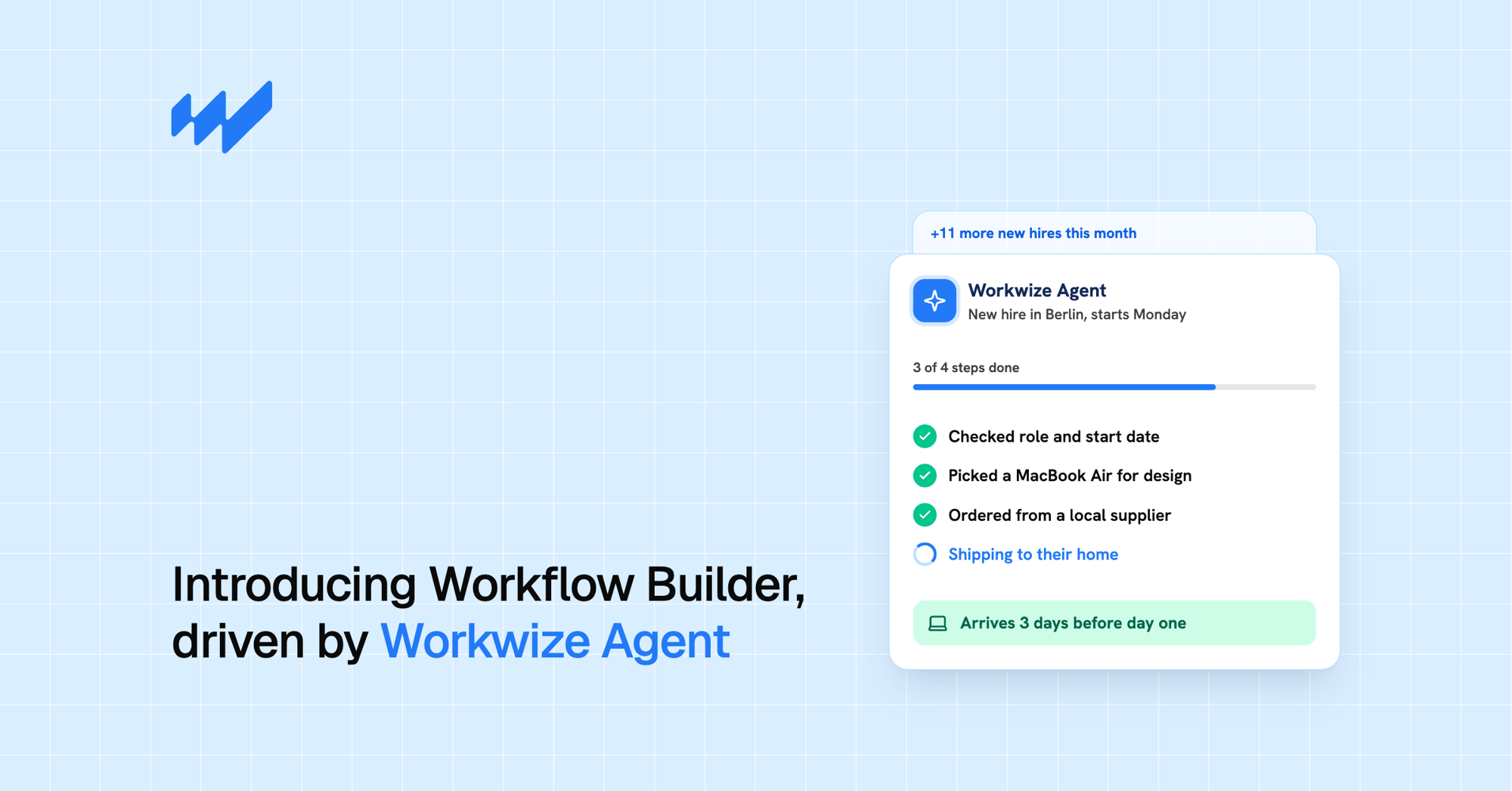
Let’s say you integrate Workwize with your HRIS platform (Bamboo HR, for example) and enable auto deployment. Whenever the HR creates a new record, it will automatically trigger the auto-deployment workflow.
Workwize will take it from there and ship pre-configured, pre-selected IT hardware to your new hire on or before the due date, ensuring a positive onboarding experience.
Because everything happens automatically, HR teams don’t have to manually create records for new hires, forward them to IT to get the required hardware ready, and go back and forth for updates.
6. Just by integrating a solution like Workwize, you can automate manual tasks and reduce manual workload by over 40%. (Workwize)

Let’s learn more about technology adoption in the HR industry.
The State of HR Technology Adoption
HR tech adoption is no longer optional or a nice-to-have; it has become a necessity.
As HR’s scope expanded and processes became more interdependent, manual systems simply couldn’t scale. Hybrid work increased data fragmentation, and compliance pressure multiplied. And employees now expect seamless experiences across payroll, benefits, and onboarding.
Organizations realized that HR cannot function effectively without modern systems.
7. This is why the HR tech market is showing rapid growth, with the global HR technology market projected to grow from $23.98 billion in 2022 to $39.90 billion by 2029. (GlobeNewswire)And this HR tech adoption is happening in companies of all sizes.
Long gone are the days when only enterprises could afford HR platforms. With the growth of cloud-based HR apps, the adoption of HR technology solutions has intensified, even among mid-size and small businesses.
8. In fact, 90% of employers now use some kind of HR information system or benefits platform, a big jump up from about 70% five years ago (Guardian’s Report)
9. And if that’s not enough, 98% of employers were using a technology platform for at least one HR function, says the same report.
In a nutshell, companies of all sizes are investing in HR tech. And rapid growth in cloud apps and tangible benefits of HR tech are driving this change.

Adoption Is Happening Across HR Processes
Once companies adopt a single HR technology, the efficiency gains drive them to digitize adjacent processes.
What started with payroll and HRIS has naturally extended into learning, performance, and benefits systems. HR leaders have learned that manual processes create data inconsistencies, compliance risks, and gaps in the employee experience.
That’s why HR automation is now happening horizontally across functions rather than in isolated pockets.
10. For example, payroll processing is 97% digitized across organizations (Guardian)Seeing the benefits of automated payroll processing, other categories like benefits administration and performance management are also following the trend:
11. 51% of organizations have a performance management module built into their HRIS, and another 17% built their own custom PM software. (HR Research Institute)That means around 68% of organizations have systematized performance reviews/goals via tech., according to the same report.
And Learning and development are following a similar path. As companies understand the value of consistent onboarding, ongoing training, and audit-ready compliance tracking, LMS adoption has risen sharply.
12. 96% of large and mid-size companies and 81% of small companies now use an LMS for training. (Training Mag)
From recruiting to training to time tracking, there’s an HR tech solution for every need, and most organizations have jumped on board. And for obvious reasons: technology lowers the burden on HR departments, who are already working beyond their natural capacity.
Trend Toward Integration and Consolidation
Early on, companies adopted point solutions (one system for recruiting, another for payroll, another for engagement, etc.), which led to scattered data and admin hassle.
Now, businesses want a more unified approach. The majority of employers are moving to a single integrated platform that can handle multiple HR/benefit functions to realize the benefits of systems integration.
13. In fact, 68% of employers say that increasing integration of their HR systems is a highly important priority now (Guardian)
They’ve learned that when payroll, HR, and benefits systems talk to each other (or are part of a single suite), it eliminates duplicate data entry, reduces errors, and provides a more holistic view of employee information.
This has fueled the rise of all-in-one HR suites and deeper integrations between best-of-breed tools.
Shift Towards Skills-Based Hiring (Over Traditional Resumes)
Recruiting is one of the areas seeing the most dramatic transformation through automation and new practices.
Traditional resumes no longer tell employers what they actually need to know. Skills are changing too fast. Job titles vary widely, and degrees often don’t reflect capability.
As a result, employers increasingly rely on skills assessments and automation to reduce bias and improve hiring accuracy.
This shift is restructuring how companies evaluate talent, and it's showing real results.
14. 85% of employers report using skills-based hiring in some form, up from 81% in 2024. (Test Gorilla)
That doesn’t necessarily mean companies have stopped using resumes completely for hiring. But there has been a drop.
15. The same report from Test Gorilla states that 67% of companies are using resumes, down from 73% in 2024, marking a move away from traditional hiring tools and towards practices that prioritise skills.The reason is simple: Resumes don’t tell you the complete story (about the skills), and skills-based hiring, on the other hand, brings in good hiring matches for employers.
16. 82% of employers are satisfied with hires recruited through skills-based hiring, says Test Gorilla’s Report.Automation is Changing HR Analytics and decision-making
In today’s world, where data is the new currency, HR is expected to make evidence-based decisions about people and talent. However, while HR leaders acknowledge the importance of analytics, they struggle to use data to improve decision-making.
17. According to Leapsome’s 2024 trends report, 60% of HR leaders say it’s difficult to gather the people data/insights they need to support their proposals to executives. (Leapsome)Difficulty in gathering data is a different problem. Even when data is available, HR departments struggle to analyze it and draw insights that are meaningful enough to demonstrate the value of their initiatives.
18. For instance, even when data exists, nearly half (48%) of HR professionals admit they struggle to prove HR’s value or tie their initiatives to business outcomes, according to the same report.This happens because HR teams don’t have the right technology to analyze the data they generate. However, this data gap can be crippling, especially when HR budgets are tight and you need to justify every program with ROI.
But the good thing is that organizations recognise this, and are investing in people analytics functions and tools. A few years ago, only the largest companies had dedicated people analytics teams. And now it’s becoming mainstream.
19. In Insight222’s global study, 90% of companies surveyed said their people analytics teams either grew or remained the same size in the last year. (Insight222)
20. In fact, on average, the ratio of analytics staff to employees has improved substantially: in 2020, it was about 1 analytics pro per 4,000 employees, and by 2024, it’s 1 per 2,500 employees, says the same report.
So a company of 10,000 employees might have around four people dedicated to HR data, whereas before they might have had only two. This indicates a solid commitment to building analytics capability.
Companies are also arming these teams with better technology, since automated solutions tend to analyze data more effectively, which can support data-driven decision-making.
21. The Insight222 report also says 68% of organizations increased their investment in analytics software, dashboards, or specialist people analytics technology in the past 12 months.
As organizations strengthen their analytics, HR is shifting from intuition to evidence. The teams that struggled to gather or interpret data are now on track to deliver insights that directly link people programs to business outcomes.
AI Is Everywhere in HR
AI has rapidly become one of the biggest forces reshaping HR. Not because it’s trendy, but because HR teams simply don’t have the capacity to keep up with rising workloads, faster hiring cycles, and higher employee expectations.
The pressure to do more with fewer people has pushed organizations to seek technologies that eliminate repetitive work and accelerate decision-making. And AI fits that need perfectly.
22. Recent surveys indicate roughly 45% of organizations are currently using AI in at least one HR area (be it recruiting, learning, etc.) (Engagedly)And companies believe AI's long-term potential is great. That’s why, even in 2025 and in the years to come, investments in AI don’t show any signs of slowing down.
23. In fact, 92% of companies plan to increase their AI investments over the coming 3 years. (McKinsey)And this shift isn’t only happening at the operations level. Even the leadership teams are getting hands-on with AI tools.
24. 45% of CHROs report using ChatGPT or another AI tool at their organization. (Evanta)
As adoption deepens and leaders get hands-on, AI is shifting from a support tool to a core HR capability. Companies that embrace it early will move faster, make better decisions, and deliver a far stronger employee experience.
Benefits of AI in HR
The enthusiasm around AI isn’t driven by hype. It's driven by results. The teams that adopted AI early are already seeing tangible improvements in how fast they work, how accurately they operate, and how consistently they deliver outcomes.
One of the biggest advantages HR teams report is speed. When AI takes over routine screening, scheduling, or document creation, teams spend far less time on manual tasks and more time on actual decision-making.
25. 65% of the surveyed companies feel that AI has greatly improved efficiency and productivity in HR management tasks. (Engagedly)And the impact isn’t limited to time savings. Hiring teams are seeing cost advantages, too. AI shortens sourcing cycles, reduces dependence on agencies, and help HR prioritize higher-quality candidates earlier in the funnel.
26. This is why AI-powered recruitment can reduce cost-per-hire by up to 30%. (SHRM)HR leaders also see AI as a way to lighten the load from repetitive work, including drafting emails, summarizing documents, generating JDs, and answering simple questions.
27. So, it’s no surprise that 29% of HR leaders believe generative AI can help automate redundant tasks and save time in the short- or mid-term. Another 28% believe it can improve current processes. (Evanta)
And once teams actually adopt AI tools, the benefits become even more solid. Tasks that took hours now take minutes, and backlogs that were impossible to clear start disappearing.
28. No wonder, 85% of employers who use automation or AI say it saves them time and increases their efficiency, according to the same SHRM report.
29. The report also says, 86.1% of recruiters using AI reported that it accelerates the hiring process.
Overall, the optimism isn’t theoretical. It’s a direct response to measurable improvements in speed, cost, and quality across HR workflows.
However, despite the tangible benefits, there are notable challenges and valid concerns:
Challenges with AI Adoption
As promising as AI is, HR teams are discovering that adoption comes with its own set of human, ethical, and operational hurdles. The biggest challenge isn’t the technology itself. It’s how people feel about interacting with it, and whether HR teams are actually prepared to use it responsibly.
One of the most pressing concerns is the loss of human touch in sensitive moments like hiring. Recruiters worry that relying too heavily on automation could make the process feel transactional rather than personal.
30. 40% of talent acquisition specialists worry that over-reliance on AI could make recruitment too impersonal, potentially turning off good candidates. (KORN FERRY)
That fear isn’t baseless. Job seekers themselves don’t fully trust AI-driven hiring experiences, especially when the stakes are high. Many feel uneasy when interviews or screening steps are handled by algorithms instead of people.
31. Over 65% of people are uncomfortable with AI being used in recruiting and hiring. (ServiceNow)
This discomfort might push talent away from organizations that rely on AI and towards those that value human interaction more.
Also, their concerns go deeper than discomfort. Candidates worry about fairness, transparency, and whether their data is being used responsibly.
32. The same report says 43.75% job seekers cite bias, 53.87% cite privacy, and 61.31% cite less personalized experience as major concerns about companies using AI in the hiring process.
Even inside HR teams, confidence levels aren’t where they need to be.
Most HR professionals don’t feel technically or operationally ready to use AI tools to their full potential. This skill gap creates hesitation. And it can slow AI’s ROI if teams don’t understand when or how to use it.
33. According to an AIHR Report, 65% of HR professionals don’t feel ready to work with AI. (AIHR)
Leadership feels the gap, too. While companies may be investing, they openly admit they’re still at the early stage of maturity.
34. Even though most companies invest in AI, just 1% of business leaders believe they are at maturity. (McKinsey)
Overall, while AI brings clear benefits, these concerns remind us that adoption isn’t just about buying tools. It’s about preparing people, fixing processes, and building trust across HR teams and candidates.
HR Automation Goes Beyond the Basics
When it comes to HR automation, most surveys and reports focus on automated resume screening, interview scheduling, payroll processing, AI interview bots, support chatbots, AI-powered surveys, and the like.
While all of the above processes are important, you’re missing something even more crucial: onboarding.
Without automation, both the HR the IT departments are left chasing different individuals (HR emails IT for updates, and IT asks the vendors) to ensure timely asset deliveries and a decent onboarding experience.
And more often than not, manual processes lead to human errors (e.g., HR forgetting to update the new employee’s record in the HRM tool), resulting in a poor onboarding experience for users (probably due to delayed asset deliveries).
35. In fact, 78% of the employees don’t agree that their organization does a great job onboarding. And a bad onboarding experience severely impacts retention (Gallup)
Therefore, companies must invest in a solution that automates onboarding. And Workwize is your safest bet. Let’s learn how it helps HR managers make the most of automation.
How Workwize Helps HR Teams Make the Most of Automation?
Workwize is a strong IT asset management (ITAM) platform that can help you automate multiple HR and IT processes.

At a higher level, Workwize automates the entire asset lifecycle from procurement to disposal, and enables zero-touch onboarding and offboarding. Let’s look at Workwize’s automation features closely:
- Zero-touch deployment or onboarding: When you enable auto-deployment in Workwize and integrate it with your HRIS platform, you can initiate onboarding with just a click. And the assets will reach your new-hires before or by the due date. No back-and-forth required with IT.
Automating deployment can help you deliver a seamless onboarding experience for your new hires. And that gives you quite an edge, since only 12% of employees strongly agree that their organization does a great job of onboarding, says Gallup.
- Zero-touch offboarding: When you enable auto-offboarding in Workwize and integrate it with your HRIS, you can initiate offboarding by updating the termination date. Your employee will be offboarded, and the assets will be securely delivered to your desired location with certified data erasure.
- Real-Time Tracking: Because Workwize offers real-time tracking, you don’t have to constantly ask for or give updates to the IT department. This saves HR teams from wasting time on redundant tasks and enables them to focus on more strategic ones.
If you want to see how Workwize functions, you can watch Workwize’s free demo video.
However, for a more personalized tour of the platform, you can book a free demo and see how Workwize handles your unique pain points.


Establish a single source of truth for every IT asset across the globe.
.png?width=258&height=318&name=g10%20(5).png)
More related resources to help you stop firefighting hardware operations.


Get monthly insights into how other IT leaders are improving their ops.



.png?width=2880&height=1232&name=Group%202147262874%20(1).png)
Stop coordinating
hardware like it's 2012.
.svg)
.png?width=172&height=68&name=apple%20business%20patner%20(1).png)
.svg)
.svg)
.svg)
.svg)